



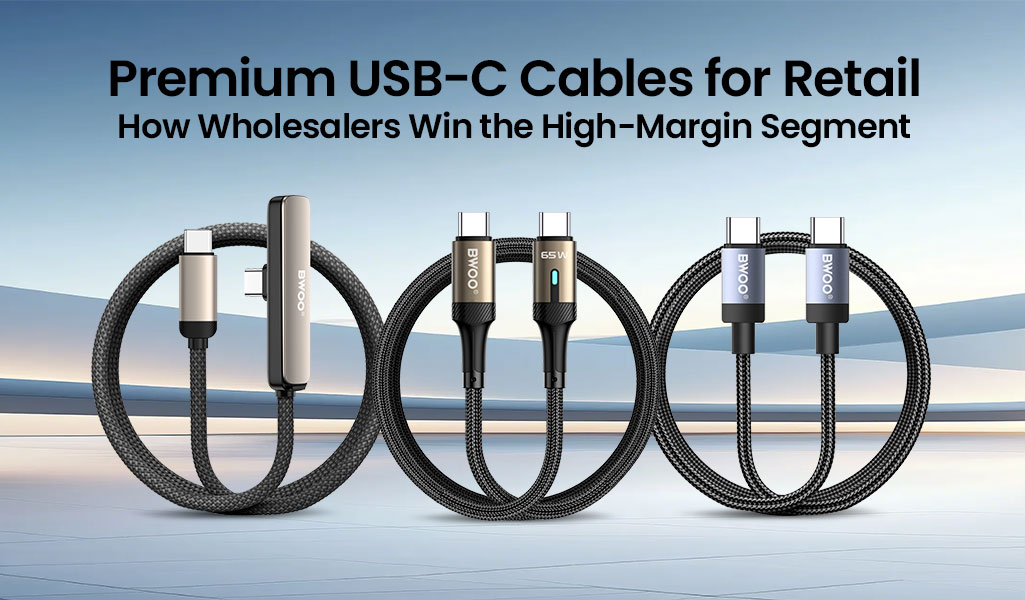
The humble charging cable has quietly become one of the most profitable categories in consumer electronics retail. As universal standards push USB-C into every laptop, phone, tablet, and accessory, retailers are discovering that premium USB-C cables command margins that basic cables simply cannot match. For B2B wholesalers and distributors, the question is no longer whether to stock premium cables, but how to source, customize, and position them to capture the high-value buyer. This guide breaks down the 2026 opportunity and gives you a practical framework for building a premium cable line that retailers actually want.
Why Premium USB-C Cables Are the Fastest-Growing Retail Segment
The Shift from Bargain Cables to Value-Driven Purchases
For years, retail shelves were dominated by low-cost, thin cables sold on price alone. That model is fading. Consumers have learned that cheap cables fail faster, charge slower, and can even damage devices. According to recent retail data, repeat purchases of premium cables are driven by durability and performance rather than impulse price points. When a customer buys a braided 65W cable that lasts for years, the retailer earns trust, repeat business, and a higher average order value. For wholesalers, this means USB-C cable wholesale programs should emphasize quality tiers rather than competing purely on cost.
USB-C as the Universal Standard
The European Union's common charger directive, combined with industry adoption, has made USB-C the single port for nearly every device sold today. Laptops, smartphones, earbuds, handheld consoles, and even portable monitors all ship with USB-C. BWOO has also explained the difference between USB-C and USB-A ports. This consolidation creates a massive, unified market for cables. A retailer can now stock one cable family that serves every customer, which simplifies inventory and unlocks economies of scale for wholesalers who offer a complete range.
What Makes a USB-C Cable “Premium” in 2026
65W E-Marker Certification and PD 3.1 Support
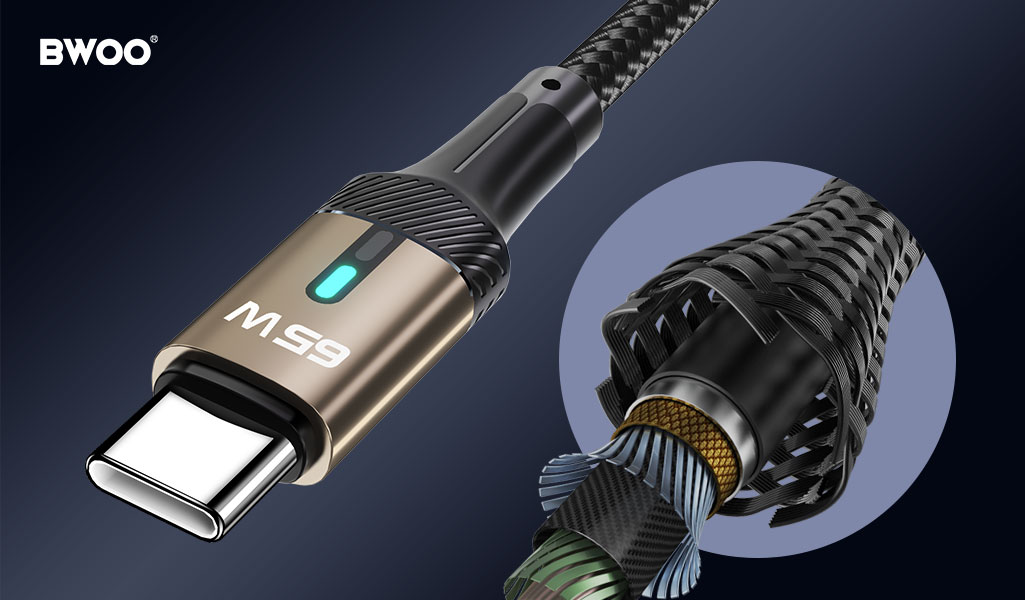
The current ceiling for USB-C charging is defined by Power Delivery 3.1, which supports up to 65W over a single cable. Premium cables embed an e-marker chip that communicates the cable's capabilities to the connected devices. This chip enables higher power transfer, safer charging, and correct negotiation of voltage and current. When sourcing, always confirm that the cable includes an e-marker and is rated for the speeds you advertise. This single feature separates a genuinely premium cable from an ordinary one.
Braided Build Quality and Reinforced Strain Relief
Build quality is what customers feel the moment they pick up the product. Premium cables typically use nylon braided exteriors, aluminum housings, and reinforced strain relief at both connector ends. These details dramatically extend cable lifespan and justify a higher retail price. A well-built cable is also easier to brand, because the material quality carries into the look and feel of your custom logo.
Certified Safety and Compliance
Safety certification is non-negotiable for premium positioning. Reliable suppliers provide CE, FCC, and RoHS compliance, and many retail chains now require documentation before listing a product. For B2B buyers, verified compliance protects your reputation, simplifies market entry, and reduces liability.
Premium vs. Budget USB-C Cable Comparison
Feature | Premium USB-C Cable | Budget USB-C Cable |
Max Power (PD) | Up to 240W (PD 3.1) | 60W or less |
E-Marker Chip | Yes | Usually no |
Exterior | Nylon braided | PVC or thin TPU |
Strain Relief | Reinforced | Minimal |
Data Speed | Up to USB4 / 40Gbps | USB 2.0 (480Mbps) |
Lifespan | 2-3 years+ | Months to 1 year |
Retail Margin | High | Low |
5 Factors B2B Buyers Must Check When Sourcing Premium USB-C Cables
Certification and Compliance Documents
Before committing to a supplier, request certificates for CE, FCC, RoHS, and, where relevant, UL or REACH. These documents are your safety net for retail listings and export markets. A supplier who cannot produce compliance paperwork on request is a red flag, no matter how good the price looks.
Charging and Data Transfer Specifications
Verify the exact power rating and data speed of each cable in the range. Define whether you need PD 3.1 240W, PD 3.0 100W, or 60W for phone-first SKUs, and whether USB 2.0 speeds are acceptable or you need USB4 / Thunderbolt-class performance. Match the specification to the retail tier you are building.
Customization: Logo, Color, and Retail Packaging
Premium lines are built on brand. Work with a supplier that offers logo printing, custom colorways, and retail-ready packaging such as hang tags, boxes, or display-ready hooks. The ability to create a branded, shelf-ready product is the fastest way to differentiate from generic imports.
Minimum Order Quantities and Lead Times
Understand your supplier's MOQ per SKU and lead time for custom orders. A flexible supplier that offers tiered MOQs lets you test new designs with smaller initial batches before scaling, which reduces inventory risk for a new retail line.
Supplier Track Record and Sample Testing
Always test physical samples before placing large orders. Check the cable's flex life, connector fit, heat performance under load, and actual measured charging speed. A short sample-testing phase prevents costly returns and protects your retail relationships.
How to Build a Premium Retail Cable Lineup
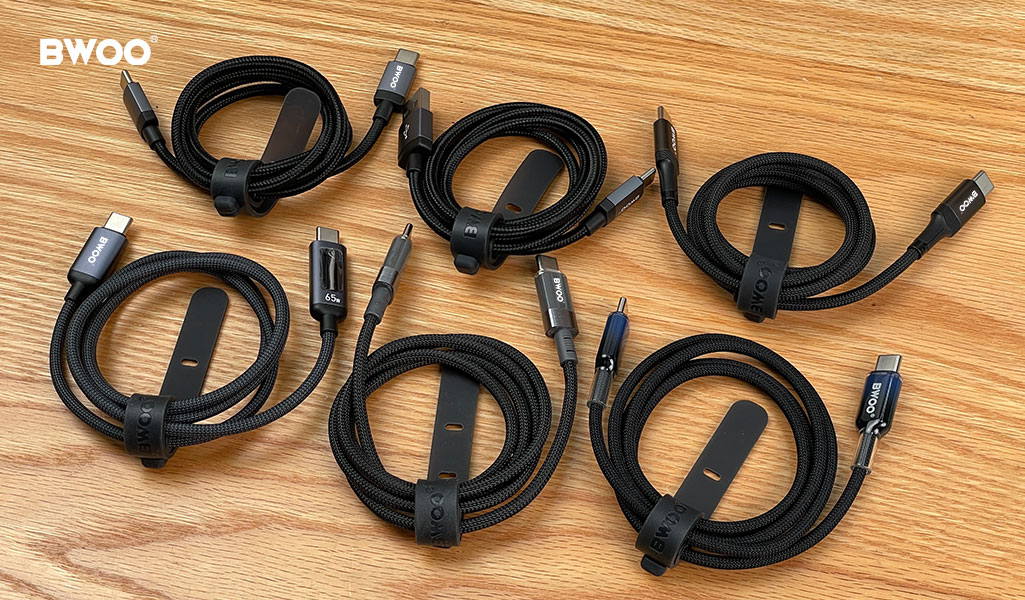
A winning lineup typically includes three tiers: a flagship 240W braided cable for laptops and power users, a mid-range 65W cable for phones and tablets, and a charger and charging cable set. Pair these with accessories like cable organizers and wall chargers to increase basket size. Retailers respond well to a merchandised “charging station” display, so design your packaging and in-box materials to support that story.
FAQ
Are premium USB-C cables worth the higher cost for retailers?
Yes. Premium cables deliver higher margins, lower return rates, and stronger repeat purchases because they last longer and perform better. They also elevate the perceived quality of the retailer's brand.
What is the difference between 60W, 100W, and 240W USB-C cables?
The wattage rating defines the maximum power the cable can carry. A 60W cable suits phones and earbuds, a 100W cable handles most laptops, and a 240W cable (PD 3.1) supports high-power laptops, monitors, and future devices. Higher-rated cables with e-markers are backward compatible.
Can I add my own logo and custom packaging to USB-C cables?
Most reputable suppliers offer OEM/ODM customization, including logo printing, custom colors, and retail packaging. Confirm the MOQ and tooling costs before placing your order.
How can I verify that a USB-C cable supplier is reliable?
Check compliance certificates, request and test physical samples, review production capacity and lead times, and ask for references from existing wholesale clients.
Ready to Build a Premium Cable Line?
The premium segment is one of the most reliable growth areas in phone accessories for 2026. A focused lineup of certified, well-built, and beautifully packaged USB-C cables can become a dependable revenue stream for your wholesale business. Explore BWOO's premium USB-C cable collection and contact our team to discuss MOQs, custom branding, and samples.
[Send Inquiry] Ready to stock a premium USB-C cable line? Contact the BWOO team today to request samples, pricing, and customization options.


