



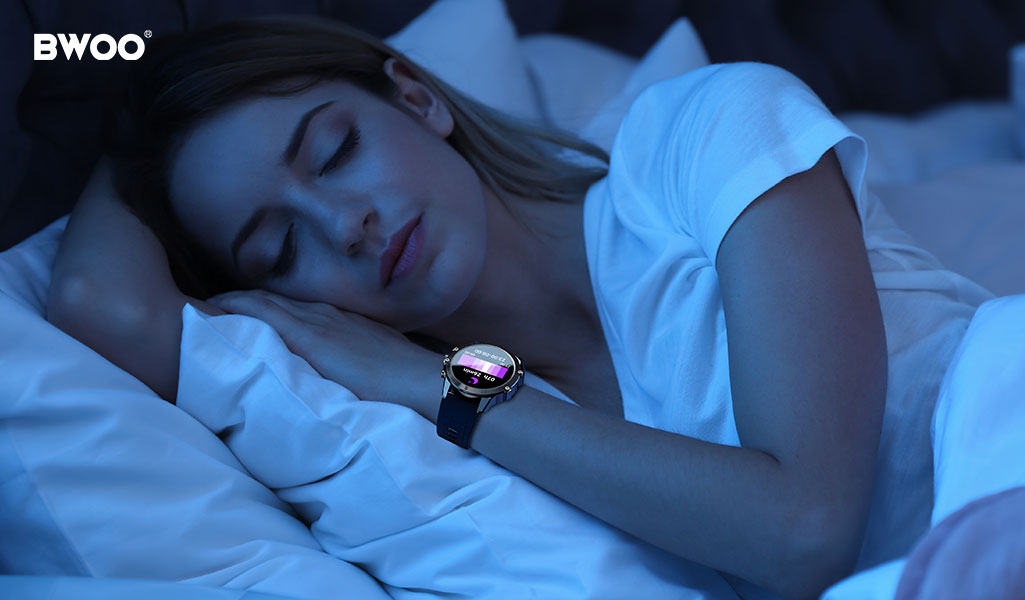
Smartwatch sleep tracking has evolved from a novelty feature to a genuinely useful health tool for millions of users. Yet if you have ever woken up feeling refreshed only to see your watch report 'poor sleep quality' — or vice versa — you have experienced the core challenge: accuracy variance across devices, sensors, and algorithms. Understanding why sleep tracking differs between watches, and what specifications actually matter for reliable results, helps you choose a wearable that delivers actionable sleep insights rather than misleading data.
How Smartwatches Track Sleep: The Sensor Stack
Sleep tracking relies on multiple sensor inputs processed through device-specific algorithms. The primary sensors are: Photoplethysmography (PPG) — the green/red LED sensor on the watch underside that measures heart rate via light absorption changes in blood vessels. During sleep, PPG data reveals heart rate variability (HRV), a key indicator of sleep stage transitions. Accelerometer — detects body movement and position changes. High movement indicates wakefulness or light sleep; near-zero movement suggests deep sleep. Some watches add: SpO2 sensor (blood oxygen) for detecting sleep apnea indicators, skin temperature sensor for tracking circadian rhythm alignment, and ambient light sensor correlating sleep environment with sleep quality. The quality of each sensor — sampling rate, LED count, noise filtering — directly impacts data accuracy.
Why Different Watches Give Different Sleep Scores
Even with similar sensor hardware, sleep tracking results can vary significantly between devices because the algorithm layer is proprietary and non-standardized. Each manufacturer develops its own sleep staging algorithm that interprets PPG and accelerometer data into sleep stages (Awake, REM, Light, Deep). These algorithms are trained on different reference datasets — typically polysomnography (PSG) lab studies — but the size, demographic diversity, and methodology of these training sets vary. Apple Watch uses a proprietary algorithm trained on one of the industry's largest PSG reference datasets. Huawei's TruSleep uses PPG-based cardiorespiratory coupling analysis. Fitbit's sleep staging leverages heart rate variability patterns and movement. Independent validation studies show that the best consumer wearables achieve 80-85% agreement with PSG for sleep-wake detection but only 60-70% for specific sleep stage classification — meaning your watch is reasonably good at telling whether you are asleep, but less accurate at distinguishing deep sleep from light sleep.
What Specifications Indicate Better Sleep Tracking Accuracy
When comparing smartwatches for sleep tracking, these hardware and software specifications are the strongest quality signals. Multi-channel PPG with at least two LED wavelengths (green for motion-compensated HR, red/infrared for SpO2) and four photodetectors for signal redundancy. Sampling rate of 25 Hz or higher for PPG — lower sampling rates miss short-term HRV fluctuations that are critical for sleep stage transitions. Dedicated low-power sleep tracking mode that maintains sensor operation without draining battery overnight. Algorithm transparency indicating clinical validation — look for brands that publish sleep staging accuracy benchmarks against PSG. Continuous overnight SpO2 monitoring rather than spot-check-only, as blood oxygen dips during sleep are intermittent and easily missed with periodic measurements.
Common Sleep Tracking Limitations to Know
Even the best consumer smartwatches have inherent limitations. They struggle to distinguish 'quiet wakefulness' (lying still with eyes open) from light sleep — both show minimal movement and similar heart rate patterns. They cannot detect sleep disorders — while SpO2 and HRV patterns may suggest sleep apnea indicators, a smartwatch is not a diagnostic device. They are less accurate for users with certain conditions (arrhythmias, very dark skin tones affecting PPG penetration) — though sensor technology is steadily improving in inclusivity. The takeaway: use sleep tracking for trends over weeks and months, not for making decisions based on a single night's data.
Beyond Basic Sleep Tracking: Features That Add Value
Premium smartwatches are expanding beyond basic sleep stage tracking into actionable wellness guidance. Sleep coaching uses multi-night data to suggest schedule adjustments (e.g. 'Your average bedtime is 12:45 AM with 6.5 hours of sleep. Going to bed 30 minutes earlier could add 45 minutes of deep sleep per night'). Smart alarm wakes you during a light sleep phase within a 30-minute window of your alarm time, reducing grogginess. Nap detection automatically identifies and logs daytime naps with their impact on overall sleep load. Sleep environment insights correlate ambient noise, temperature, and light data with sleep quality metrics. These features move the watch from a passive tracker to an active wellness tool.
BWOO's Smartwatch Sleep Tracking Platform
BWOO's smartwatch lineup features a multi-channel PPG sensor array with 26 Hz sampling rate and continuous overnight monitoring — designed to deliver reliable sleep staging at a competitive price point. The companion app presents sleep data in an intuitive dashboard showing sleep stages (Deep, Light, REM, Awake), sleep duration trends, and a composite sleep quality score. Features include SpO2 monitoring, smart alarm with light-sleep detection, and sleep coaching recommendations based on weekly patterns. For users who want sleep tracking that works without the premium-brand price premium, BWOO's smartwatches offer a practical, data-driven approach to understanding sleep health.
Conclusion
Smartwatch sleep tracking is genuinely useful — but only when you understand what the data means and its limitations. Look for devices with multi-channel PPG, 25+ Hz sampling, continuous overnight monitoring, and published accuracy benchmarks. More importantly, use sleep data for long-term trend analysis rather than fixating on individual nights. BWOO's smartwatch sleep tracking platform provides a balanced feature set focused on delivering reliable, actionable sleep insights at an accessible price point.


