



For a small home appliance brand, adding mobile accessories to the catalog can feel like stepping into an unfamiliar aisle. Yet the companies doing exactly this — from China's Zhuimi Technology to the retail giant Macalline — are discovering that the two categories share more DNA than anyone expected. The real question for brand owners is not "why would I add phone chargers next to my coffee machines?" but "why haven't I already?"
The Supply Chain Overlap That Makes It Work
One Manufacturing Ecosystem, Two Product Lines
The Pearl River Delta (PRD) manufacturing cluster has spent 30 years building the world's most efficient consumer electronics supply chain. What most brand owners don't realize is that the factories producing 150,000 rice cookers per month often share the same industrial parks, the same component suppliers, and sometimes even the same injection-molding lines as the factories producing GaN chargers and TWS earbuds. A small appliance brand already sourcing from Shenzhen or Dongguan can often add mobile accessories through the same trade agent, the same logistics provider, and the same QC inspection service — without building a new procurement department.
Bill of Materials Familiarity
A portable blender and a magnetic wireless charger share lithium-ion cells, USB-C power delivery controllers, PCB assembly processes, and silicone seals. The learning curve for sourcing these components is essentially zero for a small appliance brand that has already navigated battery certification (UN 38.3, MSDS, IEC 62133) for cordless kitchen products.
Customer Overlap and Seasonal Balance
Your existing customer already owns a phone. That is a simple but powerful fact. The 35-year-old who buys a high-end cordless vacuum from your brand is statistically likely to own at least three mobile devices: a smartphone, a pair of wireless earbuds, and a power bank for travel. When they trust your vacuum's battery life and build quality, extending that trust to a power bank with your logo on it is not a cognitive leap — it is a logical next purchase.
Mobile accessories also provide a seasonal counterbalance to small appliances. Kitchen gadgets peak during holiday gifting seasons and major shopping festivals. Mobile accessories — chargers, cables, earbuds — sell steadily year-round with their own spikes during back-to-school periods, new phone launch cycles, and summer travel seasons. Running both categories smooths out the cash flow curve and improves warehouse utilization.
Low-Risk Market Entry: BWOO's Trial-Order Pathway
Minimal Financial Exposure
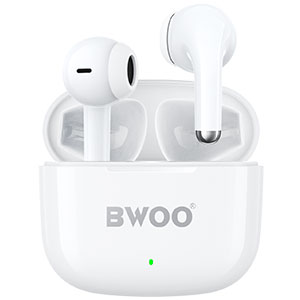
The fastest path to testing mobile accessories is private-label sourcing from an established manufacturer. BWOO supports trial orders with flexible MOQs, allowing brands to start with a curated batch of three to five SKUs — such as a multi-port GaN charger, a magnetic wireless power bank, and a pair of open-ear earbuds — without committing to container-level volumes. This approach caps the initial cash outlay at a manageable level while generating real sell-through data.
What to Look for in a Manufacturing Partner
When sourcing mobile accessories, small appliance brands should apply the same rigorous quality standards they already use for their core products. BWOO provides: in-house QC inspection reports, full compliance documentation (CE, FCC, RoHS, REACH), real sample-to-bulk consistency, and on-time delivery tracking across thousands of export orders.
The Macalline Model: Retail Space That Proves the Thesis
In 2025, Macalline, China's largest home-furnishing mall operator, launched the "Chaodianhui" (Trendy Electronics Hub) concept — reorganizing store floors to combine small home appliances, consumer electronics, and mobile digital products under one roof. By May 2026, the model had expanded to 50 locations with plans to exceed 100. This retail experiment validates what the data suggests: consumers who walk in to browse a rice cooker are equally interested in the GaN charger next to it. For wholesale brands, this means the same distributors and retail partners selling your kitchen appliances are often ready to stock your mobile accessories on the adjacent shelf.
How to Launch a Mobile Accessories Line: A Four-Step Framework
Map the overlap: Audit your top 10 SKUs by revenue. Identify battery types, certification requirements, and packaging formats. Find matching mobile accessories that share those attributes.
Select 3-5 pilot products: Begin with universal, high-turnover items — a 65W GaN charger, a Qi2 magnetic power bank, and a USB-C hub cover 80% of consumer needs.
Quality-match packaging: Mobile accessories benefit from compact, eco-friendly packaging that mirrors your small appliance unboxing experience. BWOO supports custom packaging design and private-label branding for qualified orders.
Launch through existing channels: Email your distributor list first. Run a pilot bundle offer — one small appliance plus one mobile accessory at an introductory margin. Measure reorder rates within 90 days.
Conclusion
Cross-category expansion from small home appliances into mobile accessories is not a moonshot. It leverages manufacturing geography you already use, a customer base you already own, and distribution channels you have already built. The risk lies not in trying but in waiting while competitors capture the shelf space next door. Explore bwoohk.com for private-label mobile accessory sourcing and OEM partnership details.


