



When shopping for charging accessories like power banks, cables, and wall chargers, you have probably seen terms like 'flame retardant' or 'fire-resistant materials' on product descriptions. One certification that stands behind these claims is UL94 — specifically the UL94 V-0 rating — a standard that can literally mean the difference between a device that contains a failure and one that propagates it. Here is what every consumer should know about UL94 V-0, how it is tested, and why it deserves a spot on your accessory checklist.
What Is UL94?
UL94 is a flammability standard for plastic materials used in electronic devices and appliances, developed by Underwriters Laboratories (UL) and recognized globally. It evaluates how a plastic material behaves when exposed to a flame — specifically, how quickly it extinguishes once the flame source is removed, whether it drips flaming particles, and how much it burns. The standard has multiple classification levels, with V-0 being the most stringent commonly applied to consumer electronics enclosures and internal components. The 'V' stands for vertical — the test specimen is oriented vertically during testing, which is more demanding because gravity works against flame extinguishment.
How the UL94 V-0 Test Works
The UL94 V-0 test is surprisingly straightforward in concept but demanding in execution. A standardized plastic bar (125mm long, 13mm wide, up to 13mm thick) is clamped vertically. A calibrated 20mm blue flame is applied to the bottom of the bar for 10 seconds and then removed. If the specimen stops burning, the flame is applied for an additional 10 seconds and removed again. To achieve V-0 classification, the specimen must meet all of these criteria: the after-flame time after each flame application must not exceed 10 seconds; the total after-flame time across five specimens (each tested twice) must not exceed 50 seconds; the specimen must not burn up to the holding clamp; there must be no flaming drips that ignite a cotton indicator placed 300mm below the specimen; and the after-glow time after the second flame removal must not exceed 30 seconds.
UL94 V-0 vs V-1 vs V-2 vs HB: Understanding the Hierarchy
The UL94 vertical classifications form a clear hierarchy of fire safety. V-0: Most stringent — total after-flame ≤50 seconds, no single after-flame >10 seconds, no flaming drips. This is the standard for premium charging accessories. V-1: After-flame ≤30 seconds per application, total ≤250 seconds, no flaming drips. Used in some appliance housings but generally not preferred for handheld electronics. V-2: After-flame same as V-1 but allows flaming drips that ignite the cotton indicator. This is a significant downgrade in safety — flaming drips can spread fire beyond the device. HB (Horizontal Burn): The lowest classification, for materials tested in a horizontal orientation with a burn rate limit. Common in low-cost electronics where fire safety is deprioritized. The practical difference: a V-0 rated power bank case that catches an internal short circuit will self-extinguish almost immediately. A V-2 rated case may drip flaming plastic onto your desk, carpet, or bag.
Why UL94 V-0 Matters in Charging Accessories
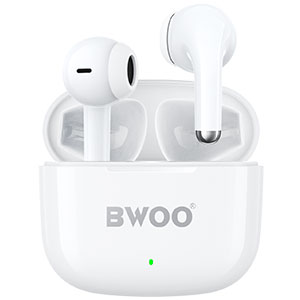
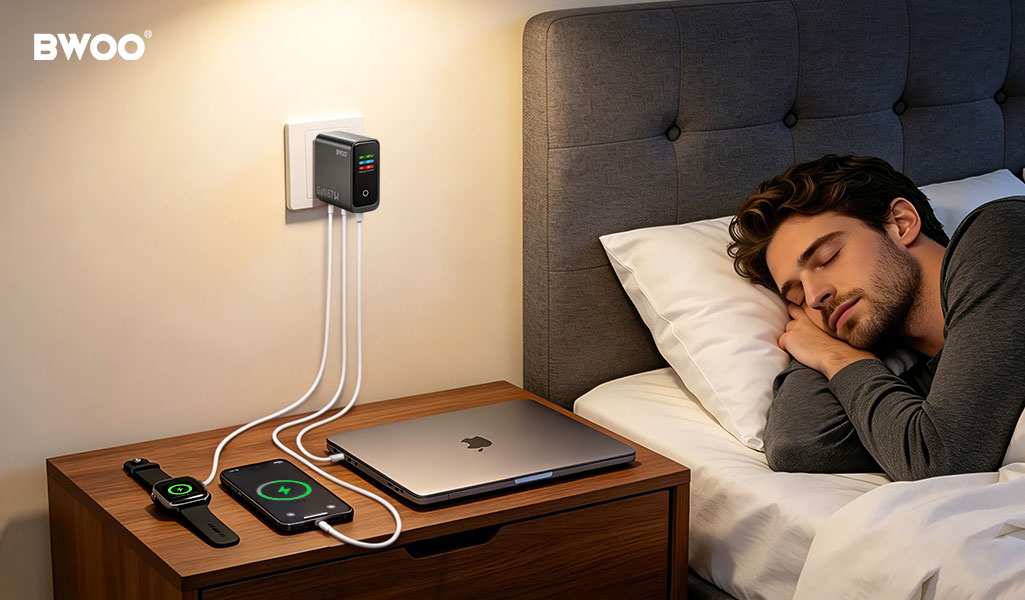
Charging accessories concentrate three risk factors that make fire resistance critical: lithium batteries (which can undergo thermal runaway under failure conditions), high current (USB-C PD delivering up to 140W generates significant heat at contact points), and proximity to combustible materials (charging on beds, sofas, and in bags overnight). A UL94 V-0 rated enclosure acts as a containment barrier — if an internal component fails, the housing resists ignition and prevents fire spread. This is not theoretical: UL94 V-0 rated materials have been shown in test conditions to contain thermal events that would have breached V-2 rated materials. For products containing lithium batteries — power banks, wireless earbuds charging cases, portable chargers — UL94 V-0 housing is one of the strongest safety signals a manufacturer can provide.
How to Verify UL94 V-0 Claims
Not every 'flame retardant' claim is backed by actual UL94 V-0 certification. When evaluating a product, look for: the exact phrase 'UL94 V-0' (not 'fire-resistant' or 'flame-retardant plastic' alone), reference to a UL file number that can be verified on UL's public database, and documentation from the material supplier identifying the specific polymer grade and its UL94 classification. Reputable manufacturers will include UL94 V-0 in their product specifications and provide test reports upon request.
BWOO's Commitment to UL94 V-0
BWOO integrates UL94 V-0 certified materials into all power bank and charger product lines as a standard practice — not an upsell. This includes the Qi2.2 BO-P85 and Qi2 BO-P84 magnetic power banks, whose enclosures use UL94 V-0 rated PC-ABS alloy that combines flame retardancy with impact resistance and premium surface finish. For BWOO, UL94 V-0 is not a marketing bullet point — it is part of a layered safety approach that includes temperature sensors, overcharge protection circuitry, and certified battery cells. When comparing products, look beyond the capacity and wattage numbers: the material certifications tell you how the device will behave when things go wrong, not just when they go right.
Conclusion
UL94 V-0 is not the most exciting specification on a charging accessory — it is not watts, capacity, or charging speed. But it is arguably the most important, because it governs what happens during the failure scenarios that no one expects. Next time you are comparing power banks or chargers, check for UL94 V-0 in the specifications. It is a small line of text that represents a meaningful safety margin — and in a category where products sit next to you while you sleep, that margin matters.


