



The wireless speaker category spans an unusually wide range — from pocket-sized personal speakers to 100W+ outdoor party systems — creating both opportunity and complexity for B2B buyers. Unlike chargers or cables where specifications are relatively standardized, speaker selection requires evaluating acoustic performance, durability ratings, connectivity protocols, and form-factor positioning. This guide provides a structured framework for sourcing BT speakers that align with your distribution channel and target price tier.
Understanding the Wireless Speaker Market Segments
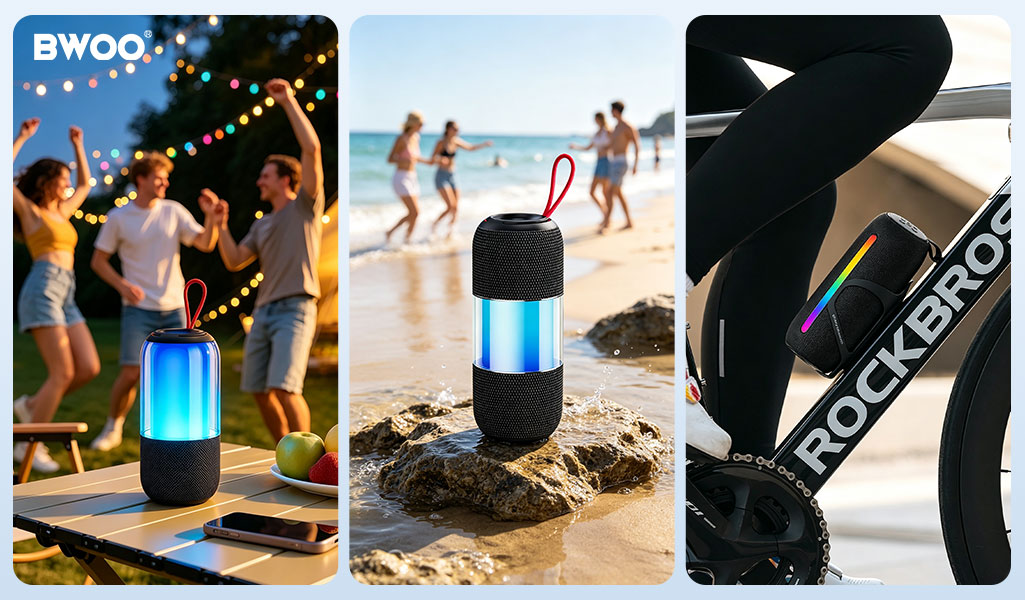
The wireless speaker market splits into four distinct segments, each with different unit economics, competitive dynamics, and retail placement strategies. Pocket/Personal speakers (3-5W, under 200g) dominate unit volume in the sub-$15 wholesale range, primarily sold through convenience retail, promotional channels, and online marketplace entry-level listings. Portable Mid-Range speakers (10-20W, IPX5-IPX7 rated) represent the volume-margin sweet spot at $15-40 wholesale, targeting outdoor enthusiasts, beach-goers, and everyday home users — this is where most B2B buyers should concentrate. High-Power Party speakers (50-100W+ RMS, with TWS pairing for stereo) are the fastest-growing segment, driven by outdoor gathering culture and commanding $40-80+ wholesale with strong brand differentiation potential. Smart speakers with voice assistant integration constitute a specialized segment requiring platform certification (Alexa/Google Assistant) and represent a higher barrier-to-entry but higher margin opportunity.
Key Specifications for B2B Product Evaluation
BT Version and Connectivity
BT 5.3 is the current mainstream standard for wireless speakers, with BT 6.0 adoption beginning in premium models. The practical difference for speakers — where audio latency matters less than for earbuds — is primarily in connection range (BT 5.3: ~240m open air; BT 6.0: ~300m+) and multi-device connection stability. TWS (True Wireless Stereo) pairing, where two identical speakers link to form a stereo pair, is now a baseline expectation in the mid-range and above. Some premium models also support multi-point connection (simultaneous pairing to two source devices) and broadcast mode (linking 50+ speakers to one source for large-area coverage).
Water and Dust Resistance (IP Rating)
Ingress Protection (IP) ratings are non-negotiable for portable speakers. IPX4 (splash-proof) is the minimum for any outdoor-positioned speaker. IPX5 (water jets) and IPX6 (powerful water jets) cover poolside and beach use. IPX7 (immersion up to 1m, 30 minutes) is the benchmark for 'floating' pool speakers and premium outdoor models. IP67 (adding dust-tight protection) is the gold standard for rugged outdoor positioning. For B2B buyers, IPX6-IPX7 certification with proper test reports from the manufacturer is a strong quality signal — uncertified 'waterproof' claims are a common red flag in supplier evaluation.
Audio Output and Driver Configuration
Wattage (RMS, not peak) is the headline specification but tells only part of the story. A well-tuned 10W speaker with a passive radiator can sound fuller than a poorly designed 20W speaker. Key audio specifications to request: frequency response range (wider = better, 80Hz-20kHz is solid for portable speakers), driver size and configuration (single full-range vs dual-driver + passive radiator), and Total Harmonic Distortion (THD) at rated power. For premium positioning, look for speakers with DSP (Digital Signal Processing) tuning — custom EQ profiles that compensate for the enclosure's acoustic characteristics.
Battery Life and Charging
Portable speaker battery life ranges from 6-8 hours (compact models) to 20-24 hours (mid-range) and 30+ hours (large party speakers). The critical specification is battery life at 50-70% volume, not the often-quoted 'at 50% volume' figure. USB-C charging is now universal, and fast-charging support (USB-PD) is a growing differentiator. For party speakers, AC/DC dual-power (wall-powered with battery backup) adds versatility.
Manufacturer Evaluation: What Separates Quality Suppliers
Wireless speaker manufacturing sits at the intersection of acoustics engineering, industrial design, and electronics integration — requiring broader expertise than simpler accessory categories. When evaluating suppliers, prioritize manufacturers with in-house acoustic testing facilities (anechoic chamber or equivalent), an experienced audio tuning team, and a track record of IP-rated product shipping. Request audio test reports with frequency response curves and THD measurements for your target model — manufacturers who cannot provide these should be deprioritized. Sample evaluation should include subjective listening tests across multiple genres (vocals, bass-heavy, acoustic) at different volume levels, plus physical inspection of waterproofing seals and port covers.
BWOO's Wireless Speaker Offerings
BWOO offers wireless speaker solutions across the portable and mid-range segments, with ODM customization available for branding, driver configuration, and industrial design. Our speaker product development prioritizes three areas: IP certification integrity (all outdoor-positioned models ship with certified IPX5-IPX7 ratings), tuned audio profiles (DSP-calibrated frequency response for balanced sound at all volume levels), and durable construction (reinforced grilles and drop-tested enclosures). For B2B buyers expanding into audio, BWOO provides the cross-category reliability of a manufacturer with established supply chains across mobile accessories — meaning your speaker orders benefit from the same logistics, QC, and account management infrastructure as your charger and power bank shipments.
Conclusion
Wireless speakers offer B2B distributors a category with strong consumer demand, clear segmentation for channel strategy, and margin potential that rewards product differentiation over pure price competition. The key to successful sourcing is matching your supplier's acoustic engineering capability to your target segment's requirements — and validating specifications through sample testing rather than trusting spec sheets alone. For buyers seeking a manufacturing partner with multi-category expertise and ODM flexibility, BWOO's speaker lineup provides a solid platform for market entry or expansion.


