



Building a phone accessories brand is one of the most accessible paths into consumer electronics — low per-unit cost, established demand, and relatively short development timelines. But the difference between a brand that scales profitably and one that stalls on quality issues comes down to one decision: choosing the right private label supplier. This guide walks through the supplier evaluation process from initial shortlisting through pilot order validation, with practical checklists and real-world considerations for brand buyers entering or expanding in the mobile accessories space.
OEM vs ODM vs White Label: Understanding the Partnership Models
Before beginning a supplier search, clarifying which manufacturing model suits your brand strategy prevents wasted conversations. OEM (Original Equipment Manufacturing) means you provide the design — industrial design files, specifications, sometimes even component sourcing preferences — and the factory executes production. This offers maximum product differentiation but requires significant upfront design investment and longer development timelines. ODM (Original Design Manufacturing) means the factory provides existing product platforms that you customize with your branding, packaging, and optionally, specification modifications. This is the most common model for phone accessories brands entering the market — faster time-to-market, lower upfront cost, and reduced development risk. White Label is the simplest model: off-the-shelf products rebranded with your logo, often with minimal customization. Suitable for market testing or filling out a catalog but offers no competitive differentiation.
The Supplier Evaluation Framework: Five Dimensions
1. Certification and Compliance Readiness
The first filter should be certification capability — a supplier who cannot immediately provide relevant test reports is not prepared for professional brand partnerships. Request REACH and RoHS reports for EU-bound products, FCC documentation for US markets, and product-specific certifications (Qi for wireless chargers, UN38.3 for power banks, BT SIG for audio products). The speed and completeness of the certification response is itself a quality signal: suppliers with organized compliance documentation have mature quality management systems. Red flag: 'We can get the certification after you place the order.' This means the certification process has not started, and your timeline is at risk.
2. R&D and Customization Capability
In-house ID (industrial design) and engineering teams determine how much customization is possible — and how fast. Ask about: do they have internal ID designers or outsource? Can they share a portfolio of customized projects (anonymized client work is standard)? What is their typical development cycle from concept approval to mass production? For phone accessories, 8-12 weeks from design freeze to production is competitive. Manufacturers who promise 4-week turnarounds for custom designs are likely offering surface-level branding on existing molds — not true customization.
3. MOQ Flexibility and Scaling Path
Minimum Order Quantities reveal a supplier's target customer profile. Manufacturers quoting 5,000+ unit MOQs are optimized for enterprise clients; those quoting 300-500 unit pilot orders are structured for brand partnerships that start small and scale. The ideal supplier offers a graduated MOQ structure: pilot order (200-500 units) at a slightly higher per-unit cost, followed by volume pricing tiers at 1,000, 3,000, and 5,000+ units. This lets you validate product-market fit before committing to large production runs.
4. Communication and Account Management
Communication quality is not a soft factor — it is a production risk indicator. During the evaluation phase, assess: response time (under 24 hours during business days is standard), English proficiency of the account manager (not just sales staff), willingness to share production timelines with specific milestone dates, and clarity on ownership of packaging artwork, compliance documentation, and IP. A supplier who is vague about timelines during the sales process will be vague during production — when the stakes are your inventory and customer relationships.
5. IP Protection and NDA Process
For brand buyers, intellectual property protection is non-negotiable. Professional suppliers have a standardized NDA process — if a supplier is reluctant to sign an NDA before discussing project details, that is a disqualifying red flag. Beyond the NDA, ask about: how they handle tooling/mold ownership (you should own molds you pay for), whether they manufacture competing products under their own brand (creates channel conflict), and their policy on using your product images or designs in their portfolio or at trade shows.
The Sourcing Workflow: From Shortlist to Production
Step 1: Build an initial shortlist of 5-8 candidates using trade platforms (Alibaba Gold Supplier verification), trade show presence (Global Sources, Canton Fair), and direct referrals from industry contacts. Filter immediately by export experience and certification coverage. Step 2: Send a standardized RFQ (Request for Quotation) with your design brief, material specifications, target price range, and packaging requirements. Consistency in the RFQ format enables direct comparison across suppliers. Step 3: Request samples with full material datasheets. Evaluate against a pre-production scorecard covering build quality, spec accuracy, and packaging execution. Step 4: Run a pilot order of 200-500 units with your top one or two suppliers. This validates production quality, communication reliability, and on-time delivery under real production conditions. Step 5: Before scaling, formally approve all packaging artwork, compliance labels, and QC inspection standards in writing. Create a documented standard that governs all future reorders.
Partnering with BWOO: A Case Study in ODM Collaboration
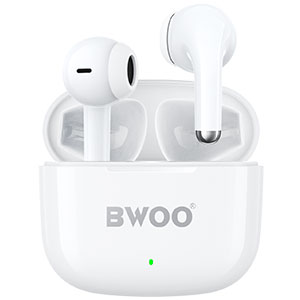
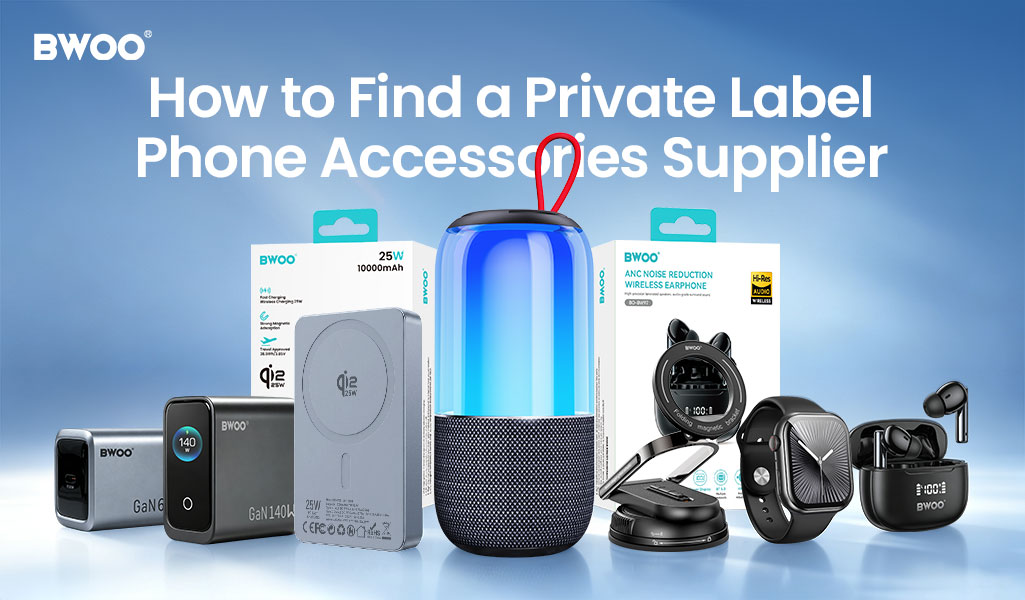
BWOO operates a pure ODM model across its mobile accessories product lines — TWS earbuds, chargers, power banks, wireless speakers, data cables, car mounts, and smartwatches. Unlike consumer-brand manufacturers who sell under their own name while also offering OEM services (creating channel conflict), BWOO's entire business is structured around brand partnership. This means: no competing consumer brand, full tooling ownership transfers to brand partners, flexible MOQ starting at 500 units for pilot orders, in-house ID and engineering teams for customization projects, and dedicated account management with English-language support. BWOO's cross-category manufacturing capability means brand partners can consolidate sourcing across multiple product categories with one supplier relationship — reducing logistics complexity, QC overhead, and supplier management burden. For brand buyers evaluating private label partners, explore BWOO's product categories or contact our partnership team to discuss your brand vision.
Conclusion
Finding the right private label supplier is the single highest-leverage decision in building a phone accessories brand. A supplier who aligns with your certification requirements, customization needs, and scaling timeline becomes a strategic asset; a mismatch becomes an ongoing operational burden. The framework outlined here — clarify your partnership model, evaluate across five dimensions, follow a staged sourcing workflow — provides a repeatable process for qualifying suppliers. BWOO's ODM-first approach offers brand buyers a partnership structure designed for long-term collaboration rather than transactional sourcing.


