



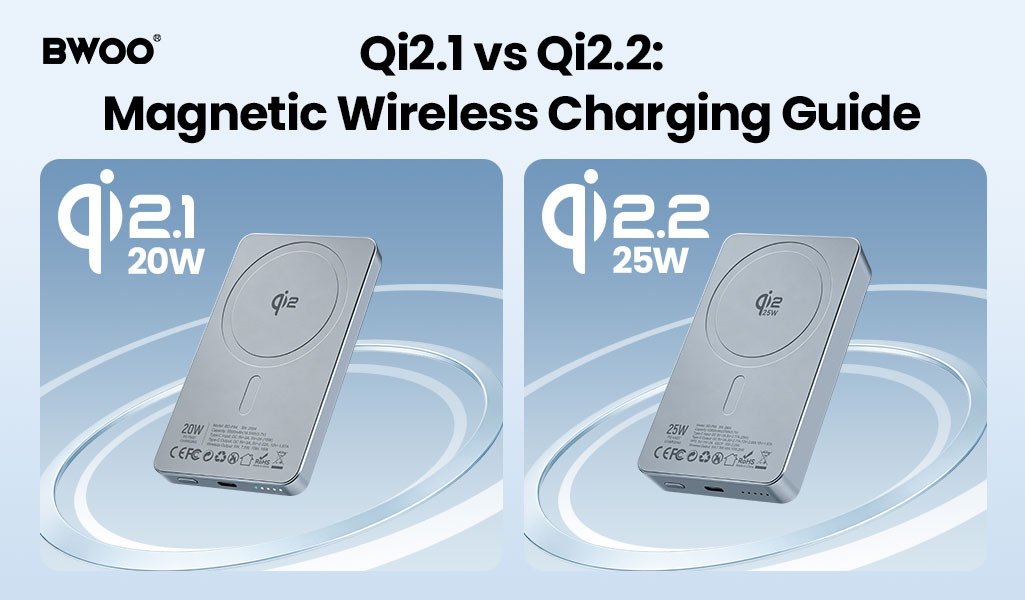
The Qi wireless charging standard has undergone its most significant evolution since the introduction of Magnetic Power Profile (MPP) in 2023. With Qi2.2 raising the power ceiling to 25W and Qi2.1 expanding magnetic compatibility to non-magnetic phones via accessory cases, B2B buyers face a critical question: which standard should your next product line target? This guide compares Qi2.1 and Qi2.2 across power output, compatibility, thermal management, and market timing to help distributors make informed sourcing decisions in 2026.
A Quick History: From Qi1 to Qi2.2
The Wireless Power Consortium (WPC) launched Qi1 in 2010 with 5W output, later extending to 15W via Extended Power Profile (EPP). The major leap came in 2023 with Qi2.0, which introduced MPP — magnetic alignment technology adapted from Apple's MagSafe, maintaining 15W output but dramatically improving coil-to-coil alignment and reducing energy loss from misalignment. Qi2.1 followed in 2024, expanding MPP to 'Qi2 Ready' devices — non-magnetic phones that achieve magnetic attachment through certified cases, with Samsung Galaxy S25 being the flagship implementation. Qi2.1 also introduced 'moving coil transmitter' technology for automotive applications where the charging coil actively tracks the phone's position. Now Qi2.2, with formal specifications expected imminently, pushes output to 25W while building on the magnetic alignment foundation of Qi2.0.
Qi2.1 vs Qi2.2: Key Technical Differences
Power Output
Qi2.1: Maintains 15W maximum output, identical to Qi2.0. Enough for overnight charging and standard daytime top-ups but insufficient for users who expect fast-charging speeds comparable to wired 25-45W solutions. Qi2.2: Raises output to 25W maximum, a 67% increase. This brings wireless charging into the 'quick top-up' category — delivering approximately 50% charge in 30 minutes for compatible devices. For B2B buyers, the 25W threshold is significant: it crosses the psychological barrier where consumers perceive wireless charging as fast enough to replace wired charging for daily use.
Thermal Management
Higher wattage generates more heat, and excessive heat degrades battery health and triggers charging speed throttling. Qi2.2 mandates enhanced thermal management requirements that Qi2.1 does not address — including stricter temperature thresholds, requirement for temperature sensors at both transmitter and receiver sides, and protocols for dynamic power adjustment. BWOO's Qi2.2 power bank (BO-P85) incorporates a multi-layer graphite cooling sheet and aluminum alloy frame as a passive heatsink, keeping surface temperature below 42°C under sustained 25W output. For distributors, products with certified Qi2.2 thermal management carry a tangible safety and performance advantage over uncertified 'fast wireless' claims.
Device Compatibility and Ecosystem
Qi2.1's headline feature is backward compatibility with Qi2.0 and forward compatibility with Qi2.2 — a Qi2.1 charger will charge Qi2.2 devices at 15W, and a Qi2.2 charger supports Qi2.1 devices at 15W. The ecosystem distinction is in the target device tier: Qi2.1 primarily serves mid-range and value-tier devices, including non-magnetic phones using Qi2 Ready cases. Qi2.2 targets flagship-tier devices from Apple and Google, with both manufacturers expected to launch Qi2.2-compatible models. As of mid-2026, over 1,700 products have received Qi2 certification across phones, earbuds, desktop chargers, and automotive applications.
Market Timing: When to Invest in Qi2.2
The B2B procurement timeline typically runs 8-16 weeks from order to delivery, plus 4-8 weeks for certification and packaging. This means decisions made in mid-2026 will determine what products hit shelves in Q4 2026. Qi2.2 is currently in the early adopter phase — certification processes are being finalized, and the first wave of Qi2.2-certified accessories is shipping. Early-moving distributors who secure Qi2.2 inventory now will capture the premium pricing window before mass-market adoption drives margins down. BWOO has already completed Qi2.2 integration on its BO-P85 model, with shipping available for Q3 2026 orders.
What This Means for Your Product Portfolio
For B2B distributors, the optimal strategy in 2026 is a tiered portfolio: carry Qi2.1 products for the mid-range segment where magnetic alignment and affordable pricing are the primary selling points, while adding Qi2.2 SKUs for the premium tier where 25W speed and advanced thermal management justify higher MSRPs. This approach captures both the volume segment and the margin segment. BWOO's product matrix supports this strategy directly: the Qi2 BO-P84 (15W, 5,000mAh) addresses the compact magnetic charging segment, while the Qi2.2 BO-P85 (25W, 10,000mAh) serves the premium fast-charging tier.
Conclusion
Qi2.2 represents a meaningful upgrade — not just a spec bump, but a standard that makes wireless charging fast enough to change consumer behavior. For B2B buyers, the decision between Qi2.1 and Qi2.2 comes down to your target price tier and launch timeline. If you are targeting Q4 2026 retail shelves, Qi2.2 certification readiness should be a key supplier selection criterion. Explore BWOO's Qi2.2-certified power bank lineup or contact our product team to discuss customized solutions for your market.


