



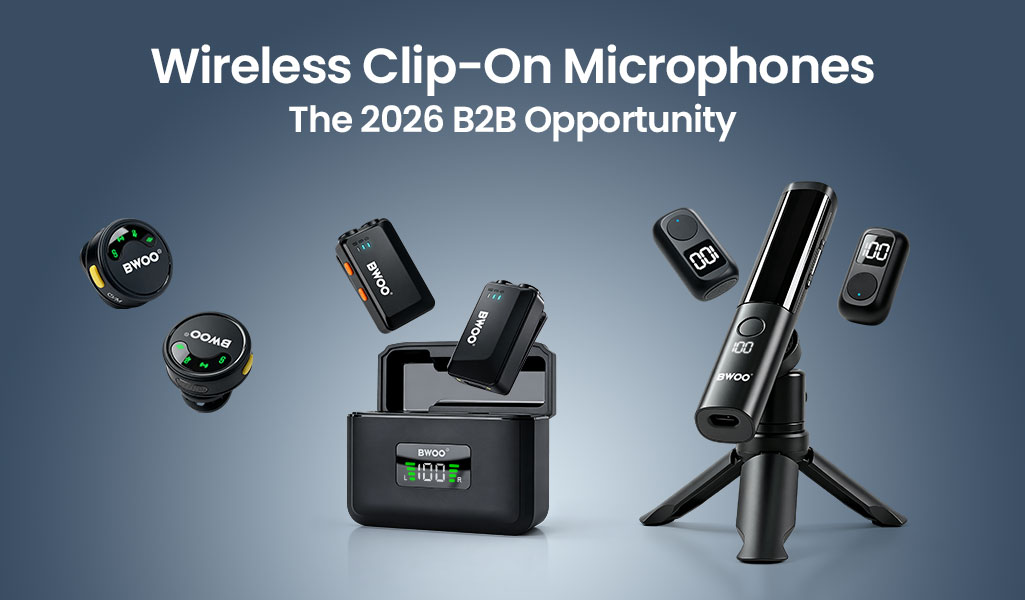
Wireless clip-on microphones are one of the highest-margin audio opportunities for B2B distributors entering 2026. The creator economy — short-form video, livestreaming, podcasting, and online education — has turned the wireless lavalier mic from a broadcast professional’s tool into an everyday creator essential. For wholesalers and distributors, the category offers a compelling combination of high search demand, strong retail prices, and a fast-growing user base. This article explains why wireless clip-on microphones are a strategic B2B line for 2026, what specs to prioritize, and how in-stock models such as the BO-MF05, BO-MF03, and BO-MF02 anchor a profitable audio assortment.
Why Clip-On Microphones Are Booming in 2026
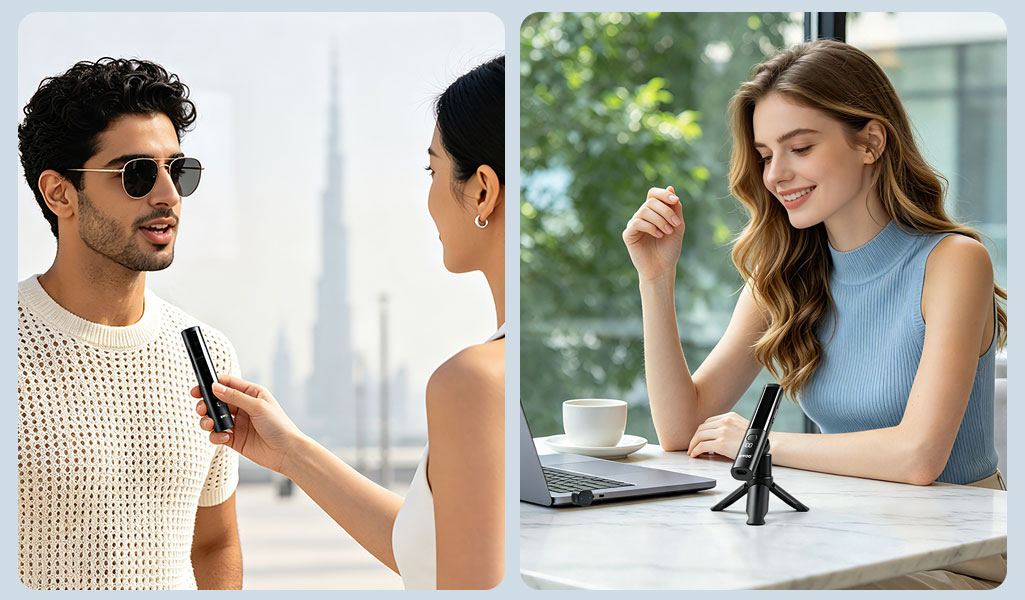
The driver is simple: mobile video now runs on the voice. Platforms reward clear audio, and phone built-in mics cannot handle wind, background noise, or distance. A wireless clip-on microphone solves all three at a price point that creators, educators, and small businesses can justify.
Market signals confirm the trend. Search volume for terms such as wireless lavalier microphone and clip on microphone has remained at high heat through 2025 into 2026, while the creator economy's total addressable audience keeps expanding across TikTok, YouTube Shorts, Instagram Reels, and livestream commerce. For B2B buyers, this translates into a product with:
Broad, non-seasonal demand across content creators, podcasters, online teachers, and business presenters.
Visible quality differences that let distributors upsell by tier.
A clear path from single unit to multi-pack and kit sales (mic + receiver + charging case).
Understanding the Product Tiers
Wireless clip-on microphones come in distinct feature tiers. Knowing the tiers lets a distributor stock a deliberate price ladder rather than competing on a single low-end SKU.
Tier | Typical configuration | Ideal buyer profile | Retail positioning |
Entry | 1 mic + receiver, plug-and-play | First-time creators, vloggers | Budget-friendly, easy demo |
Mid | 2 mics + charging case | Interviewers, podcasts, dual-person shoots | Best value, most popular |
Premium | AI noise reduction / advanced DSP | Livestream commerce, professional creators | High margin, differentiated |
Specs That Matter for B2B Buyers
Audio Quality: Noise Reduction Is the New Battleground
The single most marketable spec in 2026 is AI or DSP noise reduction. Clean audio in noisy environments — streets, cafés, trade shows — is what separates a good clip-on mic from a phone's built-in mic. The BO-MF02 with AI noise reduction targets creators who record in uncontrolled environments and need background chatter suppressed automatically.
Battery & Charging Case: The 2-Mic Kit Differentiator
For interviews and podcasts, a two-mic kit with a charging case is the volume product. A case that tops up both mics between shoots solves the real-world pain of dead batteries mid-recording. The BO-MF03 wireless lavalier microphone with charging case addresses exactly this workflow.
Connectivity & Range
Confirm the connection method (BT, 2.4GHz receiver dongle, or USB-C receiver) and rated range. 2.4GHz receiver-based systems typically offer more reliable, lower-latency audio than plain BT and work with phones, cameras, and computers alike — worth verifying with the supplier for the use cases you target.
A Real Anchor: The BO-MF05
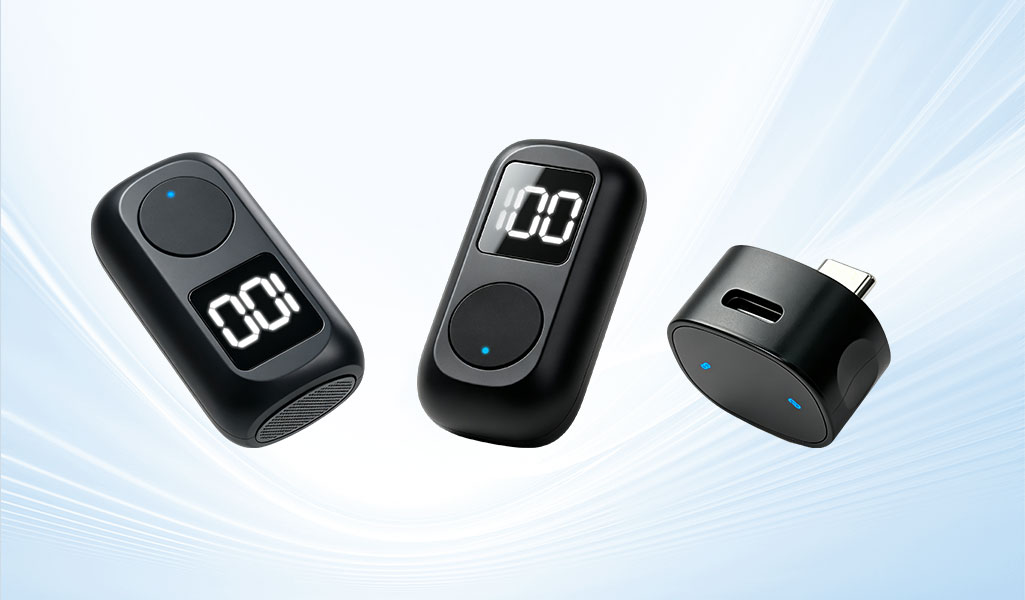
For B2B buyers who want to enter the category quickly without a custom-development cycle, the BO-MF05 is a ready anchor. Already listed in BWOO's audio/other lineup, the BO-MF05 gives distributors a proven SKU with immediate sample availability, certifications, and bulk supply.
From a portfolio standpoint, the wireless microphone line also complements BWOO’s existing audio ecosystem. A distributor already stocking TWS earbuds and headphones can layer in clip-on mics to serve adjacent creator and professional-audio demand, increasing average order value per customer without adding a completely unrelated category.
Sourcing Checklist for Wireless Clip-On Microphones
Before placing a bulk order, verify:
Certifications: CE, FCC, RoHS (and regional equivalents) with valid certificates on file.
Latency: Confirm the rated audio latency for livestreaming and video sync; sub-30ms is the practical target.
Compatibility: Check iOS/Android phone compatibility, plus camera and computer support where relevant.
Noise reduction claim: Ask which DSP/AI algorithm is used and request a demo recording in a noisy environment.
Customization: Logo printing on the mic body, charging case, and retail packaging; private-label programs starting at reasonable MOQs.
Bundling: Whether the supplier can pack 2-mic kits or multi-pack sets that raise per-order value.
FAQ
Q1: Are wireless clip-on microphones compatible with iPhone and Android?
Yes. Most 2026 models connect via a USB-C receiver or BT and work with both iOS and Android phones, as well as computers and cameras. Confirm receiver compatibility with the supplier for your target devices.
Q2: How do clip-on mics handle background noise?
Entry-level mics rely on basic noise cancellation; mid and premium tiers add AI/DSP noise reduction that suppresses background chatter while keeping the speaker’s voice clear. Models like the BO-MF02 are built around AI noise reduction.
Q3: What is the practical wireless range?
Typically 10–30 meters line-of-sight depending on the system (BT vs 2.4GHz receiver). Receiver-based systems usually offer more stable range and lower latency for livestreaming.
Q4: Can I get a two-mic kit with a charging case?
Yes. Two-mic kits with charging cases are the most popular B2B configuration for interviews and podcasts — for example, the BO-MF03 with charging case.
Send Inquiry: Ready to add wireless clip-on microphones to your audio lineup?
Contact BWOO for samples of the BO-MF05, BO-MF03, and BO-MF02 — request a demo recording and bulk pricing today.


