




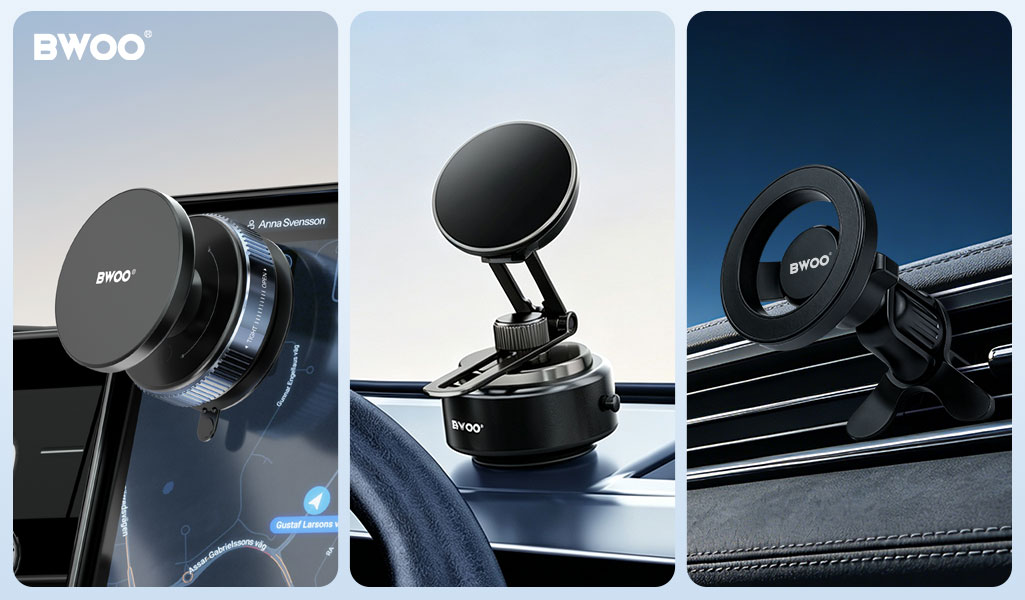
A car phone mount is one of the most frequently used accessories a driver owns — yet the difference between a mount that stays put for years and one that falls off on a hot day often comes down to a single decision: the fixing method. With three dominant attachment types on the market and new technologies like electric vacuum suction entering the conversation, B2B buyers need a clear framework for understanding which fixing methods suit which vehicle types, climates, and customer expectations. This guide compares adhesive dashboard pads, suction cups (manual and electric), and air vent clips across the factors that matter most to end users.
Why the Fixing Method Defines the Mount Category
In the car phone mount market, the fixing mechanism is the product category. It determines installation complexity, dashboard compatibility, temperature tolerance, and — most critically — return rates. A mount with excellent phone-gripping and wireless charging features will still generate returns if it cannot stay attached to the customer's particular dashboard. For B2B distributors, stocking a mix of fixing methods means covering the broadest vehicle compatibility and reducing the most common cause of customer dissatisfaction.
Method 1: Air Vent Clip Mounts
Air vent clip mounts attach to the horizontal or vertical blades of a vehicle's air conditioning vent. They are the most popular fixing method globally due to their combination of low cost, instant tool-free installation, and near-eye-level phone positioning — ideal for navigation visibility without taking eyes off the road. The critical quality distinction is in the clip mechanism: metal hook designs that engage the back of the vent blade significantly outperform plastic clamps that grip the blade face. Metal hooks resist deformation from heat cycling and maintain grip even when the vent blade material softens in summer temperatures. The trade-off is vehicle compatibility: horizontal-blade vents are nearly universal, but some modern vehicles — notably Tesla, BYD, and other EVs with minimalist dashboards — use vertical or hidden vent designs where clip mounts do not function. Additionally, vent mounts block airflow to that specific vent, which some drivers find unacceptable in extreme weather.
Method 2: Suction Cup Mounts (Manual)
Manual suction cup mounts use a lever or twist-lock mechanism to create a vacuum seal against smooth, non-porous surfaces — primarily windshields and glossy dashboard panels. The advantage is versatility: they can be positioned on the windshield (legal in most jurisdictions, though some states restrict windshield placement), on a smooth dashboard section, or on an included adhesive mounting disc applied to a textured surface. Modern industrial-grade suction cups using thick, UV-resistant silicone with lockable arms achieve holding forces of 50-85 pounds — far exceeding the weight of any phone. The limitation is surface compatibility: textured or grained dashboards (common in trucks and SUVs) defeat the vacuum seal, and extreme temperature fluctuations can cause gradual loss of suction over days or weeks, requiring periodic reattachment. Manual suction mounts typically retail in the $15-30 range.
Method 3: Electric Vacuum Suction Mounts (New for 2026)
Electric vacuum suction represents the newest evolution in fixing technology. These mounts incorporate a miniature electric pump that actively evacuates air from the suction chamber, creating significantly stronger negative pressure than manual lever mechanisms. Some models include a pressure sensor that monitors seal integrity and automatically re-pumps if pressure drops — effectively eliminating the gradual suction loss problem. Electric vacuum mounts can adhere to lightly textured surfaces that defeat traditional suction cups, expanding dashboard compatibility. The trade-off is cost (typically $35-60 retail) and the need for periodic USB charging of the pump battery. For the premium automotive accessory segment, electric vacuum suction offers a compelling 'never fall off' value proposition that justifies the higher price point.
Method 4: Adhesive Dashboard Pads
Adhesive dashboard pads solve the textured-surface problem that suction cups cannot. A flat, smooth mounting disc or pad uses 3M VHB (Very High Bonding) or similar industrial adhesive to permanently attach to any dashboard surface — textured, curved, or leather. A suction cup or magnetic mount then attaches to this smooth pad surface. Adhesive pads are the universal solution for 'difficult' dashboards, including Tesla and other EV interiors where vents and smooth surfaces are limited. The installation is semi-permanent: the pad can be removed with heat and adhesive remover but leaves no damage when properly removed. For B2B buyers, including an adhesive pad in the package alongside a suction mount effectively future-proofs the product against vehicle compatibility complaints. This approach — adopted by brands like ESR in their MagSafe car mount charger — has become the de facto standard for premium mount kits.
Comparison at a Glance
Installation speed: Vent clip (instant) > Suction cup (5-10 seconds) > Adhesive pad (1-2 minutes for initial cure) > Electric vacuum (10-15 seconds). Dashboard compatibility: Adhesive pad (any surface) > Electric vacuum (lightly textured+) > Vent clip (horizontal-blade vents only) > Manual suction (smooth/glossy only). Temperature resilience: Adhesive pad (excellent once cured) > Electric vacuum (good with auto-pump) > Metal-hook vent clip (good) > Manual suction (degrades in heat). Price tier: Vent clip ($5-15) < Manual suction ($15-30) < Adhesive+suction combo ($20-35) < Electric vacuum ($35-60).
BWOO's Car Mount Solutions
BWOO addresses the full spectrum of fixing methods with two complementary products. The BO-ZJ162 Magnetic Air Vent Phone Holder uses a metal-hook clip mechanism for instant, secure attachment to horizontal vent blades, paired with a strong magnetic phone plate system (or direct MagSafe attachment for compatible phones). The BO-ZJ163 15W Wireless Charging Magnetic Car Phone Holder combines Qi-certified wireless charging with a versatile mounting system that supports both vent clip and adhesive dashboard pad installation — giving end users the flexibility to mount on their preferred surface. Both products reflect BWOO's approach of designing products that solve real installation challenges rather than shipping a single-method mount and hoping it fits.
Conclusion
The fixing method is the foundation of car phone mount design, and no single method covers all vehicles. B2B buyers who stock mounts across the vent clip, suction cup, and adhesive pad spectrum — or better yet, products that combine multiple methods in one package — will see lower return rates and higher customer satisfaction. BWOO's multi-method approach with the BO-ZJ163, combined with the dedicated vent-clip BO-ZJ162, provides coverage across the widest range of vehicle interiors.


