



From Backup Accessory to Digital Lifeline
In 2026, a power bank is no longer just a backup accessory. With the widespread adoption of 5G networks and the rapid growth of AI-powered smartphones, mobile devices now consume significantly more power than ever before.
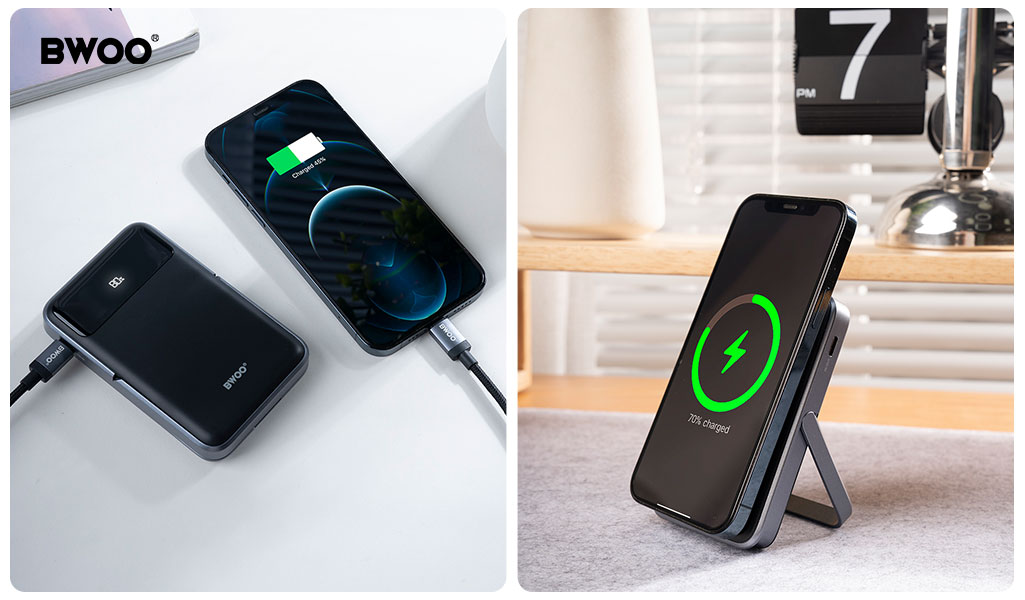
As a result, the modern power bank has evolved into a personal energy hub. It is no longer simply a battery pack, but a device that integrates magnetic wireless charging, high-speed two-way charging, and intelligent power management.
This guide explains the most important power bank technologies of 2026, helping both consumers and wholesalers understand what specifications truly matter when choosing the next generation of portable chargers.
1. Core Technology Standards in 2026
Understanding the latest charging standards is essential. Without them, buyers may end up purchasing products that quickly become outdated.
Qi2 Magnetic Wireless Charging
The Qi2 magnetic charging standard has become one of the most important upgrades in portable energy devices.
Qi2 introduces precise magnetic alignment between the power bank and the smartphone. This alignment improves charging efficiency and reduces energy loss caused by misplacement.
Key advantages include:
Faster wireless charging speeds (typically 15W–25W)
Improved thermal control and reduced overheating
More stable charging during movement
For many modern smartphones, Qi2 magnetic charging provides a convenient way to charge without cables while maintaining reliable performance.
PD 3.1 High-Power Fast Charging (140W+)
Power banks are no longer designed only for smartphones.
The USB Power Delivery 3.1 (PD 3.1) protocol enables power outputs up to 140W or even 240W, making it possible for portable chargers to power high-performance devices such as laptops, tablets, and gaming devices.
With this technology, a high-capacity power bank can support:
Smartphones
Tablets
Ultrabooks
Professional laptops such as MacBook Pro
For professionals who travel frequently, this capability transforms the power bank into a portable power station for multiple devices.
GaN (Gallium Nitride) Integration
Another important advancement is the use of GaN (Gallium Nitride) power chips.
GaN technology improves energy efficiency and reduces heat generation, allowing manufacturers to design smaller power banks with higher output power.
For example, modern 20,000mAh power banks can now maintain compact sizes while still supporting high-speed charging for several devices simultaneously.
2. A New Energy Revolution: Semi-Solid-State Batteries
Battery safety remains one of the biggest concerns for power bank users. New battery technologies are helping address these concerns.
Improved Safety
Many high-end power banks in 2026 are beginning to adopt semi-solid-state battery technology.
Compared with traditional lithium-ion batteries, semi-solid-state batteries use less flammable liquid electrolyte, which improves thermal stability and reduces safety risks.
This design provides stronger resistance to:
Physical pressure
Internal short circuits
Thermal instability
As a result, these batteries are considered safer and more reliable for portable energy devices.
Better Performance in Extreme Temperatures
Semi-solid-state batteries also perform better in harsh environments.
Even in temperatures as low as -20°C, they can maintain stable power output. This makes them particularly useful for outdoor activities such as:
Skiing
Mountaineering
Winter travel
Longer Battery Lifespan
Traditional lithium batteries typically support around 500 charge cycles before noticeable capacity loss.
Semi-solid-state battery systems can reach 2,000 cycles or more, significantly improving product lifespan and sustainability.
3. Intelligent Power Management and Smart Interaction
Modern power banks are becoming more interactive and informative.
Real-Time Power Monitoring
Instead of the traditional four LED indicators, many premium power banks now feature full-color LCD displays.
These displays can show detailed information such as:
Remaining battery percentage
Estimated charging time
Real-time input and output power
Battery health status
This level of transparency allows users to manage their portable energy more effectively.
App Connectivity and Smart Control
Some advanced power banks also support mobile app connectivity, enabling users to access additional features such as:
Locating the power bank if misplaced
Monitoring battery status remotely
Optimizing charging strategies to extend battery life
Smart connectivity turns the power bank into a connected device within a broader personal tech ecosystem.
4. How to Choose the Right Power Bank in 2026
Different lifestyles require different portable charging solutions. Here are some practical recommendations based on typical user scenarios.
For Daily Commuters
City commuters usually need a lightweight and portable device that can quickly top up their smartphones during the day.
Recommended specifications:
Capacity: 5,000–10,000mAh
Ultra-slim design
Magnetic wireless charging support
Built-in charging cable for convenience
Recommended product:
BWOO 5000mAh Magnetic Power Bank Ultra-Slim (BO-P79)
For Business Travelers
Frequent travelers often carry multiple devices, including smartphones, tablets, and laptops. In this case, higher capacity and stronger output power are essential.
Recommended specifications:
Capacity: 20,000mAh
Output power: PD 45W or higher
Multiple charging ports for simultaneous charging
Built-in charging cables for convenience
Recommended product:
BWOO 20000mAh PD45W Power Bank with Built-in Charging Cables (BO-P78)
For Outdoor Adventurers
Outdoor users need devices that can operate reliably in challenging environments.
Recommended features include:
IP68 water and dust resistance
Rugged protective structure
Emergency solar charging capability
These features ensure the power bank remains reliable during camping, hiking, or other outdoor activities.
Conclusion
Understanding power bank technology in 2026 is not only about achieving faster charging speeds. It is also about improving safety, efficiency, and sustainability in our increasingly mobile digital lives.
With innovations such as Qi2 magnetic charging, PD 3.1 high-power output, GaN technology, and semi-solid-state batteries, the modern power bank has evolved into a powerful and intelligent energy solution.
For consumers and distributors alike, staying informed about these technologies is the key to selecting products that will remain relevant in the years ahead.


