



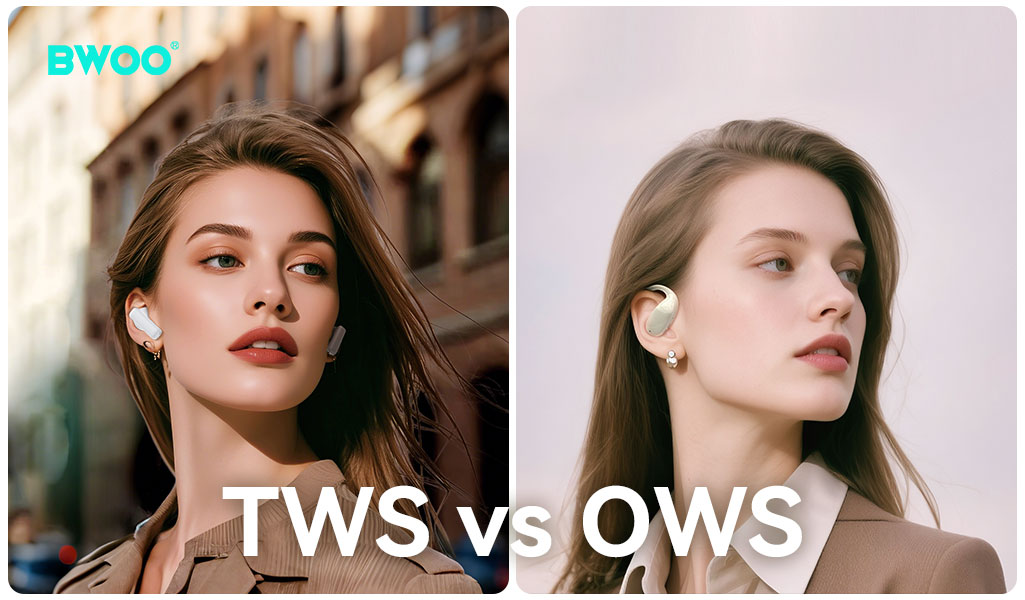
In today's fast-paced audio market, wireless earbuds have become essential for music lovers, professionals, commuters, and athletes. Among all categories, True Wireless Stereo (TWS) earbuds and Open-Wear Stereo (OWS) earbuds are the most discussed options. For both brands and consumers, understanding the differences between TWS and OWS is crucial for choosing the right audio product.
This article dives into what TWS and OWS are, how they differ, and how to choose the right type based on real-world usage needs.
What Are TWS Earbuds?
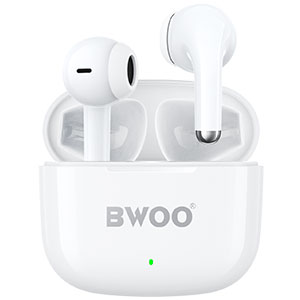
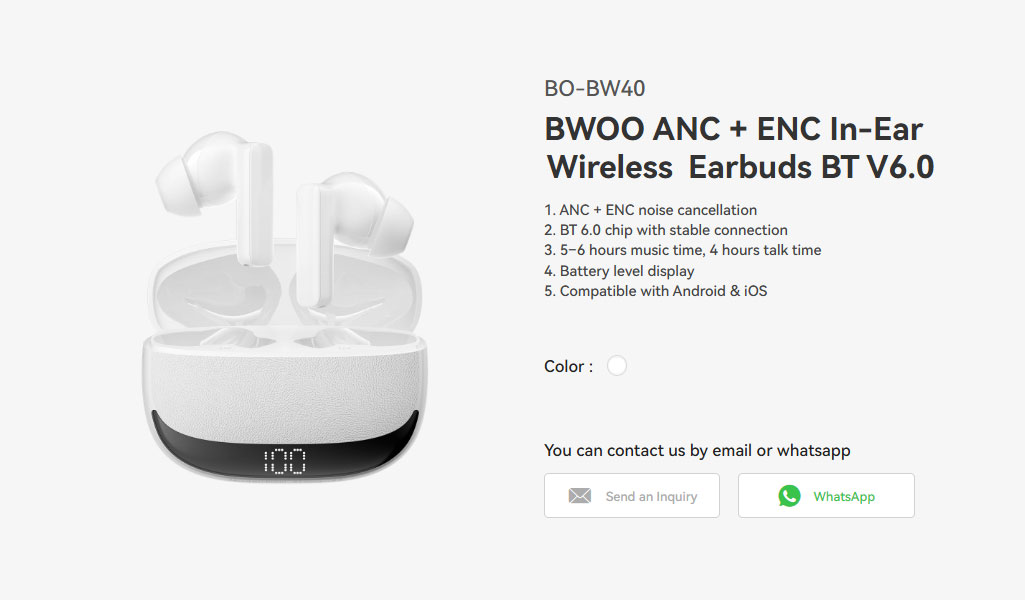
TWS (True Wireless Stereo) earbuds are completely wireless headphones that use BT to transmit stereo sound to each earbud independently. They have become mainstream due to their portable size, strong sound isolation, and wide compatibility.
Key Features of TWS
Complete wireless freedom with no cables between earbuds
Strong passive noise isolation due to in-ear sealed design
Rich bass and immersive sound
Compact charging case for additional battery cycles
Touch or button controls for calls and music
Ideal for commuting, calls, travel, and daily use
What Are OWS Earbuds?
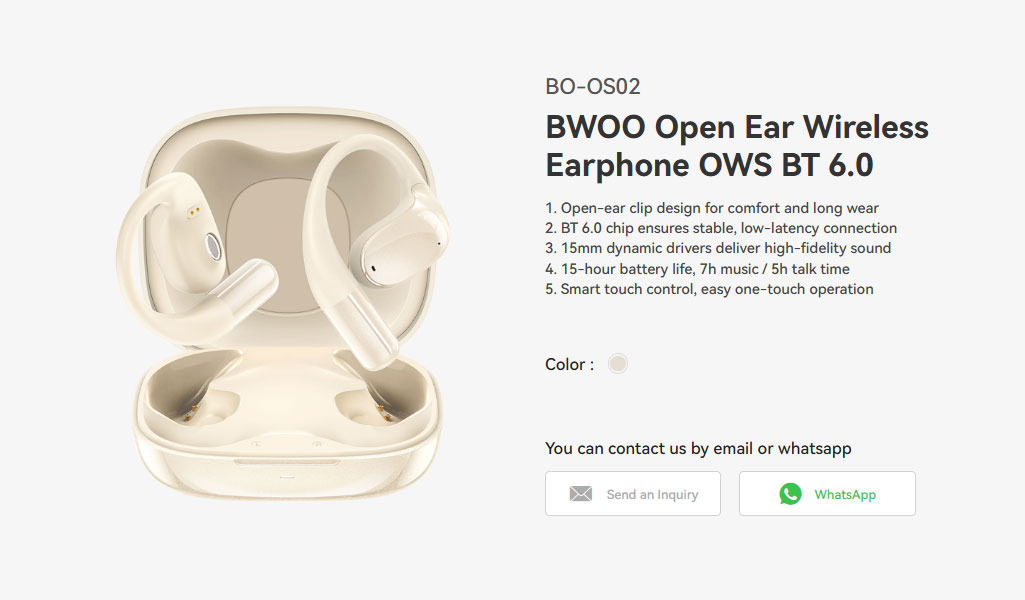
OWS (Open-Wear Stereo) earbuds are open-ear headphones designed to sit outside the ear canal. Instead of sealing the ear, they allow users to hear both the audio and the surrounding environment.
Key Features of OWS
Open-ear design that does not block the ear canal
Excellent environmental awareness for outdoor activities
Lightweight and pressure-free fit
Often use air-conduction drivers instead of bone conduction
Ideal for running, cycling, outdoor workouts, and office use
TWS vs. OWS: Side-by-Side Comparison
Category | TWS (True Wireless Stereo) | OWS (Open-Wear Stereo) |
Design | In-ear sealed, compact | Open-ear, sits outside the canal |
Environmental Awareness | Low; isolates noise | High; keeps surroundings audible |
Stability During Movement | Secure fit but may loosen in intense workouts | Very stable for running/cycling due to ear-hook/open frame |
Battery Life | Varies; usually shorter per charge but supported by charging case | Longer continuous playtime because of larger body space |
Audio Experience | Enhanced bass, immersive listening | More natural, spacious sound but lighter bass |
Target Users | Commuters, travelers, office users, casual listeners | Runners, cyclists, outdoor users, people who dislike in-ear pressure |
Category | TWS (True Wireless Stereo) | OWS (Open-Wear Stereo) |
Design | In-ear sealed, compact | Open-ear, sits outside the canal |
Environmental Awareness | Low; isolates noise | High; keeps surroundings audible |
Stability During Movement | Secure fit but may loosen in intense workouts | Very stable for running/cycling due to ear-hook/open frame |
Battery Life | Varies; usually shorter per charge but supported by charging case | Longer continuous playtime because of larger body space |
Audio Experience | Enhanced bass, immersive listening | More natural, spacious sound but lighter bass |
Target Users | Commuters, travelers, office users, casual listeners | Runners, cyclists, outdoor users, people who dislike in-ear pressure |
Pros and Cons of TWS and OWS
Pros of TWS
Immersive sound with deep bass
Good noise isolation for focused listening
Highly portable with pocket-sized case
Great for calls and everyday entertainment
Cons of TWS
Reduced awareness of surroundings
Some users may feel in-ear discomfort
Stability varies depending on ear shape
Pros of OWS
No ear canal pressure; ultra-comfortable
High environmental awareness—safer for outdoor sports
Stable fit with large ear-hook designs
Ideal for long hours of wear
Cons of OWS
Bass response is typically weaker
Sound leakage may occur at high volume
Less immersive compared to sealed in-ear models
How to Choose Between TWS and OWS Earbuds
Choosing the right type depends on your personal needs, environments, and comfort preferences. Below is a practical guide based on real usage scenarios.
Usage Scenarios
Choose TWS if:
You need immersive sound for commuting, traveling, studying, or office calls.
Choose OWS if:
You exercise outdoors, run, cycle, or need constant awareness of surroundings.
Battery Life
TWS: Case extends overall battery but each session is shorter.
OWS: Typically offers longer single-session playback due to larger built-in batteries.
Comfort & Fit
TWS: Comfortable for most users but may cause pressure for some.
OWS: Best for long-term comfort, no in-ear discomfort, stable during intense movement.
Audio Quality
TWS: Better bass, isolation, and detail—best for music lovers.
OWS: Natural and open sound—ideal for light listening and workouts.
Conclusion
Both TWS and OWS earbuds serve different user needs. TWS excels in audio immersion, noise isolation, and portability, making it great for daily use and entertainment. OWS, on the other hand, is perfect for outdoor activities, comfort, and safety thanks to its open-ear design.
Understanding their strengths helps consumers choose the right earbud type while helping brands position their products more effectively in the evolving wireless audio market.
Related readings:
Noise Cancelling vs. Transparency Mode


