

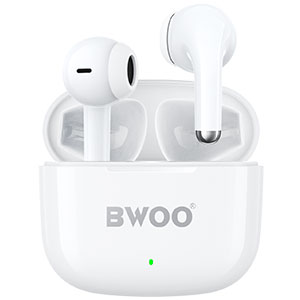



Every day we face a layered soundscape: traffic and engine rumble on the commute, quiet but distracting office chatter, or the ping of notifications while trying to concentrate. Headphones today are more than music players - they're tools to control what reaches your ears. Google Trends shows rising interest in terms like “active noise cancelling”, “transparency mode” and “noise cancelling headphones” over recent years. This signals more users are looking for ways to either block out or stay aware of their environment - whether students wanting quiet study sessions, commuters seeking a calmer ride, or remote workers needing clearer calls. This article explains what ANC and transparency mode are, how they work, their pros and cons, typical use cases, and how a switchable solution (ANC + transparency) gives the most flexible listening experience.
What is Noise Cancellation - and how do headphones implement it?
Active Noise Cancellation (ANC) uses microphones to “listen” to ambient sound, then generates an inverted audio signal ("anti-noise") that destructively interferes with the unwanted sound before it reaches your ear. This works especially well for steady, low-frequency noises (aircraft engines, bus rumble, HVAC hum). There are different ANC architectures (feedforward, feedback, hybrid) depending on whether microphones sit outside the earcup, inside the ear canal, or both - hybrid systems usually perform best across a wider range of noises. ANC is an active, powered process (it uses battery and DSP).
What is Transparency Mode?
Transparency mode (sometimes called Ambient or Ambient Sound mode) intentionally lets external sounds pass through the headphones into your ears. The same microphone array used for ANC is repurposed to capture ambient audio, which is then processed and mixed with your playback so you can hear announcements, traffic, or a conversation without removing the earbuds/headphones. Well-implemented transparency aims to sound natural (not “microphone-y”) and may include features like voice emphasis or adaptive leveling.
Pros & cons - ANC vs Transparency Mode
Active Noise Cancellation (ANC)
Pros
Excellent at reducing steady, low-frequency noise (e.g., airplane engines, bus/train rumble), improving perceived loudness of music and lowering listening volume needs.
Enhances focus in noisy environments, and can reduce listening fatigue on long trips.
Cons
Less effective for mid/high-frequency, irregular sounds like nearby human voices or abrupt noises.
Uses battery and DSP - turning ANC on reduces runtime.
Some users notice a slight pressure or “seal” sensation with strong ANC (depends on tuning).
Transparency Mode
Pros
Restores situational awareness: lets you hear announcements, traffic, or nearby speech without removing the headphones. Useful for safety (street crossing) and quick conversations.
Often implemented with processing that makes ambient sound natural and clear, sometimes with voice boost features.
Cons
Passes through environmental noise - so it is not suitable when you want complete quiet.
Because it actively captures and replays external sound, it also consumes battery.
Use-case comparison - which mode for which scenario?
Airplane / long-haul travel:
ANC - blocks engine rumble and cabin noise so music/movies are clearer and you can listen at lower volumes.
City walking / crossing streets:
Transparency Mode - keeps you aware of traffic and announcements; safer than fully occluding sound.
Office open-plan / café studying:
Depends - ANC for focus (blocks distant chatter and HVAC). But use Transparency when someone calls your name or for short interactions.
Phone/VoIP calls:
Depends - ANC improves microphone input by reducing background noise for the speaker, while Transparency lets you monitor your environment and remain aware - many modern earbuds allow quick switching or have adaptive modes that do this automatically.
Gym / running:
Depends - some users prefer Transparency for safety; others prefer ANC combined with open-ear designs. Consider local laws and safety.
BWOO products that combine both modes
BWOO offers models that support both ANC and Transparency mode so users don't have to choose - they can switch depending on the moment.
Suggested copy for product spotlights:
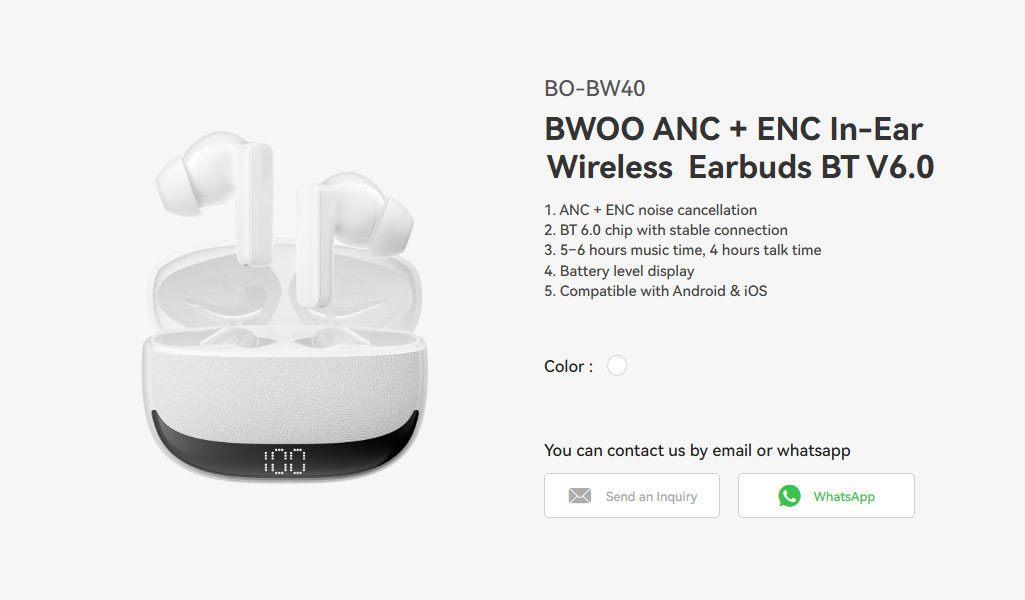
BW40 - ANC In-Ear True Wireless Earbuds
The BW40 delivers hybrid ANC for effective rumble reduction and a clean Transparency mode for safe, natural-sounding passthrough during conversations and street use.
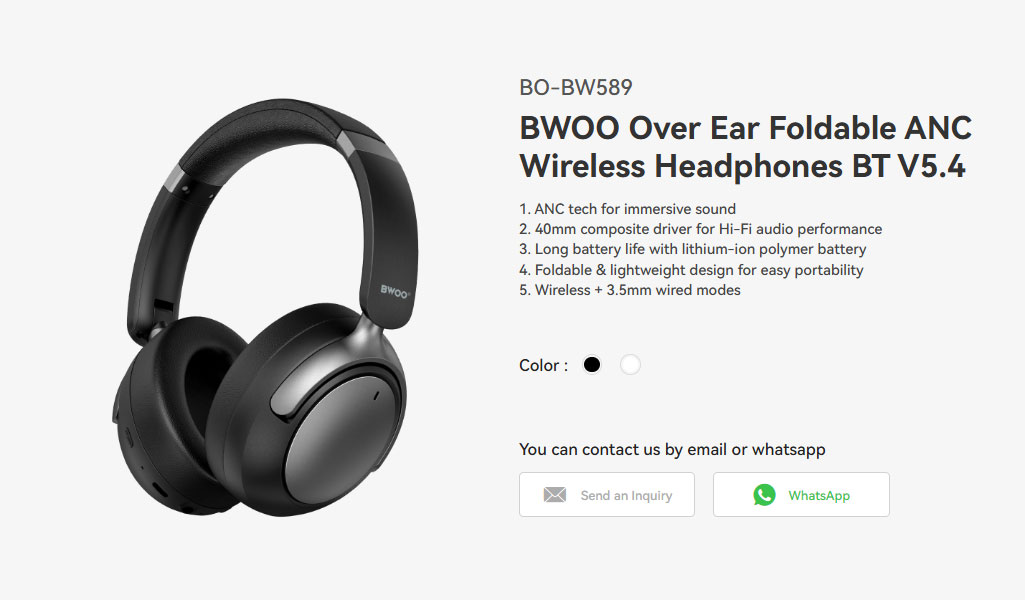
BW589 - ANC Over-Ear Headphones
The BW589 pairs strong low-frequency noise reduction with an adaptive Transparency implementation - perfect for travelers and office workers who need both deep quiet and situational awareness.
Conclusion - Not an either/or choice
ANC and Transparency mode solve different problems: ANC removes steady background noise to help you focus or enjoy media quietly, while Transparency returns environmental sound so you stay aware and can interact without removing your earbuds. The best practical choice for most users is a headphone or earbud that supports both modes and makes switching fast and intuitive - that way you can tailor your listening to the moment.
Related readings:


