






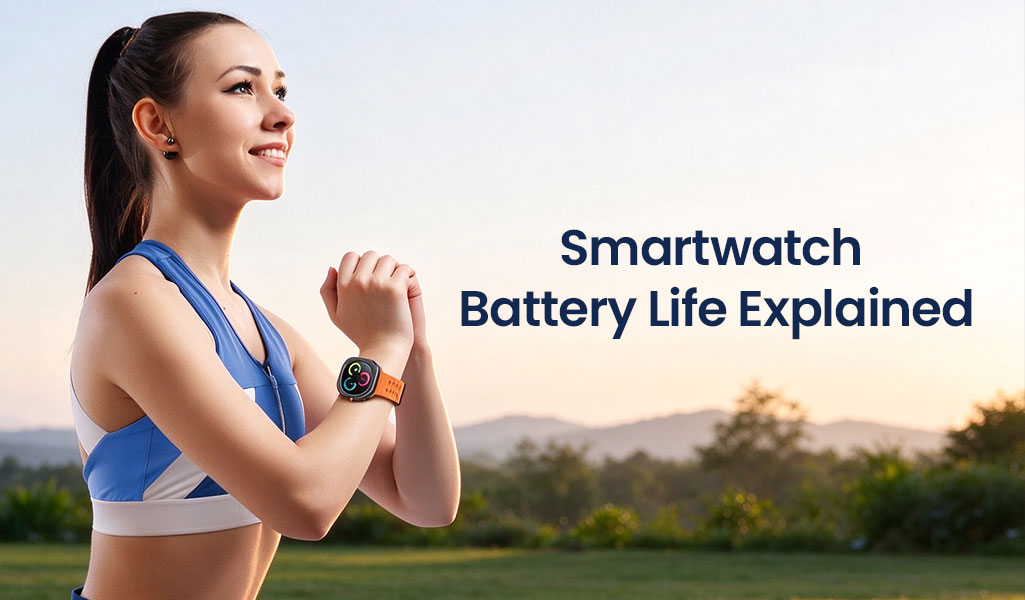
Battery life is one of the first questions buyers ask when comparing smartwatches. A larger battery number may look attractive on a specification sheet, but milliamp-hours alone do not tell the whole story. Real-world runtime depends on the screen, sensors, wireless connections, software settings and the way the watch is used.
The market is also moving in more than one direction. Omdia reported that global wearable band shipments declined 2% year over year in Q2 2026, while smartwatch shipments grew 6%. Its analysis highlighted demand for more advanced sports watches and devices offering multi-day battery life. For brands and distributors, battery performance is therefore both a practical user benefit and a product-positioning factor.
1. Battery Capacity Is Only the Starting Point
Battery capacity is commonly shown in mAh. It describes the amount of electrical charge a battery can store under its rated conditions, but runtime depends on how quickly the device consumes energy. Two watches with different mAh values cannot be ranked fairly without considering their display size, components, firmware, settings and test conditions.
A smartwatch with a larger, brighter display or more frequent sensor sampling may use more energy than a simpler model. Conversely, software optimization and lower-power components can help a device deliver longer runtime from a smaller battery. Capacity should be compared alongside operating time and the conditions under which that time was measured.
2. The Main Factors That Affect Daily Runtime
Display size, brightness and always-on settings
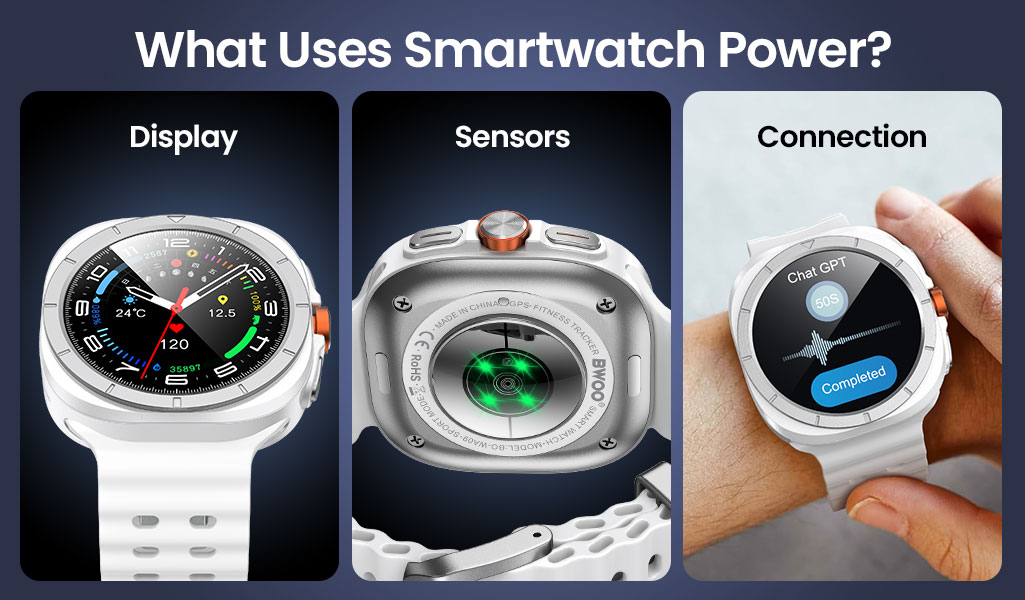
The screen can be one of the largest sources of power consumption during active use. A larger display, high brightness, frequent wake-ups and an always-on display setting can increase energy use. A watch that spends more time with its screen off may last longer than one used for frequent notifications and screen interactions.
Health sensors and monitoring frequency
Heart-rate monitoring, blood oxygen estimation and sleep tracking use sensors and processing. More frequent or continuous measurements can consume more energy than occasional checks. The exact impact depends on the sensor design, measurement schedule and software. For background, BWOO has separate explainers on how smartwatches measure heart rate and how smartwatches measure blood oxygen.
For a product example, the BWOO BO-WA08 smartwatch lists heart-rate and SpO2 tracking among its functions, while the BO-WA09 smartwatch lists a 400mAh battery and published working-time and standby-time figures. These model pages can help buyers connect feature sets with runtime claims, but the actual battery impact still needs to be assessed under defined settings.
Sports modes and location services
Workout tracking can increase power use, especially when a watch records activity frequently or uses connected location services. Buyers should confirm whether a model uses its own positioning hardware, relies on a paired phone, or offers different tracking modes. Do not assume that every smartwatch has built-in GPS simply because it lists multiple sports modes.
Calls, notifications and wireless connections
Watches that handle calls, receive frequent messages, synchronize apps or maintain continuous connections with a phone may use more power than watches used mainly for time, steps and occasional checks. Vibration alerts, audio features and frequent app synchronization can also affect runtime.
3. Working Time and Standby Time Are Not the Same
Product pages may list both working time and standby time. These figures describe different usage patterns. Working time generally refers to a period when the watch is being used under a stated or assumed set of functions. Standby time refers to a lower-activity state with limited interaction. A long standby figure should not be presented as the number of days a user can expect during normal daily use.
The current BWOO product pages provide two examples:
Model | Published battery data | Published runtime wording |
BO-WA09 | 400mAh | 8–10 days working time; 60 days standby |
BO-WA05 | 230mAh | 5–7 days normal use; 10–15 days theoretical standby |
These figures are published model specifications, not results from a controlled side-by-side test. They should not be used to claim that one model is more efficient simply because its battery capacity is larger or smaller. The display, sensor configuration, firmware and usage assumptions may differ.
4. How Buyers Should Evaluate Battery Claims
For distributors comparing models, the most useful approach is to request the test conditions behind the runtime statement. Ask whether the estimate assumes a fixed display brightness, limited notifications, specific health-monitoring intervals, no long calls, and a defined number of workouts or screen activations per day.
Check whether the page distinguishes typical working time from standby time.
Ask which functions were enabled during the runtime test.
Confirm whether screen brightness and always-on display were fixed or disabled.
Ask how calls, notifications, sensor sampling and sports tracking affect the stated estimate.
Test a production sample under a repeatable daily-use pattern that matches the intended customer.
It is also useful to compare battery life with the intended retail segment. A basic lifestyle smartwatch may prioritize notifications, step tracking and a readable display. A more advanced sports watch may trade some runtime for frequent measurements and richer activity features. The right balance depends on the buyer's target customer.
5. Match Battery Performance to the Product Positioning
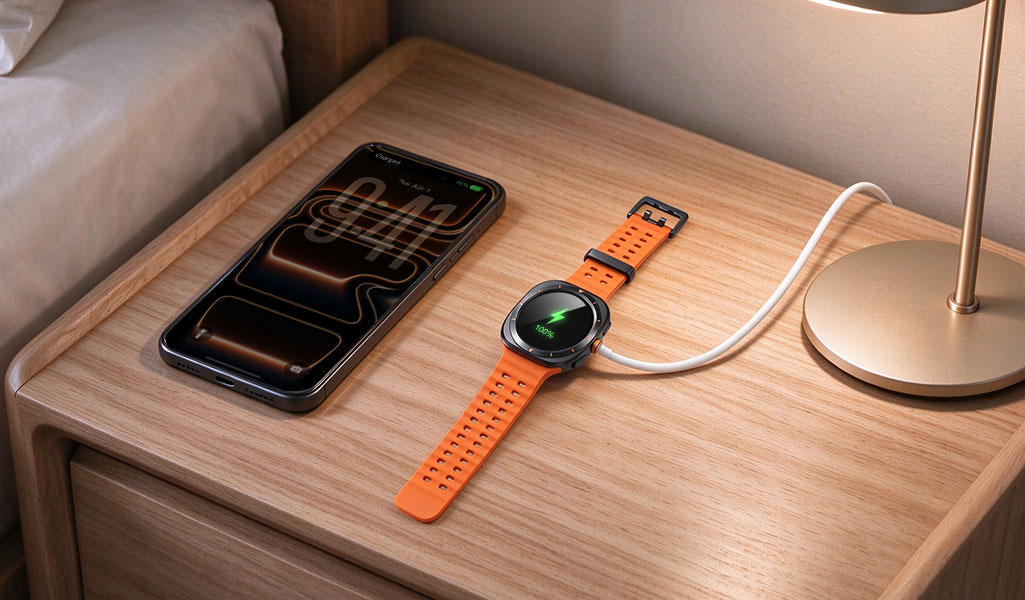
A smartwatch with many features is not automatically the best choice for every channel. Some customers value a large screen and frequent interaction; others prefer simple tracking and fewer charging interruptions. Buyers should compare battery capacity, working time, standby time, display, sensor functions and app compatibility as a complete product proposition.
To review the current range, browse the BWOO Smart Watch collection and examine the model-level details for BO-WA09 and BO-WA05. Confirm the latest specification sheet before preparing market listings or retail packaging.
Conclusion
Real-world smartwatch battery life is determined by more than the mAh number on a product page. Display behavior, sensor schedules, activity tracking, calls, notifications and software settings all influence how often a watch needs charging. For B2B buyers, the most reliable comparison combines battery capacity with model-specific working-time claims and clearly stated test conditions.
FAQ
Does a larger smartwatch battery always last longer?
No. Capacity is only one factor. Display power, sensor usage, wireless connections, software and daily interaction all influence runtime.
What is the difference between working time and standby time?
Working time describes runtime under a defined or assumed use pattern. Standby time describes a lower-activity state. Standby figures should not be presented as typical daily-use runtime.
Does continuous heart-rate or SpO2 monitoring use more battery?
More frequent sensor sampling can use more energy than occasional measurements. The actual impact depends on the watch hardware, measurement schedule and software.
Can sports modes reduce smartwatch battery life?
They can, depending on which sensors, location functions and screen updates are active. Check which features are used by each mode and whether the product uses its own or a paired phone's location services.
How should a distributor verify a battery-life claim?
Request the test conditions, including brightness, monitoring intervals, call and notification activity, sports tracking and screen usage. Then test a sample using a repeatable routine that represents the target customer.


