



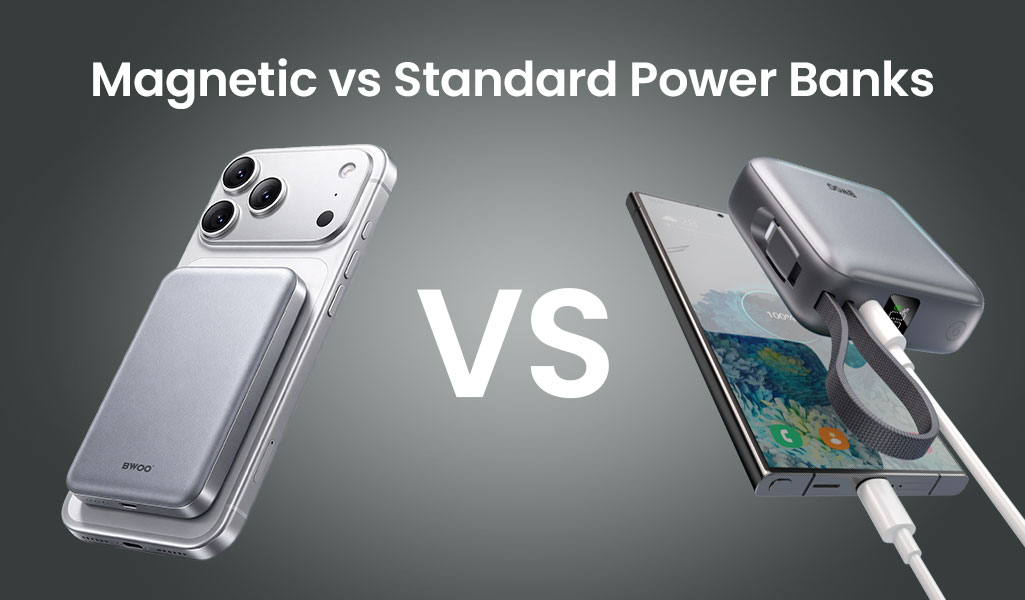
Magnetic and standard power banks solve the same basic problem—keeping devices powered away from a wall outlet—but they prioritize different kinds of convenience. A magnetic model can attach to a compatible phone and support wireless charging, while a conventional model usually relies on a cable plugged into a USB output. Some products combine more than one approach, so the label alone is not enough to understand the full configuration.
For a retailer or distributor, the question is not simply which type is better. It is which mix makes sense for the customer, price tier and use scenario. A pocketable magnetic model may appeal to customers who value a compact, cable-light setup. A higher-capacity conventional model may be more suitable for longer trips, multiple device top-ups or users who prioritize stored energy and wired output.
The Main Differences Buyers Should Explain Clearly
1. Compatibility comes before convenience
Magnetic attachment is not the same as universal compatibility. Users need a phone or accessory arrangement that supports the relevant magnetic alignment and wireless charging behavior. A compatible case or magnetic ring may be needed for some devices, and the result can vary with the case, alignment, phone generation and charging standard. Buyers should ask for the supported-device list and the exact conditions behind any magnetic compatibility claim.
The BWOO BO-P84 product page describes it as a Qi2 15W 5,000mAh magnetic power bank, with USB-C wired output listed up to 20W. The BO-P79 is listed as a 5,000mAh ultra-slim magnetic model with a 15W wireless output and up to 20W USB-C wired output. These details make useful model examples, but buyers should verify the current product sheet and device compatibility before publishing a listing.
2. Wireless and wired charging behave differently
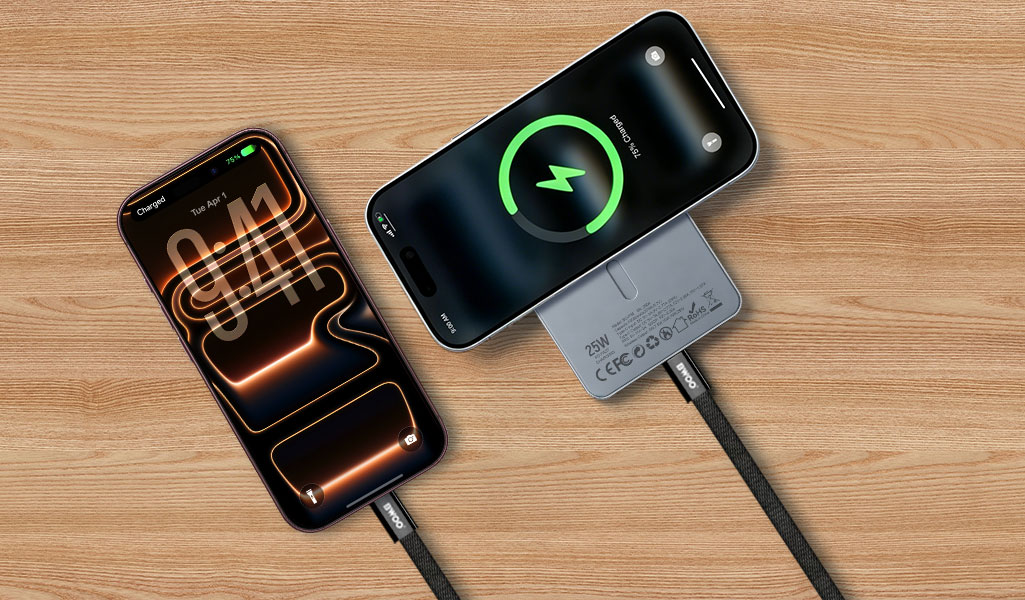
A magnetic power bank can reduce cable handling, but wireless charging depends on alignment and typically creates more heat than a comparable wired connection. Actual charging power can change with the receiving device, battery level, temperature and charging control. This is why the printed maximum should be explained as a supported capability under specified conditions, not a promise that every device will draw that power continuously.
For more context, link this comparison to BWOO's existing article on why wireless chargers get hot. The aim is not to discourage wireless charging; it is to help the buyer explain the trade-off clearly and set realistic user expectations.
3. Capacity is only one part of the buying decision
A higher mAh figure may appeal to users who need more energy, but capacity should be considered alongside rated output, size, weight, ports and the products that will be charged. A compact 5,000mAh magnetic model may be a better fit for a pocket or short daily outing, while a larger conventional model with built-in cables or several outputs may suit travel or multi-device use.
BWOO's power-bank capacity guide explains why battery capacity and rated output capacity are not the same. The earlier built-in cable power bank buying guide is also relevant when a buyer is choosing convenience features beyond magnetic attachment.
Quick Comparison: Which Use Cases Fit Each Type?
Buying factor | Magnetic power bank | Standard / non-magnetic power bank |
Main convenience | Attach-to-phone style use; fewer loose cables when the phone and case are compatible. | Flexible wired charging across compatible devices with a suitable cable. |
Compatibility check | Phone support, magnetic alignment, case thickness, charging standard and supported output. | Connector type, supported charging protocols, maximum output and cable compatibility. |
Typical product priority | Thin profile, low weight, magnetic stability, wireless output and usable wired backup. | Capacity, wired output, number of ports or built-in cables, and overall size/weight. |
Best-fit retail scenario | Everyday carry, commuters, lifestyle-focused or premium mobile accessory shelves. | Travel, higher-capacity use, value tiers, multi-device charging or cable-based use. |
Buyer risk to verify | Magnetic hold, temperature behavior, actual supported phone/case combinations. | Output sharing, cable quality, usable capacity, port combinations and supported protocols. |
How to Build a More Useful Retail Assortment
Instead of buying only one type, many distributors can evaluate a small range that covers distinct customer jobs. The exact mix should come from sales history, price bands, local device use and the retailer's merchandising strategy—not from an assumption that one design will replace the other.
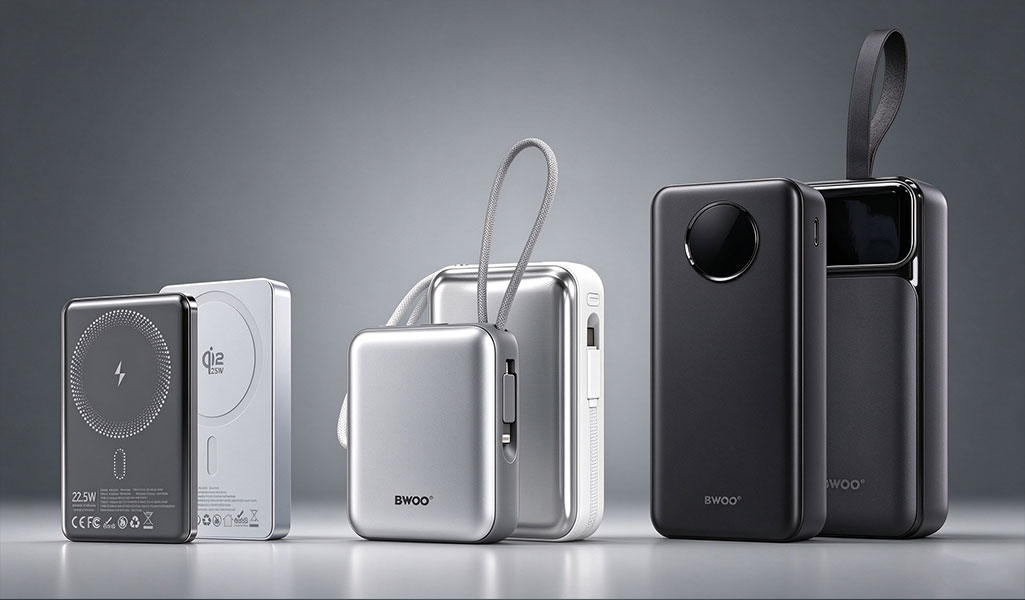
Compact magnetic option: a slim model that emphasizes attachment, portability and quick everyday top-ups. Use the real product size and weight from the current specification sheet.
Mainstream wired option: a non-magnetic model with a clear capacity and USB output position for customers who prefer cable charging.
Multi-device or travel option: a larger model with multiple outputs or built-in cables, provided port allocation and supported connector types are clearly explained.
For examples of conventional designs, the BWOO BO-P70 lists a 10,000mAh capacity and dual USB-A outputs, while the BO-P73 lists 20,000mAh, a digital display and built-in cables. They represent different product positions and are not direct same-capacity comparisons with the magnetic models above.
Questions to Ask Before Placing a Bulk Order
Which phone models, cases and charging standards are included in the supported-device list?
What are the maximum wireless and wired outputs, and under what conditions are they available?
What is the battery capacity and rated capacity, and what are the dimensions and weight?
How does the product manage heat during extended wireless charging? Which test data is available?
What model-specific compliance and transport documents are required for the intended market?
Are product images, packaging labels and online claims consistent with the current production version?
If you are building a category range, start from the live BWOO Power Bank collection and compare the model-specific pages rather than relying on a category headline. Buyers preparing a larger supplier comparison can also use the brand-screening framework in the B2B mobile accessory brand guide.
Conclusion
Magnetic and standard power banks have overlapping but different roles. Magnetic designs emphasize convenient attachment and wireless use; conventional designs often offer straightforward wired charging, a wider set of connector options or larger capacities. The right assortment is the one that fits the customer's device compatibility, charging habits and price expectations. Confirm model-level output and documentation before turning a product feature into a sales promise.
FAQ
Is a magnetic power bank compatible with every phone?
No. Compatibility depends on the phone, case, magnetic alignment and supported wireless charging standard. Verify the model-specific list before purchase.
Is wireless charging always slower than wired charging?
Not in every device combination, but maximum supported power and real-world performance differ by product. Alignment, temperature, phone behavior and charging protocol all matter.
Is a magnetic power bank better for travel?
It may be convenient for short daily trips and cable-light use. For longer travel or multiple devices, capacity, wired output, weight and connector options may be more important.
How should buyers compare capacity?
Check both the battery capacity and the rated output capacity, plus the test conditions. See BWOO's mAh and rated-capacity guide.
Should retailers stock both designs?
That depends on the channel, sales data and target price bands. A small, clearly differentiated assortment is often easier to explain and manage than many nearly identical SKUs.


