



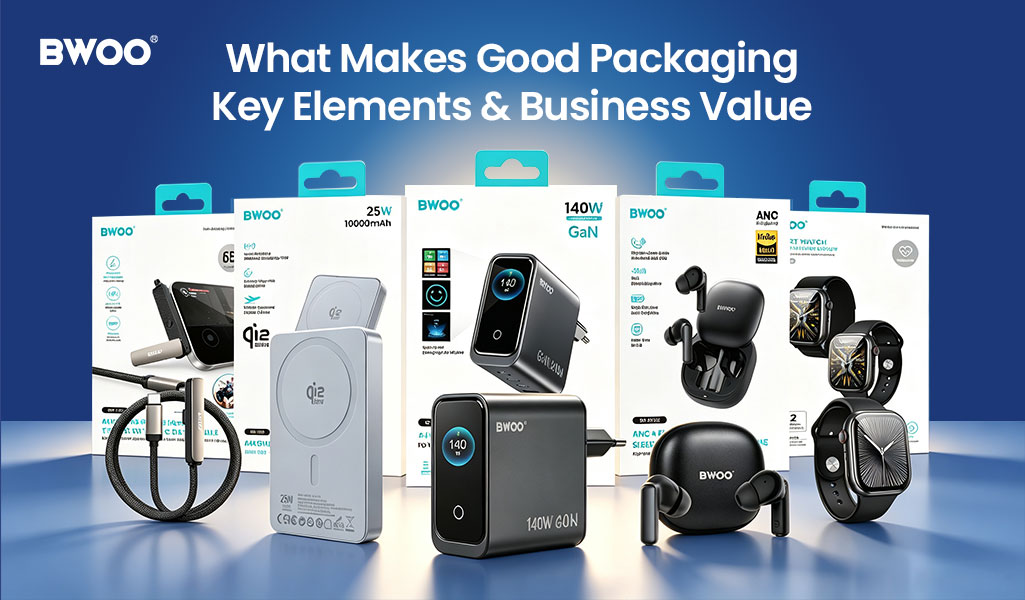
Ask most people what packaging is for and they will say “to protect the product.” That is only half the answer. In mobile accessories — a category where customers judge quality in seconds — good packaging is simultaneously a salesperson, a brand statement, and a protection layer. It raises perceived value before the product is even touched, it tells buyers the item inside was made with care, and it quietly prevents the returns that erode margins. For B2B buyers, wholesalers, and private-label brands, understanding what separates good packaging from merely functional packaging is a practical business skill: it affects how much you can charge, how many units come back, and how strongly your brand is remembered. This guide breaks down the elements that define good packaging, the business value it creates, and how a professional supplier can deliver all of them in one program.
Key Elements That Define Good Packaging
Good packaging is not a single feature — it is a system of decisions that work together. A box can be beautiful but fragile, or protective but unreadable. The best packaging balances all of the following elements, and a professional supplier helps you hit that balance deliberately rather than by accident.
Visual Attraction and Brand Recognition
The first job of packaging is to earn a second look. A strong visual hierarchy — clear product name, recognizable logo, consistent color system, and a design language shared across the whole product line — makes each SKU reinforce the brand instead of competing with it. On a crowded retail shelf or in a product gallery, packaging with a coherent identity is easier to notice, easier to remember, and easier to photograph well for e-commerce. Brand consistency across SKUs also lets a wholesaler present a unified range to retail partners, which strengthens negotiation position and shelf presence at once.
Product Protection
Protection is the non-negotiable foundation. Good packaging must survive the physical journey: buffer the product against drops, prevent impact damage during transport, and resist moisture and humidity where the product is exposed to varying climates. The practical proof of protection is drop testing — reputable accessory suppliers validate packaging with standard drop and compression tests, then match the internal structure (foam, paper inserts, or molded trays) to the fragility of the product. A box that protects consistently lowers damage claims, freight disputes, and the hidden cost of replacement units.
Clear Information and Compliance
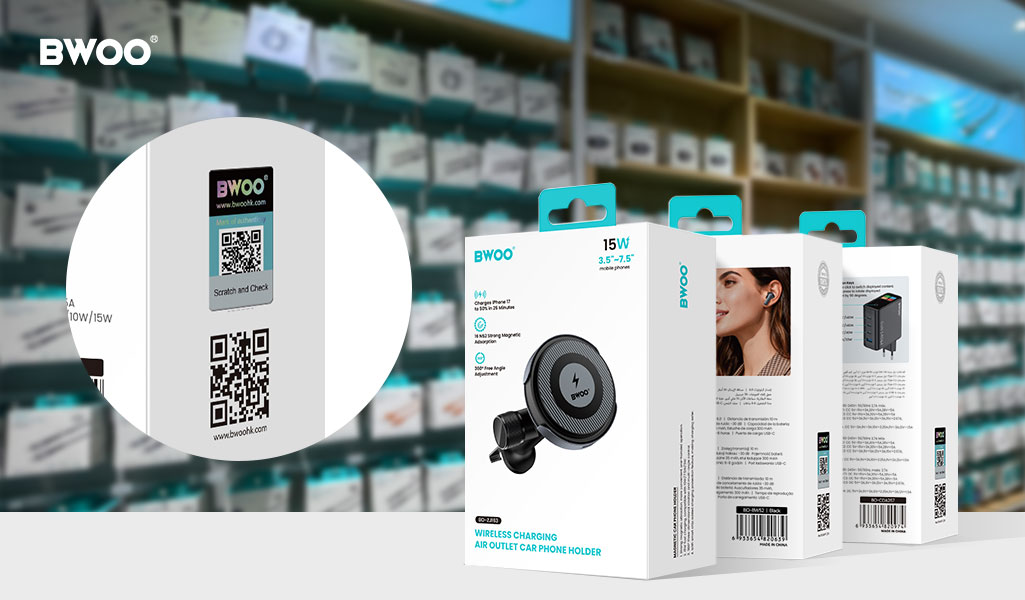
Packaging is also a communication surface. Good packaging carries the information buyers need at the moment of decision: product name and model, key specifications, capacity or performance figures, and the certification marks required by the target market. For regulated markets, compliance statements must be correctly placed so products clear customs and retail listing reviews without friction. Increasingly, packaging also carries anti-counterfeiting elements — verification codes, holographic labels, or serial numbers — that protect the brand and give retailers confidence they are stocking genuine goods. Clarity here is not decoration; it is operational.
Unboxing Experience
The unboxing experience is the first tactile contact a customer has with the brand. Good packaging opens easily without tools or struggle, holds the product in a neat, well-fitted insert so nothing rattles, and layers the reveal so the product arrives feeling intentional rather than dumped in a bag. In the era of unboxing videos and social sharing, a thoughtful unboxing experience is free marketing: customers photograph, film, and recommend products whose packaging makes them feel they bought something special.
Retail and Logistics Convenience
Packaging that looks good in a catalog must also work on a pallet. Good packaging accounts for retail display — a hang hole for pegboards, a footprint that stacks cleanly on shelves, a barcode and SKU label in the right position for scanning — and for logistics efficiency, with standard sizes that reduce void fill and dimensional-weight shipping charges. When packaging is designed for the supply chain as well as the shelf, distributors save real money on every shipment and every store replenishment.
Sustainability Trends
Sustainability is moving from optional to expected. Retail buyers increasingly ask about recyclable materials, and end consumers notice excessive plastic. Cost-effective moves include FSC-certified paper, soy-based inks, and removing unnecessary plastic windows or lamination. Sustainable choices can also lower packaging weight and freight cost, and they give distributors a credible story to tell retail partners. Good packaging today balances premium feel with environmental responsibility — the two are no longer opposites.
Cost and Customizability
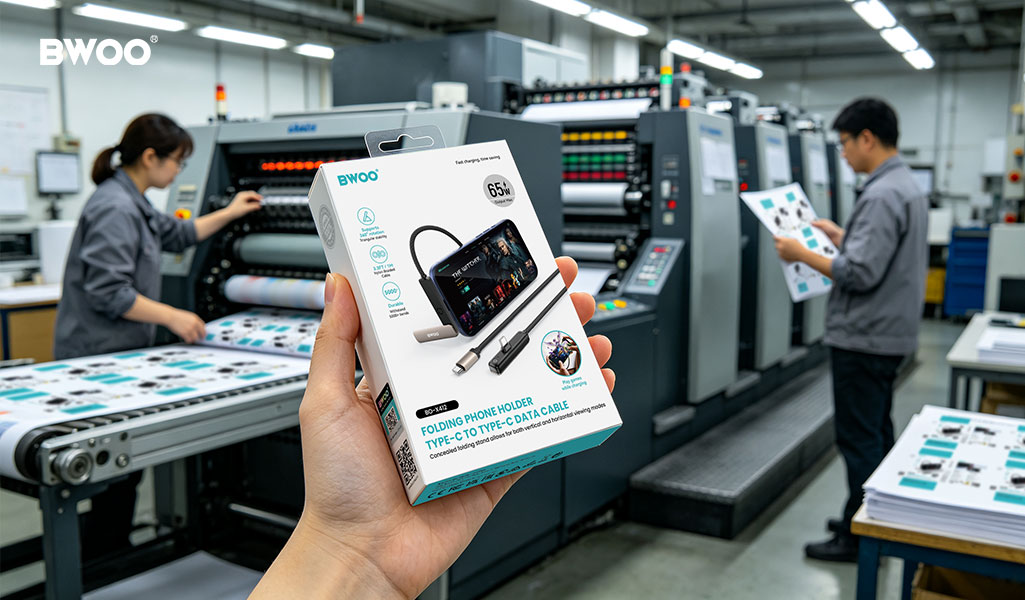
Finally, good packaging must make business sense. This means realistic sampling — verifying print quality, color, and structure on physical samples before committing to volume — and a clear understanding of how printing processes, materials, and finishing (matte or gloss lamination, spot UV, embossing) affect unit cost. It also means a reasonable MOQ that fits the distributor’s order pattern, so a premium program does not require a warehouse of boxes. A good supplier helps you choose the packaging tier that matches each product tier, rather than forcing one expensive solution on everything.
What Good Packaging Can Bring to Your Business
Once the elements are in place, packaging starts paying back in measurable ways. The value it creates touches price, returns, brand trust, and channel health.
Higher Perceived Value and Stronger Pricing
Perceived value is set before the product is unpacked. The same tempered-glass protector or cable can command a meaningfully different price depending on the box it arrives in. Premium packaging justifies higher terminal pricing in retail, supports a stronger wholesale pitch to sub-retailers, and reduces the pressure to compete on price alone. For distributors, packaging quality is effectively a margin tool — it lets you sell the experience, not just the component.
Lower Shipping Damage and Fewer Returns
Packaging pays for itself when it prevents damage-related claims, and it pays again when it prevents perception-driven returns. A structurally sound box keeps products intact through transit, lowering freight disputes and replacement costs. A premium presentation, meanwhile, reduces the “it feels cheap” returns that plague accessory categories — customers who receive a well-packaged product are more likely to keep it, review it well, and reorder.
Brand Protection and Channel Confidence
Anti-counterfeiting and tamper-evident features protect the brand across the channel. Scratch-off verification codes, holographic labels, and sealed structures let retailers and end customers confirm genuine stock, which protects premium pricing and keeps parallel or fake products from eroding the brand. For a manufacturer working with distributors, this is also a trust asset: partners feel safer building a business around a brand that actively protects its own identity.
Brand Trust, Repeat Orders, and Referrals
Consistent, high-quality packaging builds a memory. When every SKU arrives looking like part of one family, customers come to associate that look with quality, which drives repeat purchases and word-of-mouth referrals. In B2B distribution, the brand impression travels further — packaging seen at trade shows, in catalogs, and on retail shelves keeps the supplier top-of-mind for the next order cycle.
How BWOO Delivers Every Element
BWOO's packaging capability covers the full set of elements above, so B2B partners do not have to assemble a packaging program from multiple vendors. Our approach combines standard retail-ready packaging with fully customizable OEM packaging:
Packaging capability | BWOO offering | Which element it covers |
Custom printed box | Custom sizes, artwork, and finishing (matte/gloss, spot UV) | Visual attraction, brand recognition |
Anti-counterfeiting labels | Holographic labels, verification codes, tamper-evident seals | Brand protection, channel confidence |
Certification and compliance marks | Correct placement of required marks per market | Clear information, compliance |
Insert and inner lining design | Molded trays, foam or paper inserts matched to product | Product protection, unboxing experience |
Batch printing and artwork control | Multi-SKU packaging variants with disciplined control | Cost, customizability, logistics |
With standard retail packaging designed to be display-ready and e-commerce friendly, and an OEM program covering custom boxes, logo printing, anti-counterfeiting features, and multi-SKU packaging management, BWOO gives distributors a single point of control for packaging that sells. For an overview of the product range available with packaging options, browse our product categories. Partners sourcing screen protectors and cases can also see how packaging fits into a full accessory program in our guide to choosing screen protector manufacturers, and how coordinated packaging supports a unified range across categories such as USB-C hubs.
Frequently Asked Questions
Q1: Which element of good packaging matters most?
A: It depends on your channel, but protection and clear information are the non-negotiables — a damaged or mislabeled product fails no matter how beautiful the box is. On top of that foundation, visual attraction and unboxing experience drive the perceived value that supports pricing. In practice the best programs build all elements together, which is why working with a supplier that can control packaging, labeling, and compliance in one place, as BWOO does, simplifies the whole process.
Q2: What are the typical MOQ and sampling time for custom packaging?
A: MOQ varies with packaging complexity — a simple printed paper box generally has a lower MOQ than a rigid box or one with special finishing, and material choice also affects the minimum. Sampling typically takes a few working days plus shipping, with production lead time depending on order size and printing method. Request a formal quotation with MOQ, sample fee, and lead time from your supplier to compare programs.
Q3: How does packaging actually reduce returns?
A: Packaging reduces returns in two ways. Physically, a structurally sound box with proper inserts protects the product during transit, cutting damage-related returns and freight claims. Psychologically, premium presentation reduces the “it feels cheap” returns common in accessories — a well-packaged product feels like a keeper. Standardizing box sizes also lowers dimensional-weight shipping costs.
Q4: How can a small-batch distributor upgrade packaging without a large budget?
A: Focus on the highest-visibility SKUs first: replace plain poly bags with printed paper boxes on your best sellers, add a branded label or one-color print to existing packaging, and standardize box sizes to cut damage and freight. Reserve full custom rigid-box programs for the flagship SKU, and scale up as sell-through justifies the investment.
Build Packaging That Sells, Not Just Ships
Good packaging is not an expense to minimize — it is an investment that compounds. It protects the product, raises perceived value, reduces returns, defends the brand, and turns every delivery into a small brand moment. The decisive factor is whether your supplier can deliver all the elements together, with the right materials, the right finishes, and the right cost structure for your order pattern. BWOO covers standard retail packaging and fully customized OEM packaging across our accessory range, with anti-counterfeiting, compliance, and artwork control under one roof. Send Inquiry with your product range, target markets, and packaging goals to receive samples, a packaging capability overview, and a tailored quotation.


