



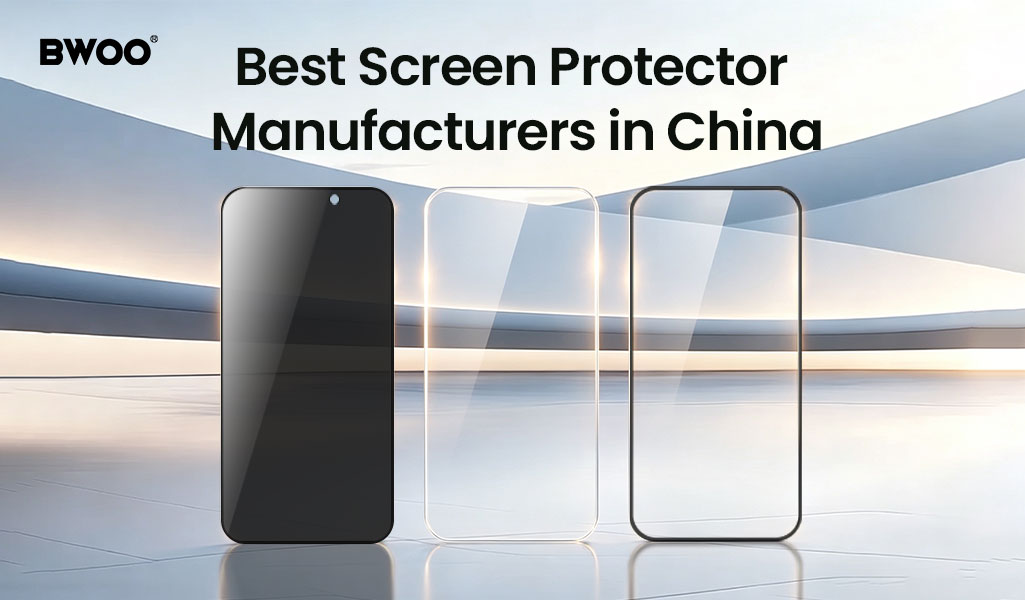
Screen protectors are among the highest-velocity accessories in the mobile aftermarket, yet they are also among the most quality-sensitive. A single production-line inconsistency — a weaker adhesive, a cloudier glass, a coating that wears off after a week — can turn into a wave of returns and negative reviews that damage an entire brand. For importers, distributors, and private-label buyers, choosing the right screen protector manufacturer in China is therefore not a commodity purchasing decision; it is a supplier-quality decision with direct impact on brand reputation. This guide explains the key quality indicators, the supplier evaluation framework, and how manufacturers in Shenzhen and Dongguan serve bulk buyers.
The Screen Protector Manufacturing Landscape in China
China's mobile-accessory supply chain is highly concentrated in the Pearl River Delta, with Shenzhen and Dongguan serving as the two dominant hubs. The ecosystem can be understood in layers rather than as a single type of factory:
Upstream glass suppliers: Companies such as Lens Technology and Biel Crystal, both based in southern China, produce the high-purity alkali-aluminosilicate glass (often referred to as “A” or “A+” grade glass) that feeds the entire tempered-glass value chain. Their scale sets the baseline for raw-material quality.
Coating and processing houses: Facilities that apply anti-fingerprint oleophobic coatings, hardening treatments, and edge-grinding. These specialist shops determine surface feel and durability.
Finished tempered-glass manufacturers: The factories in Shenzhen and Dongguan that combine cutting, CNC edge polishing, tempering, coating, and packaging into complete SKUs across hundreds of device models. This is the layer most B2B buyers actually source from.
Full-line accessory manufacturers: Companies like BWOO that additionally offer OEM/ODM services — custom logos, retail packaging, multi-SKU programs, and quality control across the entire process.
The key point for buyers is that the same city can host both world-class facilities and low-cost assemblers, so a Shenzhen or Dongguan address alone is not a quality guarantee. The supplier's process controls and testing infrastructure are what matter.
Critical Quality Indicators for Tempered-Glass Screen Protectors
Before evaluating suppliers, buyers need a shared vocabulary of quality. These are the indicators that separate a premium protector from a fragile one.
Hardness Rating (9H) — What It Really Means
The “9H” rating is the most quoted specification in the category, and also the most misunderstood. In the industry, 9H refers to a pencil hardness test: a 9H pencil is the hardest grade in the standard pencil scale, and a surface that resists scratching from a 9H pencil passes the test. It is not the same as Mohs mineral hardness, and it is not a guarantee against all scratches — a 9H surface can still be marked by harder materials such as sand or certain metals. When a supplier claims 9H, ask for the test method and, if possible, a test certificate; a genuine 9H coating should survive a standardized pencil-hardness scratch test.
Light Transmittance (≥92%)
A quality tempered-glass protector should maintain high clarity. The industry benchmark for high-end protectors is light transmittance of 92% or higher on the optical path, so that the screen's brightness, color accuracy, and readability are preserved. Low-quality glass or heavy multi-layer coatings can drop transmittance noticeably, making displays look dull. Request the transmittance spec and verify it on the production batch.
Oleophobic Coating
The anti-fingerprint, easy-to-clean surface feel comes from an oleophobic coating, typically applied via vacuum plating. The coating's durability is measured by how many wipe cycles it survives before the slippery feel degrades. Premium suppliers document coating thickness and test cycles; budget suppliers often skip the test, which is why cheap protectors become “fingerprint magnets” within weeks.
Thickness and Edge Quality
Mainstream tempered-glass protectors for phones range from roughly 0.3mm to 0.4mm, balancing drop protection with touch sensitivity and case compatibility. Edge quality matters just as much: a precisely CNC-polished, rounded edge feels comfortable, adheres evenly, and resists chipping, whereas a rough edge lifts at the corners and collects dust.
Dust-Free Adhesive and Application
A protector's value is only realized when it applies bubble-free. Leading manufacturers use dust-proof, auto-positioning adhesive layers and support “dust cabin” application methods that reduce dust entrapment during installation. This detail has a direct impact on end-user satisfaction, especially for bulk shipments destined for retail where users apply the film themselves.
How to Evaluate a Screen Protector Supplier for Bulk Orders
Certification and System Compliance
Start with the factory's management systems and material compliance. Relevant markers include ISO 9001 quality management certification, RoHS and REACH compliance for material safety, and, for specific markets, additional product-level certifications. These documents indicate that the factory has formal process controls rather than ad-hoc production.
In-House Testing Capability
Premium manufacturers maintain in-house laboratories that perform ball-drop and anti-explosion tests, hardness verification, transmittance measurement, and oleophobic durability checks. When evaluating a supplier, ask whether testing is performed in-house or outsourced, and request test reports for your target models. A factory with its own lab can react quickly to quality issues; one without it will simply forward your complaints upstream.
Sampling and MOQ Terms
Reliable suppliers offer prototyping so buyers can verify fit, clarity, and coating before committing to volume. Clarify the sample fee and timeline, and the minimum order quantity (MOQ) for production runs. Transparent MOQ and lead-time terms are a strong signal of a professional operation; vague or constantly moving terms are a caution flag.
Model Coverage and Speed of New-Release Response
In the phone-accessory market, the ability to cover a newly launched handset within days of its release is a competitive advantage. Ask the supplier about their model database, how quickly they tool up for new releases, and whether they cover flagship lineups across multiple brands — not just the most popular handset at any given moment.
BWOO: A Full-Coverage Screen Protector Manufacturer
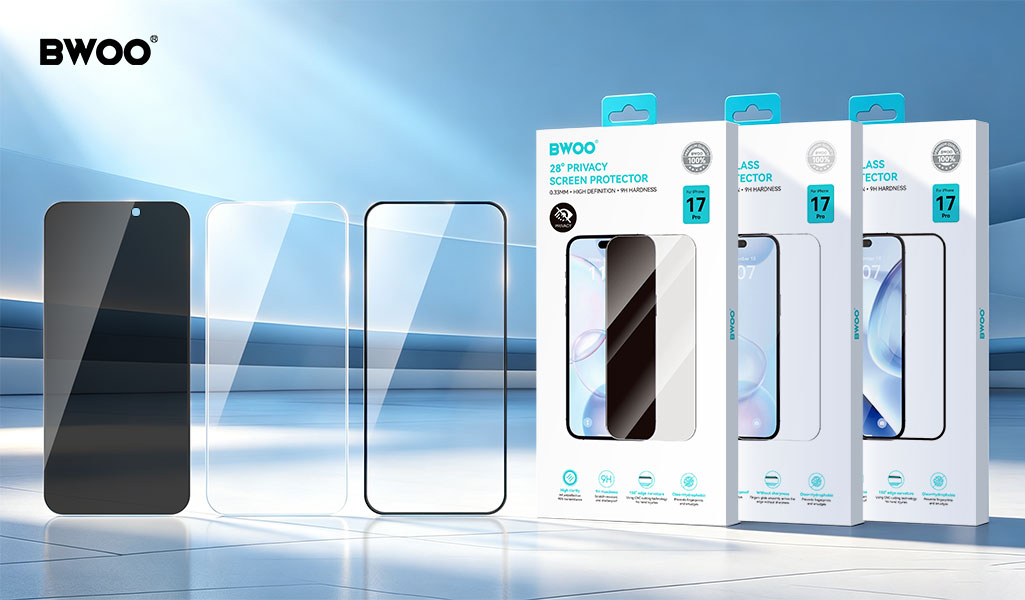
BWOO is one of the finished tempered-glass manufacturers serving B2B buyers from the Pearl River Delta, offering both standard retail lines and OEM/ODM customization. Our portfolio covers current flagship releases with both high-definition and privacy variants:
BO-IP16HD and BO-IP16AP — high-definition and anti-peep (privacy) tempered glass for iPhone 16 Pro Max.
BO-IP17HD and BO-IP17AP — high-definition and anti-peep tempered glass for iPhone 17 Pro Max.
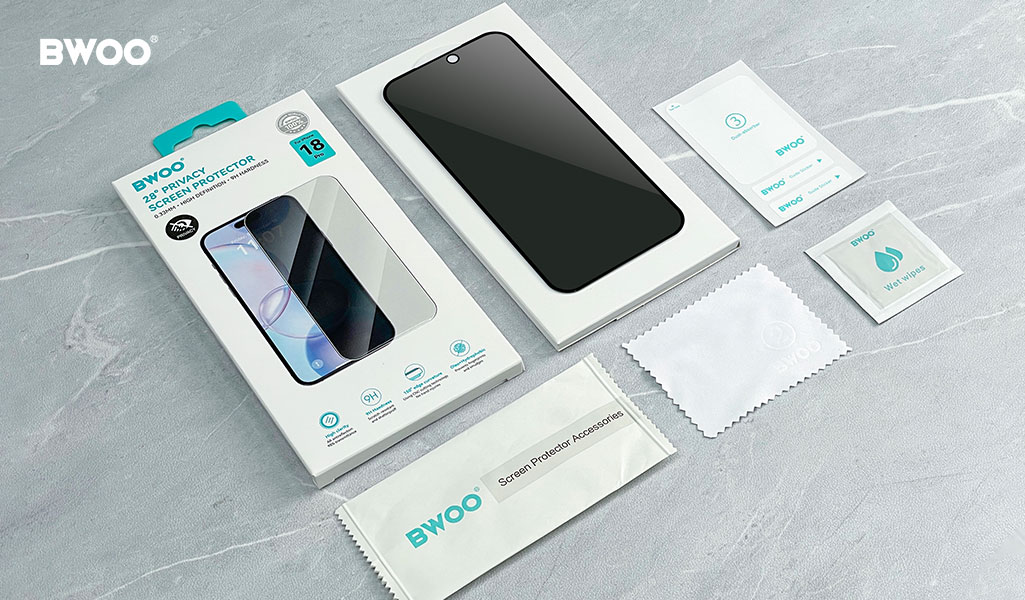
Every SKU is produced with A+ grade glass, an oleophobic coating, and CNC-polished edges, and is batch-tested for hardness, transmittance, and adhesion consistency before shipment. Buyers can browse the full accessory category, view the BO-IP17HD product page, or review our certification and compliance approach to understand the documentation we provide with each order.
Practical Sourcing Advice for Bulk Buyers
Order cross-model samples first: Sample two or three models at the same time — a flagship, a mid-range, and an older device — to check consistency, not just flagship quality.
Specify the quality bar in writing: Put transmittance, hardness test method, coating durability, and acceptable defect rate into the purchase contract, not just the email thread.
Plan for new-release waves: Time your ordering around handset launch cycles so your inventory covers demand spikes without overstocking.
Balance price against defect economics: A slightly cheaper protector that yields a 3–5% higher defect or return rate often costs more in the end than a cleaner premium batch.
Frequently Asked Questions
Q1: What does “9H hardness” actually mean, and how is it tested?
A: In the tempered-glass screen protector industry, 9H refers to the pencil hardness test — a 9H pencil is the hardest in the pencil hardness scale, and a surface that resists a scratch from it passes. It is not the same as Mohs mineral hardness, and it does not protect against every hard material. Buyers should ask for the standardized test method and, ideally, a certificate, rather than treating “9H” as an absolute promise.
Q2: How should I choose between privacy (anti-peep) and high-definition screen protectors?
A: Choose based on the use case. High-definition protectors maximize clarity, brightness, and color accuracy and suit most daily users. Privacy (anti-peep) protectors limit viewing angles so content is only clearly visible from directly in front, which suits commuters and professionals handling sensitive information. Note that anti-peep films typically reduce brightness slightly from wide angles, so weigh privacy against display quality for your target audience.
Q3: How do manufacturers ensure bubble-free application and high adhesion rates in bulk shipments?
A: Quality suppliers combine three controls: a dust-proof auto-positioning adhesive layer, precise edge and cut tolerances that match the device screen, and dust-cabin application methods that reduce dust entrapment. Batch consistency is verified through adhesion and application tests before shipment. Ask the supplier for their application success rate data and the defect threshold they guarantee for bulk orders.
Q4: What is the OEM customization process and MOQ for custom logo and packaging?
A: A typical OEM program covers logo printing on the protector or packaging, custom retail packaging design, and multi-SKU production across the models you stock. The process usually begins with a sample for approval, followed by confirmed artwork and a production run. MOQ varies by supplier and customization depth; established manufacturers such as BWOO quote clear MOQ and lead times per program. Request a formal quotation with MOQ, sample fees, and lead time to compare suppliers fairly.
Get Started with a Trusted Screen Protector Manufacturer
A dependable screen protector supplier is the difference between a low-return accessory line and a recurring customer headache. Whether you need high-definition or privacy protectors for flagship phones, a multi-model program, or full OEM branding, BWOO provides quality-controlled manufacturing, transparent MOQ, and export-ready compliance. Send Inquiry with your target models, quantity, and packaging requirements to receive samples and a detailed quotation.


