



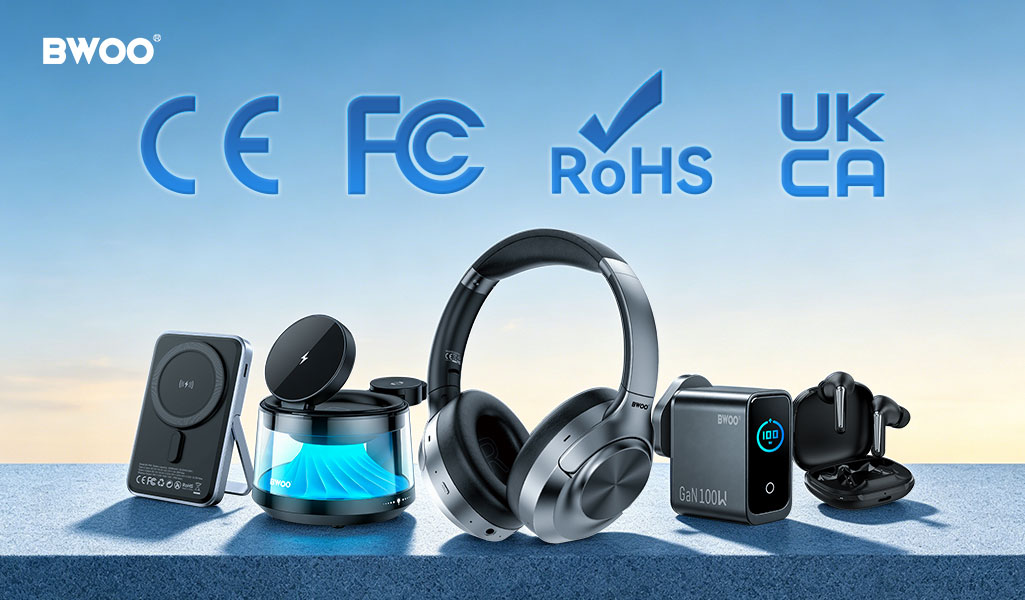
A comprehensive B2B guide to CE, FCC, RoHS, and UKCA certifications for mobile accessories importers, covering scope, testing requirements, common pitfalls, and how to verify supplier certification authenticity.
Why Certification Matters for B2B Mobile Accessories Importers
Certification is not a "nice-to-have" for mobile accessories — it is a legal requirement for market entry in the EU, US, UK, and many other regions. Non-compliant products can be seized at customs, subject to product recalls, and expose importers to liability claims. For B2B buyers building a private-label brand, certification is also a key differentiator that justifies premium pricing and builds retailer confidence.
In 2025, EU customs authorities seized over 34 million non-compliant electronic products at external borders, with mobile accessories accounting for 18% of total seizures (source: EUIPO). The most common reasons for seizure were missing or fake CE marks, lack of RoHS compliance documentation, and absence of UKCA marking for goods entering Great Britain.
1. CE Certification: The Gateway to the European Market
CE (Conformité Européenne) marking is mandatory for mobile accessories sold in the European Economic Area (EEA). The CE mark indicates that the product complies with applicable EU directives and regulations. For mobile accessories, the relevant EU legislation includes:
Radio Equipment Directive (RED) 2014/53/EU — applies to wireless earphones, wireless chargers, and any product with radio frequency transmission (BT, Wi-Fi).
Low Voltage Directive (LVD) 2014/35/EU — applies to chargers, power banks, and any product operating above 50V AC or 75V DC.
Electromagnetic Compatibility (EMC) Directive 2014/30/EU — applies to all electronic products that could emit or be affected by electromagnetic interference.
RoHS Directive 2011/65/EU (often handled as a separate certification, see Section 3).
CE Core Testing Items
Product Type | Key CE-RED Tests | Typical Test Time | Estimated Cost (USD) |
Wireless Earphones (BT) | RF output power, spectrum mask, receiver blocking, SAR (if ≤10mm) | 2–3 weeks | $1,200–$2,500 |
Qi Wireless Charger | RF conducted/radiated emissions, magnetic field strength, thermal test | 2–3 weeks | $1,500–$3,000 |
USB-C Charger (≤100W) | LVD safety (EN 62368-1), EMC emissions/immunity | 2 weeks | $800–$1,500 |
Power Bank (Li-ion) | LVD (EN 62368-1), UN 38.3, EMC | 3 weeks | $1,500–$2,800 |
Common CE Certification Mistakes
Self-declaration without testing: Some suppliers print a CE mark without any actual testing. This is illegal and can result in customs seizure and fines. A legitimate CE mark must be backed by a Technical File containing test reports from an accredited lab (SGS, TÜV, Intertek, or a notified body).
Using an outdated harmonized standard: EU standards are regularly updated. For example, EN 300 328 (for 2.4GHz BT/wireless) was updated to V2.2.2 in 2020. Products tested under older versions may not comply with current regulations.
Missing DoC (Declaration of Conformity): The importer (not the Chinese manufacturer) is legally responsible for issuing the DoC in the EU. Ensure your supplier provides a draft DoC that you can sign as the "importer" with your EU address.
2. FCC Certification: USA Market Entry
The Federal Communications Commission (FCC) regulates all radio-frequency devices in the United States. For mobile accessories, two main paths exist:
FCC SDoC (Supplier's Declaration of Conformity): For unintentional radiators (USB chargers, power banks without wireless). Requires testing to FCC Part 15 Subpart B. SDoC can be self-declared with test report.
FCC ID Certification: For intentional radiators (wireless earphones, wireless chargers). Requires testing at an FCC-recognized lab and filing through the FCC TCB (Telecommunication Certification Body) system. The FCC ID must be printed on the product and packaging.
FCC testing typically takes 2–4 weeks and costs $1,500–$3,500 depending on the product complexity. Note that FCC certification is product-specific: changing the antenna, RF module, or enclosure may require re-certification.
3. RoHS: Restriction of Hazardous Substances
RoHS (Restriction of Hazardous Substances) restricts the use of ten hazardous materials in electrical and electronic equipment. The current RoHS 2 directive (2011/65/EU) and RoHS 3 (2015/863) cover the following substances with maximum concentration limits:
Substance | Limit (by weight) | Common Sources in Mobile Accessories |
Lead (Pb) | < 0.1% | Solder, PCB components |
Mercury (Hg) | < 0.1% | Displays (rare in accessories) |
Cadmium (Cd) | < 0.01% | Batteries, contacts |
Hexavalent Chromium (Cr6+) | < 0.1% | Metal coatings, fasteners |
PBB (Polybrominated Biphenyls) | < 0.1% | Flame retardants in plastic |
PBDE (Polybrominated Diphenyl Ethers) | < 0.1% | Flame retardants in plastic |
DEHP, BBP, DBP, DIBP (phthalates) | < 0.1% each | Cable insulation, soft plastics |
RoHS compliance requires a "Technical Documentation" package including:
Bill of Materials (BOM) with material declarations from component suppliers;
Test reports from an accredited lab on finished product or critical components;
A RoHS Compliance Statement signed by the manufacturer. Many Chinese suppliers provide "RoHS-compliant" components but fail to provide the full documentation trail — always request the full Technical File.
4. UKCA Marking: Post-Brexit UK Requirements
Since January 1, 2021, Great Britain (England, Scotland, Wales) requires the UKCA (UK Conformity Assessed) mark for most products previously covered by CE. The UKCA mark has largely similar technical requirements to CE, but with key differences:
UKCA uses UK-specific designated standards (BS EN standards) rather than EU harmonized standards.
The importer's name and address must be printed on the product or packaging (for products imported from outside the UK).
The UKCA mark must be at least 5mm in height and clearly visible. A CE mark alone is not sufficient for Great Britain (though Northern Ireland follows different rules under the NI Protocol).
As of 2026, the UK government has extended the recognition of CE marks for most goods until December 31, 2027, but B2B importers targeting the UK market are advised to obtain UKCA certification proactively to avoid last-minute compliance risks.
5. How to Verify Your Supplier's Certification Authenticity
Counterfeit or forged certification documents are a known problem in the Chinese electronics supply chain. The following steps help B2B buyers verify authenticity:
Check the test report number on the issuing lab's website. SGS, TÜV Rheinland, Intertek, and UL all provide online verification portals. A legitimate report will have a unique certificate number and QR code.
Match the model number. Many suppliers reuse test reports for "similar" products. Ensure the test report explicitly lists your private-label model name/SKU, not just a generic OEM model.
Verify the lab accreditation. The lab must be accredited by the relevant national accreditation body (e.g., CNAS in China for CE reports accepted by EU). Check the accreditation scope on the lab's website.
Request the full Technical File, not just the certificate. A proper Technical File includes the test report, BOM with material declarations, circuit diagrams (for chargers), and risk assessment. If the supplier cannot provide these, the certification is likely incomplete.
6. Certification Comparison Summary
Certification | Region | Mandatory? | Testing Required? | Renewal |
CE | EU/EEA | Yes | Yes (by notified body or SDoC) | Valid while standard unchanged |
FCC ID | USA (wireless products) | Yes | Yes (TCB filing) | Product lifetime (unless modified) |
FCC SDoC | USA (non-wireless) | Yes | Yes (test report) | Product lifetime |
RoHS | EU + many others | Yes | Yes (or component-level) | Valid while BOM unchanged |
UKCA | Great Britain | Yes (post-Brexit) | Yes (similar to CE) | Valid while standard unchanged |
7. BWOO's Certification Support for B2B Partners
As a pure B2B mobile accessories brand with zero DTC channels, BWOO prioritizes compliance as a core competitive advantage for its distribution partners. Every BWOO product (chargers, power banks, earphones, cables) ships with a complete certification package:
CE (RED + LVD + EMC) test reports from TÜV or SGS, with Technical File available for importer's DoC issuance.
FCC ID or SDoC certification, with TCB grant letters and test reports provided.
RoHS 3 compliance documentation, including full BOM material declarations and lab test reports.
UKCA certification support for GB market entry, with UK-approved lab testing available upon request.
SASO (Saudi Arabia), GSO (GCC), and other regional certifications supported for Middle East market entry.
BWOO's transparent certification process means B2B buyers can confidently import and distribute products without fear of customs seizures or compliance gaps.


