

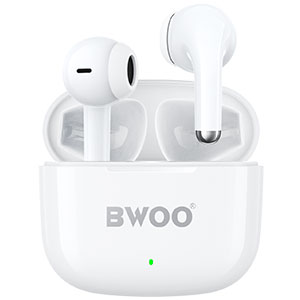


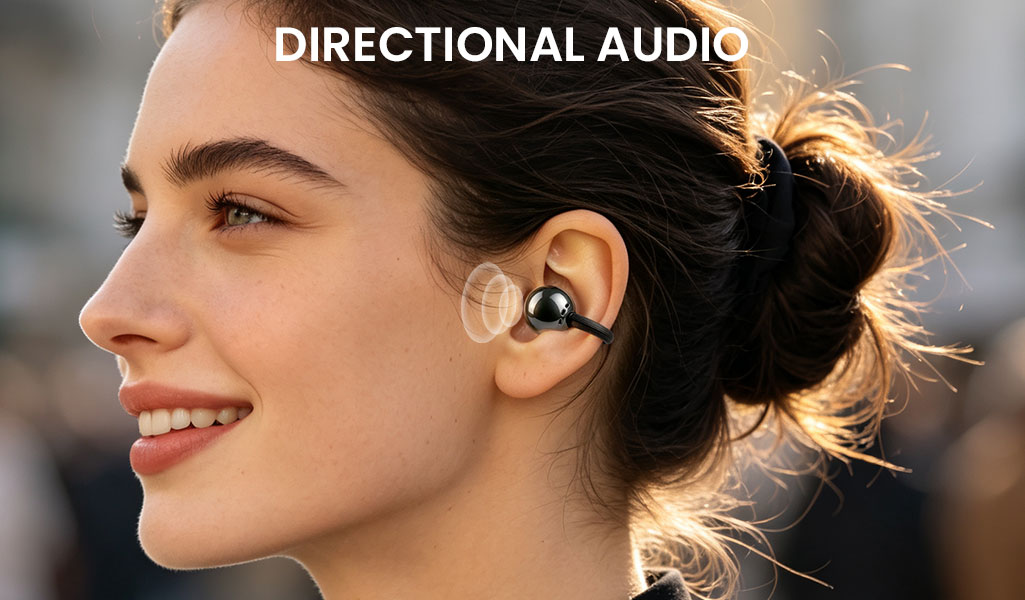
Open-ear clip-on earbuds promise a different listening experience: the ear canal stays unobstructed, while the speaker sits close to the ear. That convenience creates a familiar question for shoppers and retailers: Can directional audio make an open design more private, or will people nearby still hear the music?
The question matters as the category expands. Omdia reported that global open wireless stereo (OWS) shipments reached 11.1 million units in Q2 2026, up 12% year over year. OWS represented 13.5% of total TWS shipments, and clip-on models accounted for 61% of OWS shipments. These figures indicate momentum for the form factor; they do not mean every clip-on model will deliver the same acoustic performance. (Omdia's Q2 2026 OWS update)
What Does Directional Audio Mean in an Open-Ear Earbud?
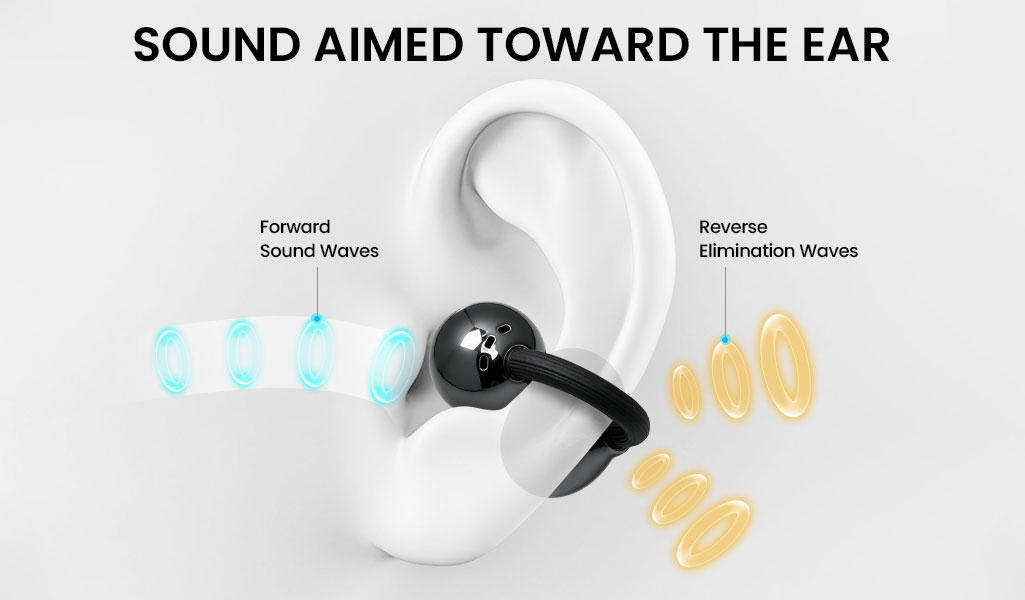
Directional audio is a broad description for acoustic design that aims to send more of a speaker’s output toward the listener’s ear and less into the surrounding space. Depending on the product, this can involve the speaker angle, acoustic chamber, driver structure, sound outlet and the way the earbud sits on the ear. The phrase alone does not identify one specific technology or prove a particular leakage level.
In a sealed in-ear earbud, the ear tip helps create an acoustic seal. A clip-on open-ear model does not seal the ear canal, so sound can travel through open air. Directional design attempts to improve where the sound goes; it does not turn an open-ear earbud into a sealed headphone.
It is also useful to separate two ideas. Open-ear listening can help users remain more aware of surrounding sounds because the ear canal is not blocked. Sound leakage is the opposite concern: some of the audio from the earbud may be audible to people nearby. A product may support environmental awareness while still producing audible leakage at higher listening levels.
For a broader comparison of fit, awareness and isolation, see BWOO's guide to open-ear vs. in-ear earbuds. This article focuses on the narrower acoustic question: how sound is directed and how leakage should be evaluated.
What Determines Sound Leakage?
No single feature determines whether another person can hear an open-ear earbud. At least five variables interact:
Listening volume: Higher output levels generally make leakage more noticeable. A design that sounds private at moderate volume may be audible in a quiet room when turned up.
Position and fit: A small change in clip position or the angle of the sound outlet can change how much sound reaches the ear and how much escapes outward.
Ear shape and wearing variation: Ear size, outer-ear shape and personal wearing habits mean the same model may perform differently across users.
Acoustic structure: Driver placement, outlet geometry and acoustic tuning influence directivity, but a marketing label is not a substitute for a repeatable measurement.
Listening environment: A busy street can mask low-level leakage; a quiet office, library or shared room makes it easier for nearby people to notice.
There is no responsible basis for promising “zero sound leakage” from an open-ear clip-on design. A more useful claim is comparative and conditional: the design is intended to reduce outward leakage under specified wearing and volume conditions, and the result should be demonstrated in testing.
How Should Buyers Test Directional Audio?
For retailers, distributors and brand buyers, a short sample test is more informative than a feature name. Use the same audio file, source phone, volume setting and room for every sample. Test at more than one distance and include more than one wearer.
Fit check: Ask several people to wear the sample and confirm that the speaker outlet sits consistently near the ear. Note whether small fit adjustments change perceived loudness.
Quiet-room check: Play speech and music at a moderate, repeatable volume. Have a second person listen from a consistent position, such as beside the wearer and approximately one metre away.
Everyday-environment check: Repeat in an office or café-like environment. Check whether the wearer can understand the content without turning the volume excessively high.
Leakage comparison: Compare the clip-on sample with another open-ear model at the same perceived listening loudness. Record the test conditions rather than reporting an unsupported universal decibel figure.
Comfort and stability check: Ask the wearer to walk, turn their head and speak. A directional design is only useful if the earbud remains comfortably positioned during normal use.
When possible, keep the sample-test notes with the product specification sheet. If a supplier provides a leakage chart, ask for the measurement distance, room noise level, audio signal, volume setting, wearer fit and test equipment.
A Product Example: BWOO BO-BW51
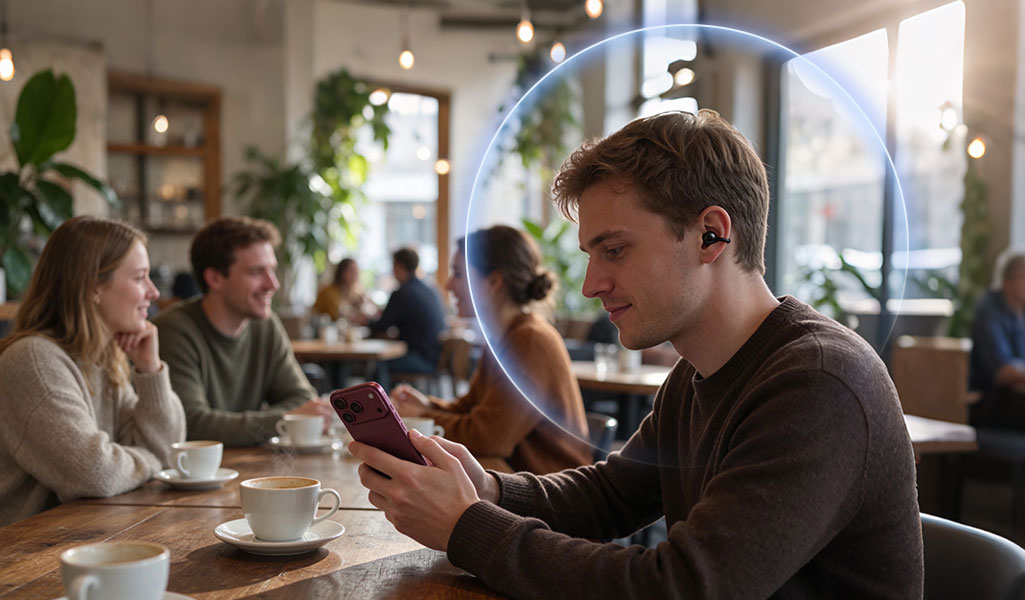
The BWOO BO-BW51 open-ear titanium clip earphones are positioned around a directional-audio listening experience. The product page describes a system intended to guide sound toward the ears while minimizing outward leakage. It also lists BT 6.0 connectivity, an 11 mm speaker, up to five hours of music time and IPX4 water resistance.
For B2B evaluation, these are useful starting points for a sample brief—not a substitute for acoustic verification. Buyers should request the latest technical sheet and ask whether BWOO can provide a defined leakage test method or sample recordings. Do not convert “minimizing leakage” into “no leakage,” and do not assume every user will experience the same result.
Explore the BWOO TWS earphones range to compare open-ear clip, ear-hook and in-ear formats. A mixed assortment can serve different listening preferences rather than treating one form factor as a universal replacement.
What Should Retailers Put on the Product Page?
Product descriptions should explain the wearing style, the intended acoustic benefit and the conditions under which the benefit was evaluated. If a brand uses “directional audio,” it should be prepared to explain the design in plain language. Useful supporting assets include a close-up of the speaker outlet, a realistic wearing image, a short sample recording and a clearly described test result.
For distributors, the strongest product story is not an absolute promise. It is a clear use case—comfortable open-ear listening, stable positioning and a tested effort to keep sound focused toward the wearer—backed by consistent sample performance.
Conclusion
Directional audio can help an open-ear clip-on earbud focus more of its output toward the listener, but it cannot remove the physical limits of an open design. Volume, fit, ear shape and room conditions all affect leakage. The right buying decision comes from a repeatable sample test, not from the phrase “directional audio” alone.
FAQ
Does directional audio mean sound cannot leak?
No. It describes an effort to direct sound toward the ear. Some sound may still be audible outside the earbud, particularly at higher volumes or in quiet environments.
Are clip-on earbuds more likely to leak sound than in-ear earbuds?
An open design has no sealed ear tip, so leakage can be more noticeable in some conditions. Actual performance varies by model, fit, volume and acoustic design.
Can users reduce sound leakage themselves?
Keeping the volume moderate and positioning the earbud correctly can help. Buyers should also confirm that the model remains stable without needing to turn the volume up.
What is the best way to compare leakage between two models?
Use the same source, content, perceived loudness, room and listener distances. Test more than one wearer and document the conditions.
Is BO-BW51 suitable for every open-ear customer?
It is one clip-on option in BWOO's range. Retailers should sample it with their target users and compare comfort, sound, call quality and leakage before selecting a target segment.


