

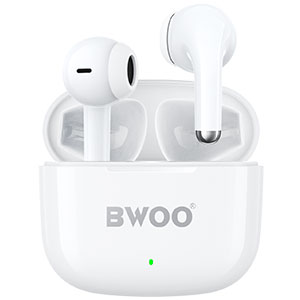


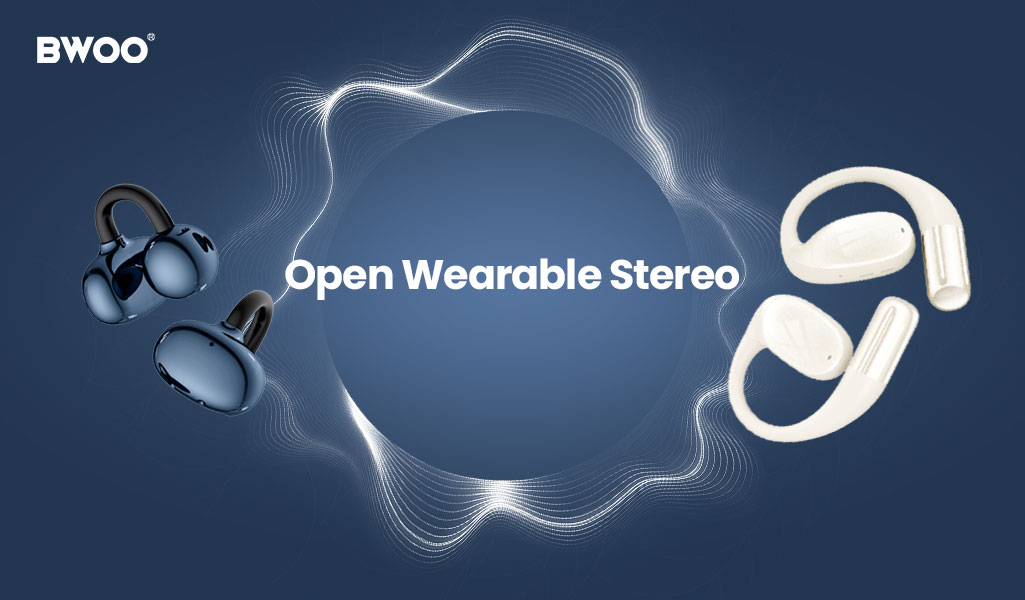
At BWOO, listening to user feedback is at the center of product development. Many users report discomfort after wearing traditional in-ear earbuds for long periods—such as ear pressure, irritation, or fatigue. Others feel unsafe when running or cycling outdoors because noise-isolating earbuds block environmental sounds.
These concerns have led to the rapid rise of Open-Wear Stereo (OWS) earbuds. Unlike traditional earbuds, open-ear designs do not enter the ear canal or completely cover the ear, offering a different balance between comfort, awareness, and sound quality.
This article explores how open-ear earbuds work, their advantages and limitations, and how to choose the right model in 2026.
1. How Open-Ear Earbuds Work
Open-ear audio devices generally rely on two main technologies: air conduction and bone conduction.
Air Conduction
Principle
Air conduction uses directional audio technology to project sound waves toward the ear canal while keeping the ear open.
Listening Experience
More natural sound reproduction
Better bass performance compared with bone conduction
Reduced sound leakage with modern acoustic design
Because of its balance between comfort and audio quality, many modern OWS earbuds—including BWOO designs—use air conduction technology.
Bone Conduction
Principle
Bone conduction headphones transmit vibrations through the temporal bone, sending sound signals directly to the inner ear.
Listening Experience
The ear canal remains completely open
Suitable for specialized activities such as swimming or extreme outdoor sports
However, bone conduction typically offers weaker bass and lower overall audio fidelity compared with air conduction systems.
Why OWS Is Becoming Mainstream
In 2026, air-conduction open-ear designs have become increasingly popular because they provide a practical balance between sound quality, comfort, and situational awareness.
This makes them well suited for daily listening without the fatigue associated with traditional in-ear designs.
2. Pros and Cons of Open-Ear Earbuds
The Advantages
Exceptional Comfort
Since the earbuds do not enter the ear canal, they eliminate ear pressure and reduce heat buildup. This allows users to wear them comfortably for extended periods.
Situational Awareness
Open-ear designs allow users to hear environmental sounds such as traffic, conversations, or announcements. This is especially valuable during outdoor activities or in office environments.
Better Listening Health
Because sound is not delivered directly into the ear canal, the pressure on the eardrum is reduced. This may help lower the risk of ear fatigue and reduce the chance of moisture buildup inside the ear.
The Limitations
Limited Noise Isolation
In very noisy environments—such as subway trains or airplanes—open-ear earbuds cannot block external noise as effectively as active noise-cancelling headphones.
Reduced Deep Bass
Due to their open structure, extremely deep bass is harder to reproduce compared with sealed in-ear earbuds. Advanced acoustic tuning and drivers are often used to compensate for this limitation.
Potential Sound Leakage
Lower-quality products may allow sound to leak to nearby people. High-quality directional audio design can significantly reduce this effect.
3. Who Benefits Most from Open-Ear Earbuds in 2026?
Outdoor Athletes
Runners and cyclists benefit from being able to hear surrounding traffic and environmental sounds while listening to music.
Office Professionals
Open-ear earbuds allow users to listen to calls or audio content while still communicating with colleagues nearby.
Users Sensitive to In-Ear Designs
People who experience ear irritation, allergies to silicone tips, or recurring ear infections may find open-ear earbuds much more comfortable.
4. Recommended Product: BWOO Open Ear Clip Earphones BT 6.0
For users interested in trying open-ear audio technology, BWOO offers a modern solution designed for comfort, stability, and everyday use.
BWOO Open Ear Clip Earphones BT 6.0
Key features include:
Open-Ear Clip Design – Comfortable and secure fit with a pressure-free wearing experience
BT 6.0 Stable Connection – Faster pairing and low-latency performance for music and calls
12mm Dynamic Driver Sound – Clear and balanced audio with immersive listening quality
Long-Lasting Battery Performance – Low power consumption for extended daily listening
Smart Touch Control – Easy operation for calls, music, and voice assistant access
This design allows users to enjoy music while maintaining awareness of their surroundings, making it ideal for daily commuting, exercise, and extended listening sessions.
5. Buying Guide: How to Choose a Good Open-Ear Earbud
When selecting an OWS earbud, consider the following factors:
Wear Stability
Look for ergonomic ear-hook or clip designs that remain stable during movement and remain comfortable even when wearing glasses.
Water Resistance
For sports or outdoor use, an IPX5 or higher rating helps protect the earbuds from sweat and rain.
Battery Life
Open-ear designs often have slightly larger housings, allowing for longer battery life. Reliable models should support extended listening throughout the day.
Connection Stability
Modern wireless protocols with low latency ensure smooth audio performance for music, calls, and video playback.
Conclusion
Open-ear earbuds are not meant to replace traditional in-ear headphones. Instead, they represent a different category designed for comfort, safety, and everyday convenience.
As more users prioritize listening health and environmental awareness, OWS technology is becoming one of the most important audio trends in 2026.
For users seeking a comfortable and safer way to enjoy audio, open-ear earbuds offer a compelling alternative.


