






China remains an important sourcing base for consumer electronics and wearable devices. For distributors, private-label brands and importers, the challenge is not simply finding a supplier that lists smartwatches. It is identifying a partner that can support the right product positioning, customization level, quality requirements and after-sales process.
A useful search for a smartwatch OEM/ODM manufacturer in China should go beyond unit price. Buyers need to understand what the supplier designs and manufactures, which functions are available on each model, what can be customized and which capabilities are handled by external partners.
1. Understand Private Label, OEM and ODM
Private label usually means selecting an existing product platform and adding brand identity, packaging or selected software settings. It can be practical for buyers who want a faster launch and do not need a new hardware design.
OEM projects generally use a buyer's product requirements or design specifications, with the supplier manufacturing to the agreed brief. Depending on the supplier, the project may involve logo placement, packaging, materials, user interface or selected hardware changes.
ODM involves a higher level of product development. The supplier may contribute industrial design, hardware architecture, firmware, tooling and engineering. Agree in writing on development scope, tooling ownership, software rights, exclusivity and change control.
For a broader overview of how a mobile-accessory project moves from requirements to production, read BWOO's OEM/ODM Complete Guide.
2. Compare Suppliers by Their Actual Wearable Range
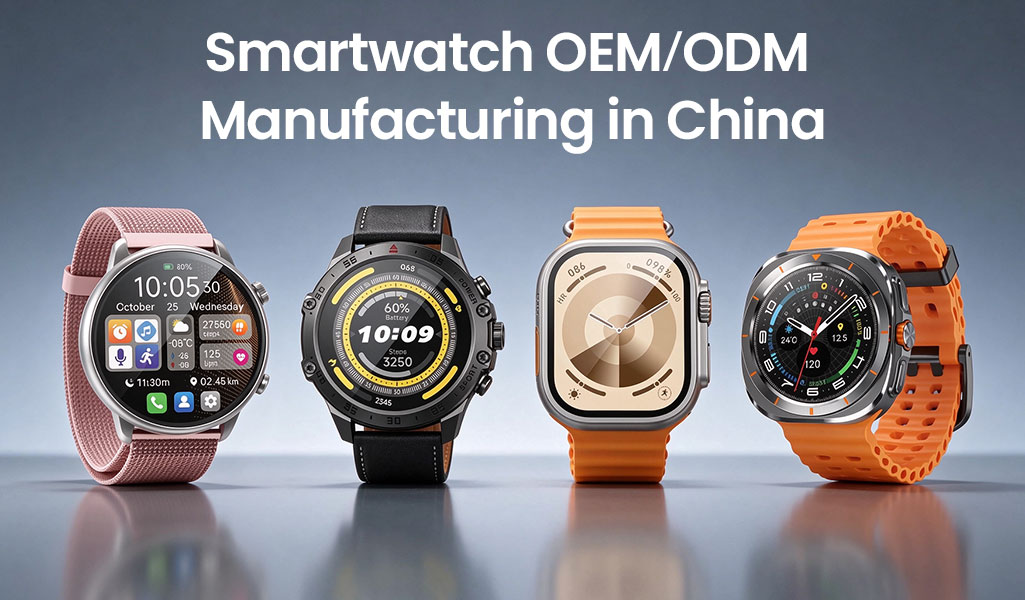
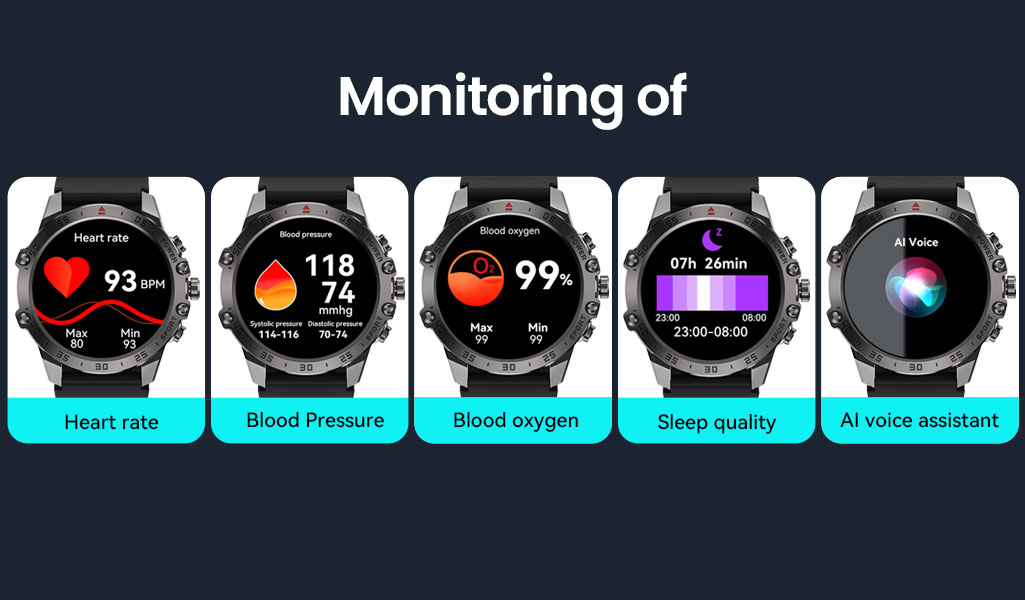
A supplier may advertise many smartwatch functions, but buyers should verify which functions are available on each exact model. Common segments include entry-level lifestyle watches, Bluetooth-calling watches, sports-oriented designs, children's watches and advanced wearable devices.
Compare screen type and size, battery capacity, supported phone operating systems, app experience, call functions, sensor features, strap options, language support and colours. Do not assume a supplier's entire catalogue shares the same chipset, app or feature set.
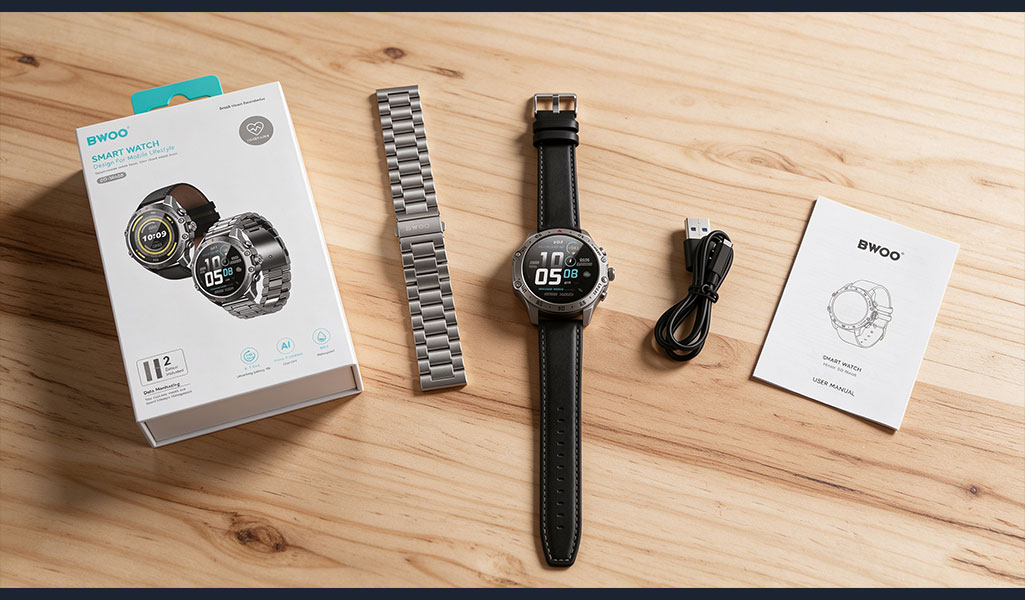
BWOO's Smart Watch collection includes models such as BO-WA09, BO-WA08 and BO-WA10. Use each current product page and the latest specification sheet to confirm exact functions before preparing a quotation or retail listing.
3. Evaluate R&D and Customization Capabilities
A supplier's customization promise should be specific. Ask which changes can be completed using an existing platform and which require new tooling, firmware work or third-party development.
Can the supplier customize logo, boot screen, watch face, strap, housing colour and retail packaging?
Can it support the required app language, notification behaviour and user-interface translation?
Which functions are supported by the exact chipset and firmware version?
Are GPS, NFC, Bluetooth calling or sensor functions standard, optional or unavailable on the proposed model?
Who owns custom designs, moulds, firmware changes and app assets under the project agreement?
Request a written customization matrix and a quotation that separates one-time development costs from unit pricing. This makes it easier to compare suppliers that use different OEM/ODM definitions.
4. Review Quality Control and Compliance Evidence
Smartwatches combine electronics, batteries, displays, straps and software. A supplier should explain its incoming inspection, assembly checks, functional testing, final inspection and handling of non-conforming products.
Ask for model-specific evidence rather than a page of generic certification logos. Confirm which reports apply to the exact product configuration and destination market. If the watch includes wireless functions, clarify relevant radio and electrical requirements. If it makes health-related claims, do not market consumer wellness measurements as medical diagnosis.
Request a model-specific specification sheet and approved sample.
Check battery capacity, charging method, runtime test conditions and included accessories.
Verify display, touch response, buttons, sensors, microphone and speaker where applicable.
Ask how firmware revisions and component substitutions are controlled.
Confirm applicable test reports, labels, manuals and packaging requirements for each target market.
5. Check MOQ, Lead Time and Supply-Chain Flexibility
MOQ and lead time depend on customization. An existing model with a logo and standard packaging may have a different minimum order quantity from a project involving a new housing, tooling, firmware or app. Ask suppliers to quote separately for samples, pilot runs and mass production.
Clarify sample approval, production lead time after approval, payment and shipping terms, spare-part availability and warranty handling. A low unit price may not represent the lowest total sourcing cost if the project requires expensive tooling or extensive rework.
6. A Practical Supplier Evaluation Checklist
Product fit: does the catalogue match your target customer and price segment?
Engineering: can the supplier explain hardware, firmware, app and customization boundaries?
Quality: are sample testing, inspection records and corrective-action processes clear?
Compliance: can the supplier provide relevant model-specific documentation?
Commercial terms: are MOQ, tooling, lead time, payment and shipping transparent?
After-sales: are warranty, spare parts, firmware support and complaint handling defined?
7. Consider BWOO for a Broader Mobile-Accessory Assortment
For buyers who source more than wearables, a supplier with a wider mobile-accessory portfolio may simplify assortment planning. BWOO presents itself as a China-based developer and manufacturer of mobile accessories and smart electronics, with categories spanning chargers, data cables, power banks, audio products and smartwatches.
Visit the BWOO Company Profile and OEM/ODM information to review the company's stated capabilities. Confirm project-specific details—including exact smartwatch model, customization scope, MOQ, sample lead time, documentation and production schedule—directly with BWOO.
Conclusion
The right smartwatch OEM/ODM partner is not necessarily the supplier with the longest catalogue or lowest quotation. It is the one that can demonstrate a suitable product platform, clear engineering boundaries, repeatable quality control, relevant documentation and dependable after-sales support. Compare suppliers using the same model-level checklist before moving from samples to bulk production.
Explore BWOO's Smart Watch range and contact the team through the OEM/ODM page to discuss your project.
FAQ
What is the difference between smartwatch OEM and ODM?
OEM usually means manufacturing to a buyer's specifications or requirements. ODM involves a greater level of supplier-led product design and development. Define the scope in the contract.
What should I check before choosing a smartwatch manufacturer in China?
Review product range, engineering capability, customization scope, model-specific test evidence, MOQ, lead time, quality control and after-sales support.
Can I customize the app and watch faces?
It depends on the product platform. Ask which app, firmware, language, watch-face and interface changes are supported and whether additional development fees apply.
Do all smartwatches from one supplier share the same functions?
No. GPS, NFC, Bluetooth calling and sensor functions vary by model, chipset and firmware. Verify each claim against the exact model.
Does BWOO offer smartwatches for B2B buyers?
BWOO lists a Smart Watch category and provides OEM/ODM information. Contact BWOO to confirm current models, customization options, MOQ, samples and project terms.


