



A data-driven B2B guide to the Southeast Asian mobile accessories market covering country differences, compliance, logistics, and localization strategies for importers and distributors.
1. The Southeast Asia Opportunity: Macro Context
Southeast Asia (ASEAN-6: Indonesia, Vietnam, Thailand, Philippines, Malaysia, Singapore) represents one of the most dynamic mobile accessories markets globally. The region has a combined population of 680 million, a median age of 29, and smartphone penetration that is still growing at 6-8% annually in emerging markets within the region. E-commerce GMV in Southeast Asia reached $131 billion in 2024 and is projected to exceed $186 billion by 2027, driven by Shopee, Lazada, Tokopedia, and TikTok Shop. For B2B importers and distributors, this means: rapidly growing retail demand, an e-commerce channel that rewards fast-moving SKUs with high turnover, and a young demographic that upgrades accessories frequently.
Unlike mature Western markets where replacement cycles are lengthening, Southeast Asian consumers replace phone cases and cables more frequently due to higher usage intensity (longer daily screen time), hotter and more humid climates that accelerate wear, and fashion-driven replacement behavior among the under-30 demographic. For distributors, this translates to higher reorder frequency and lower inventory aging risk.
2. Country-by-Country Market Breakdown
Indonesia: The Largest and Most Price-Sensitive Market
Indonesia accounts for 40% of Southeast Asia smartphone users. The market is highly price-sensitive: sub-$5 accessories dominate volume. Popular categories: basic TPU cases, 20W PD chargers, micro-USB and USB-C cables. Local preference: bright colors, bold patterns, and Islamic-themed designs during Ramadan. Certification: SNI (Standard Nasional Indonesia) is mandatory for many electronics categories, but enforcement varies by channel. Distributors supplying modern retail (Alfamart, Indomaret) must have SNI; those supplying general trade can often start without it but should plan for certification as the market matures. Logistics: Tanjung Priok (Jakarta) is the main port; average customs clearance 7-14 days. Consider using a local importer of record for first orders to navigate customs efficiently.
Vietnam: The Fastest-Growing Manufacturing and Consumer Market
Vietnam is unique: it is both a major manufacturing hub (Apple suppliers, Samsung factories) and a fast-growing consumer market. Smartphone penetration is above 70% and growing. The market favors mid-range accessories: $5-15 price points. Popular: magnetic cases (iPhone market is strong), GaN chargers, TWS wireless earphones. Local preference: minimalist design, neutral colors. Certification: CR Mark (certification regulation by the Ministry of Information and Communications) is mandatory for chargers and power banks. Vietnam has a strong local e-commerce culture — Shopee Vietnam and TikTok Shop Vietnam are primary sales channels for accessories. Distributors should plan for e-commerce-optimized packaging (small, lightweight, retail-ready).
Thailand: Premium Segment Opportunity
Thailand has the highest per-capita spending on mobile accessories in Southeast Asia. The market supports premium SKUs: $15-40 price points for branded cases, 65W+ GaN chargers, and flagship wireless earphones. Bangkok is the regional retail trendsetter — products that succeed in Bangkok often roll out to the rest of ASEAN. Certification: TISI (Thai Industrial Standards Institute) is required for chargers, power banks, and adapters. Local preference: vibrant colors, character collaborations (Sanrio, Disney), and waterproof/water-resistant ratings (due to monsoon season usage patterns).
Philippines: High Replacement Rate, Strong Brand Loyalty
The Philippines has one of the highest mobile usage intensities globally (average 10+ hours daily screen time). This drives high replacement rates for cables and cases. The market is brand-conscious: consumers recognize and trust established brands more than in other ASEAN markets. Certification: PS (Philippine Standard) mark is required but enforcement is uneven. Local preference: Catholic-themed designs (seasonal), bright colors. Logistics: Manila port congestion can cause 10-20 day delays; consider using Cebu as an alternative entry point for Visayas and Mindanao distribution.
3. Compliance and Certification Requirements by Country
Country | Plug Type | Voltage | Mandatory Certification | Key Notes |
Indonesia | C/F (Europlug/Type F) | 230V | SNI (partial enforcement) | Focus on modern retail for SNI-compliant SKUs |
Vietnam | A/C (Type A and C) | 220V | CR Mark (MIC) | Mandatory for chargers and power banks |
Thailand | A/B/C/O (Multi-standard) | 230V | TISI | Strict enforcement; plan 8-12 weeks for certification |
Philippines | A/B (Type A and B) | 220V | PS Mark (BPS) | Enforcement uneven; Manila port congestion common |
Malaysia | G (Type G, UK-style) | 240V | SIRIM | Strict for power banks and chargers; SIRIM is well-enforced |
Singapore | G (Type G, UK-style) | 230V | Safety Mark (CPS) | Highly regulated; Safety Mark mandatory for all power-related accessories |
4. Logistics: Shipping to Southeast Asia
Ocean freight from South China (Shenzhen, Guangzhou, Hong Kong) to major Southeast Asian ports typically takes 3-7 days — significantly faster than shipping to Europe (30-40 days) or North America (20-30 days). This proximity allows distributors to operate with lower safety stock, reducing working capital requirements. The table below compares major ports and typical transit times from Shenzhen.
Destination Port | Transit Time (Days) | Typical Freight Cost (40HQ) | Customs Clearance (Days) |
Jakarta (Tanjung Priok), Indonesia | 5-7 | $1,200-$1,800 | 7-14 |
Ho Chi Minh City (Cat Lai), Vietnam | 3-5 | $800-$1,200 | 5-10 |
Bangkok (Laem Chabang), Thailand | 4-6 | $900-$1,400 | 5-10 |
Manila, Philippines | 5-7 | $1,100-$1,600 | 10-20 (congestion risk) |
Port Klang, Malaysia | 4-6 | $800-$1,200 | 4-7 |
Singapore (PSA), Singapore | 3-5 | $700-$1,000 | 2-4 (highly efficient) |
5. Localization Strategies for Distributors
Packaging Language
Indonesia, Vietnam, and Thailand require local language on packaging for modern retail and e-commerce platform compliance. At minimum, include a local language insert or printed sleeve. For Shopee and Lazada listings, product titles and descriptions in local language increase conversion by 30-50% according to platform data. Distributors should request bilingual packaging (English + local language) from suppliers — most PRD factories can accommodate this at $0.05-0.15 per unit additional cost.
Color and Design Preferences
Southeast Asian consumers, particularly in Indonesia, Vietnam, and the Philippines, prefer vibrant, saturated colors — coral, turquoise, bright green, hot pink — over the muted tones preferred in Europe and North America. For phone cases, floral patterns, abstract gradients, and pop-culture character licensing perform well. For chargers and power banks, matte finishes in dark green, navy, or black dominate the premium segment. Distributors should allocate 60-70% of inventory to vibrant colors and 20-30% to neutral tones for the corporate/professional segment.
Religious and Cultural Considerations
In Indonesia and parts of Malaysia, accessories with Islamic geometric patterns or Ramadan-themed designs see seasonal demand spikes. In the Philippines, Catholic iconography and Christmas-themed accessories (the country celebrates the world longest Christmas season, starting September) are consistent sellers. Distributors who plan seasonal SKU allocations around these cultural calendars can achieve 40-60% higher sell-through during peak months.
6. BWOO in Southeast Asia: Certifications and Case Study
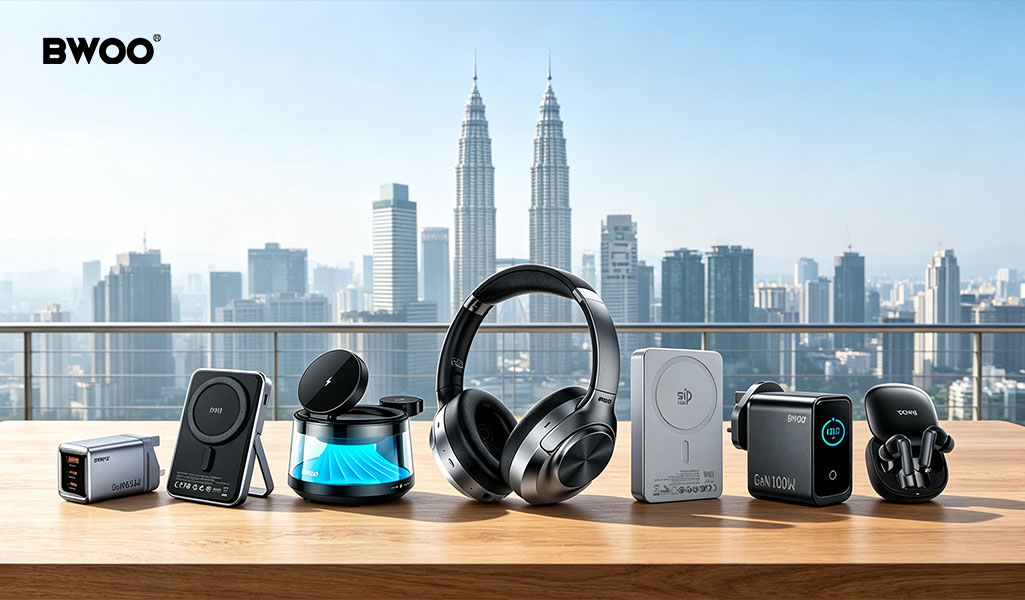
BWOO is a pure B2B brand with zero DTC channels, serving wholesalers and distributors across Southeast Asia with a full certification-ready product portfolio. BWOO products are certified for: SNI (Indonesia), CR Mark (Vietnam), TISI (Thailand), PS Mark (Philippines), SIRIM (Malaysia), and Safety Mark (Singapore). This multi-country certification coverage allows distributors to import a single BWOO SKU and distribute across multiple ASEAN markets without re-certification — a significant cost and time advantage.
Case example: A Bangkok-based distributor specializing in phone accessories for modern retail chains partnered with BWOO in Q3 2024 to supply a curated 8-SKU travel accessories line (power banks, GaN chargers, travel adapters). Because BWOO handled TISI certification and provided Thai-language packaging, the distributor was able to list in 3 major retail chains within 6 weeks of the first order. First-year projected revenue from the BWOO line: $420,000 with a 38% gross margin. The distributor has since expanded the BWOO SKU count to 22 and is planning entry into the Philippines market using the same product line with PS Mark certification already in place. Distributors interested in Southeast Asia market entry can request the BWOO ASEAN certification pack and distributor pricing at BWOO official website.
7. Conclusion
Southeast Asia offers B2B importers and distributors a rare combination: a large addressable market, rapid growth, proximity to Chinese manufacturing, and young consumers who replace accessories frequently. Success requires understanding country-specific compliance, logistics realities, and cultural preferences — not a one-size-fits-all approach. Partnering with a B2B-only supplier like BWOO that already holds multi-country certifications and understands ASEAN market dynamics can reduce time-to-market from months to weeks, allowing distributors to capture market share while the growth window remains open.


