



A comprehensive B2B guide to phone case materials, 2026 design directions, MOQ economics, and supply chain essentials for wholesalers and distributors.
1. Why Phone Cases Are a Must-Carry Category for Wholesalers
Phone cases represent the single largest product segment within mobile accessories — accounting for approximately 30% of a global market valued at $241 billion. For B2B wholesalers, phone cases offer a unique combination of high margin, fast turnover, and near-universal demand. Unlike cables or chargers — which are primarily function-driven — phone cases blend protection, fashion, and personal expression, driving replacement rates of 2-3 times per year per user. Each new smartphone launch cycle (Apple September, Samsung February/March, Google October) triggers immediate demand spikes that distributors with stocked inventory can capture. Additionally, phone cases have minimal storage and shipping costs relative to their retail value — typically 50-150g per unit — making them logistics-friendly for importers and ideal for small parcel dropshipping.
2. Phone Case Material Comparison: A Comprehensive Guide
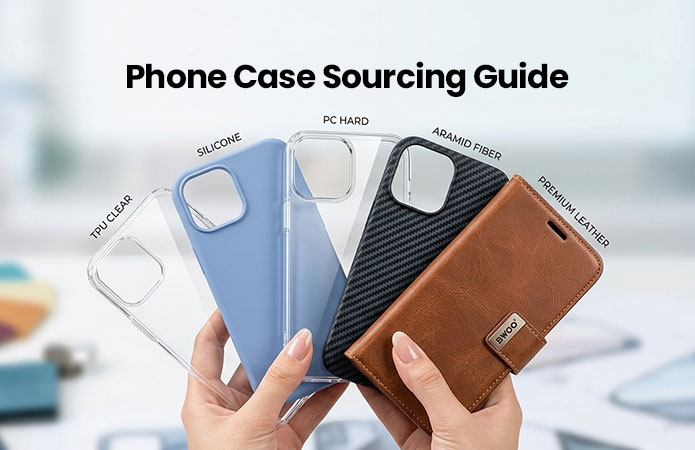
Choosing the right materials for your wholesale phone case line is the foundation of your product strategy. Each material carries distinct trade-offs in protection, feel, durability, cost, and target market positioning. The table below provides a side-by-side evaluation across six key materials.
Material Properties Comparison
Material
Protection Level
Hand Feel
Durability (Months)
Unit Cost (FOB)
Best Used For
Limitations
TPU (Thermoplastic Polyurethane)
Medium (drop absorption)
Soft, flexible, grippy
6-12 (yellows over time)
$0.50-$1.50
Clear cases, budget segment, bulk retail
Yellows under UV; limited color options
Silicone
Medium-High (excellent shock absorption)
Soft-touch, velvety
8-14
$1.00-$2.50
Premium feel at mid-price; gift market
Attracts lint/dust; can stretch over time
PC (Polycarbonate)
High (rigid, impact-resistant)
Hard, smooth, glossy or matte
18-24
$0.80-$2.00
Hard shells, two-piece hybrids, premium clear cases
Slippery without coating; can crack under extreme impact
Aramid Fiber (Kevlar)
Very High (military-grade)
Textured, premium, ultra-thin
24-36
$3.00-$8.00
Ultra-thin premium segment, corporate gifts
High cost; limited color (mostly black/gray); harder to mold
Genuine Leather
Low-Medium
Luxurious, warm, patinas with age
12-24 (if cared for)
$2.50-$6.00
Luxury segment, executive gifts, folio/wallet cases
Not water-resistant; thicker profile; higher defect rate
Wood/Bamboo
Low-Medium
Natural, unique grain per piece
12-18
$2.00-$5.00
Eco-conscious segment, artisan retail
Heavier; limited shock absorption; inconsistent grain
Hybrid Designs: The Market Standard
The vast majority of mid-to-premium phone cases sold in 2026 use hybrid constructions — combining two or more materials for optimized performance. The most common configuration is a rigid PC back plate bonded to a TPU bumper frame: the TPU absorbs drop shock while the PC provides scratch resistance and a premium finish. For clear cases, anti-yellowing TPU formulations with UV inhibitors are essential to maintain transparency beyond 6 months. For wholesalers, hybrid cases command 20-40% higher wholesale prices than single-material cases while only increasing FOB cost by $0.30-$0.80 per unit — a compelling margin story.
3. 2026 Design Trends: What Wholesalers Should Stock
Minimalist Transparent and Frosted Clear Cases
The clear case category has evolved from a budget default to a premium segment. Consumers now demand anti-yellowing guarantees (minimum 12-month clarity), reinforced corners with micro-airbag technology, and non-slip side grips. Frosted matte clear cases are particularly popular — they resist fingerprints and offer a high-end feel while still showing the phone color. Wholesalers should prioritize clear cases with certified anti-yellowing additives over generic TPU clear cases that yellow in 3-4 months and generate high returns.
MagSafe/Magnetic Alignment Compatible Cases
Apple MagSafe ecosystem adoption has driven magnetic alignment into the Android ecosystem as well, accelerated by the Qi2.2 standard that mandates magnetic alignment for 15W+ wireless charging. In 2026, cases with embedded magnetic rings are no longer an iPhone-only category. Wholesalers should stock magnet-compatible cases that work across both iPhone and Qi2.2 Android devices — this broadens the addressable market and reduces SKU fragmentation. The magnetic ring must be precisely positioned and securely embedded to avoid detachment issues that drive negative reviews.
Eco-Friendly and Biodegradable Materials
European and North American retailers are increasingly requiring sustainability certifications in their supply chain. Phone cases made from recycled ocean plastics, plant-based bioplastics (PLA/PHA blends), or fully compostable materials are gaining shelf space — particularly in the EU, where extended producer responsibility (EPR) regulations for packaging are expanding. For B2B wholesalers, offering an eco-line is becoming a table-stakes requirement for large retail chain RFQs. BWOO currently offers eco-conscious case options with verifiable material certifications — contact product specialists at BWOO official website.
Personalization-Ready Blank Cases
Print-on-demand and small-batch customization is a growing B2B channel. Wholesalers who stock blank cases optimized for UV printing, sublimation, or vinyl application can serve a secondary market: customization shops, corporate promotional product companies, and Etsy/Shopify sellers. These cases require specific surface treatments (matte coating that accepts ink without pretreatment) and consistent flat surfaces — not all blank cases are created equal.
4. MOQ and Pricing Guide by Material and Process
Understanding MOQ drivers and pricing tiers is essential for B2B negotiation. The table below provides realistic ranges based on 2026 Shenzhen/Dongguan factory benchmarks. Actual prices vary with order volume, packaging requirements, and certification needs.
Material / Type | Typical MOQ (Stock Design) | Typical MOQ (Custom Design) | FOB Unit Price Range | Mold Cost (if custom) |
Basic TPU Clear | 500-1,000 | 2,000-3,000 | $0.50-$1.20 | $0 (stock mold) |
TPU + PC Hybrid | 500-1,000 | 2,000-5,000 | $1.20-$2.50 | $300-$800 per model |
Silicone Premium | 500-1,000 | 2,000-3,000 | $1.50-$3.00 | $200-$500 per model |
Magnetic Ring Compatible | 1,000-2,000 | 3,000-5,000 | $2.00-$4.00 | $500-$1,200 per model |
Aramid Fiber Ultra-Thin | 500-1,000 | 3,000-5,000 | $3.50-$8.00 | $1,500-$3,000 per model |
Eco/Biodegradable Materials | 1,000-2,000 | 5,000+ (material minimums) | $2.00-$5.00 | $500-$1,500 per model |
5. Supply Chain Essentials: The Pearl River Delta Advantage
The Pearl River Delta (PRD) in Guangdong province is the global epicenter of phone case manufacturing. Over 80% of the world phone cases originate from Dongguan, Shenzhen, and the surrounding industrial zones. This concentration creates structural advantages for B2B buyers: intense competition keeps pricing sharp, specialized mold-making shops can turn a custom case design from CAD file to T1 sample in 7-10 days, and the ancillary supply chain — packaging, printing, injection molding resins — is fully co-located. For wholesalers, the key sourcing decision is whether to work directly with a factory or through a consolidated brand like BWOO. Direct factory relationships offer potentially lower per-unit costs but require in-house quality control, logistics management, and multi-vendor coordination. BWOO aggregates vetted PRD manufacturing capacity into a single B2B catalog, handling QC, certifications, and logistics so that distributors can focus on sales and channel development. BWOO phone case product line covers all major materials and designs at competitive wholesale pricing — visit BWOO Phone Case for the catalog.
6. Common Pitfalls in Phone Case Sourcing
Three mistakes cost wholesalers more margin than anything else in the phone case category:
Stocking model-specific cases without confirmed sell-through data. Unless you have a committed retail pre-order, avoid cases for niche phone models (e.g., specific Xiaomi/Oppo/Vivo variants not sold globally). Focus on iPhone (60-70% of aftermarket case demand in most Western markets), Samsung Galaxy S series, and Google Pixel — these three lines cover 85%+ of the premium case market.
Over-investing in seasonal colors or patterns. A Pantone Color of the Year case that sells in Q1 may be dead stock by Q3. Limit seasonal styles to 15-20% of your case inventory; keep 80% in evergreen colors (black, clear, navy, dark green).
Ignoring packaging weight. Phone cases are often sold in bulky retail packaging. The difference between a slim polybag and a full-color retail box can mean 200% more shipping cost per unit for air freight. For wholesale, offer retailers both options — polybag for cost-sensitive channels, retail box for premium shelf placement.


