



The Middle East — led by Saudi Arabia and the United Arab Emirates — represents one of the fastest-growing mobile accessories markets outside of Asia. High smartphone penetration (over 97% in UAE, 95% in Saudi Arabia), a young demographic (median age 32), and strong consumer appetite for premium accessories create a compelling B2B opportunity. However, the region has unique compliance requirements, voltage standards, and cultural preferences that importers must navigate carefully.
Market Size and Growth Trends
According to a 2025 market report by Research and Markets, the GCC mobile accessories market was valued at USD 1.84 billion in 2024 and is projected to reach USD 2.67 billion by 2029, representing a CAGR of 7.7%. The fastest-growing sub-categories are wireless earphones (+18% YoY), fast-charging adapters (+14% YoY), and power banks (+11% YoY).
Saudi Arabia accounts for approximately 52% of the GCC market by value, followed by the UAE at 28%. The UAE serves as the primary re-export hub: approximately 35% of mobile accessories imported into Dubai are re-exported to Africa, South Asia, and other Middle Eastern markets.
Voltage, Plug Standards, and Power Compatibility
The Middle East uses 220-240V at 50Hz. The primary plug types are:
Type G (UK-style 3-pin) — UAE, Saudi Arabia (widely used), Kuwait, Bahrain, Oman, Qatar
Type C (Europlug 2-pin) — also widely accepted across the region as a secondary option
Type A (US-style 2-pin) — less common, but some older buildings in Saudi Arabia may have it
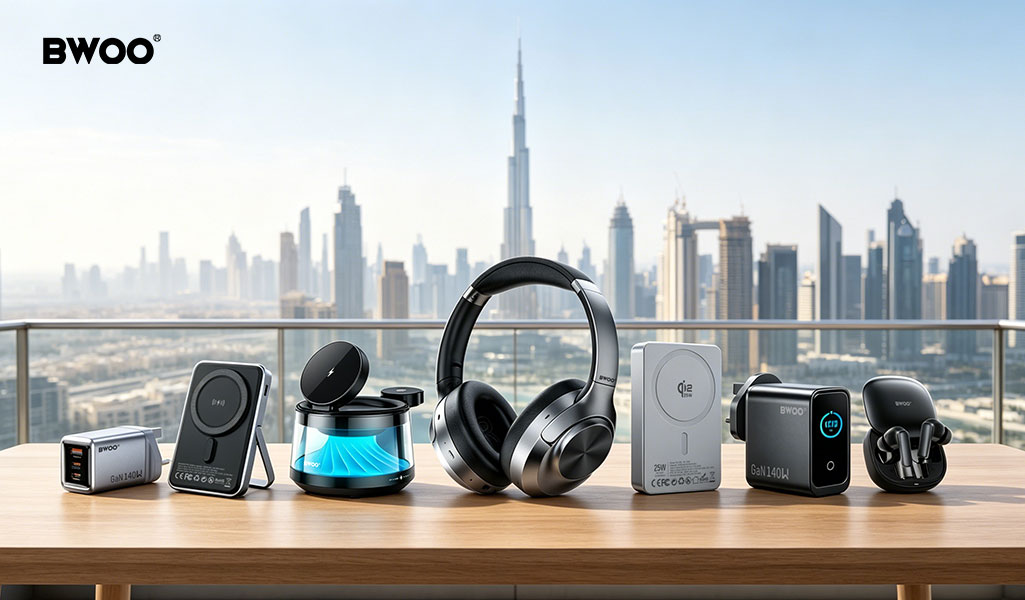
For B2B importers, this means wall chargers shipped to the Middle East must support 100-240V input (standard for GaN chargers) and ship with Type G or a multi-region plug head. BWOO's GaN charger lineup (https://www.bwoohk.com/application/charging-solutions.html) supports 100-240V input and can be ordered with Type G, Type C, or interchangeable plug heads for the Middle East market.
Packaging and Language Requirements
Packaging requirements in the Middle East are more nuanced than in Europe or North America:
Arabic labeling: Saudi Arabia's SFDA and the UAE's ESMA require product information, safety warnings, and country of origin to be printed in Arabic on the retail packaging or on a permanently affixed label. English-only packaging is not compliant for retail sale in KSA or UAE.
Dual-language packaging: The most successful SKUs in the region use bilingual Arabic-English packaging, with Arabic text in a slightly larger font to meet local regulations while remaining accessible to English-speaking expatriate consumers (who represent over 88% of the UAE population).
Premium unboxing experience: Middle Eastern consumers, particularly in the GCC, place high value on premium packaging aesthetics. Retail-ready packaging with foil stamping, embossing, or magnetic clamshell boxes can command a 20-35% retail price premium over standard cardboard boxes.
Religious and cultural sensitivity: Avoid packaging designs featuring alcohol, pork-derived ingredients (some adhesives), or imagery that could be interpreted as culturally insensitive. Halal certification for product materials is not mandatory but can be a differentiator in the Saudi market.
Compliance and Certification: SASO, GSO, GCC Mark
The regulatory landscape for mobile accessories in the Middle East centers on three key frameworks:
SASO (Saudi Standards, Metrology and Quality Organization): All electronic products imported into Saudi Arabia require SASO certification (also called the SABER certificate). The process involves product testing (typically using existing CE/FCC test reports), document review, and issuance of a Certificate of Conformity. SASO also enforces the IECEE Recognition Certificate (IRC) for certain high-risk electronic products.
GSO (Gulf Standards Organization): The GSO oversees the GCC Conformity Marking (GCC Mark) used across all six GCC countries. Products with valid SASO certification can typically obtain the GCC Mark through an expedited process. More info: https://www.gso.org.sa/
ESMA (Emirates Authority for Standardization and Metrology): The UAE's product safety regulator. As of 2025, the UAE requires the ECAS (Emirates Conformity Assessment Scheme) mark for wireless devices, chargers, and power banks. ECAS certification can leverage existing CE test reports in many cases.
RoHS and WEEE: The GCC is progressively adopting RoHS-like restrictions on hazardous substances. KSA SASO RoHS (SASO IEC 63000) became mandatory for many electronics categories in 2024.
Certification | Required For | Typical Timeline | Can Use CE Reports? | BWOO Support |
SASO / SABER | Saudi Arabia import | 2-4 weeks | Yes (with review) | Yes — SASO-ready documentation |
GCC Mark | All GCC countries | 1-2 weeks (post-SASO) | Yes | Yes — GCC Mark support |
ECAS | UAE market access | 3-5 weeks | Yes (partial) | Yes — ECAS documentation |
CE / RoHS | EU export (if dual-market) | N/A (EU standard) | N/A | Yes — full CE/RoHS docs |
Consumer Preferences: Colors, Features, and Brand Perception
Understanding local consumer preferences is critical for SKU selection and marketing:
Color preferences: Gold, rose gold, and white remain the dominant color preferences for premium wireless earphones and chargers in the GCC. Black is the default for professional/business use cases. Bright colors (neon green, orange) sell well in the sports/active lifestyle segment.
Feature priorities: For wireless earphones, call quality (ENC) is the #1 feature priority due to the high volume of business calls placed while commuting. For chargers, multi-device support (3+ ports) and compact form factor are the most requested features. For power banks, high capacity (10000-20000mAh) with fast charging (20W+) is the sweet spot.
Brand perception: European and American brands carry premium perception. 'Made in China' is acceptable when paired with strong certification marks (CE, SASO) and premium packaging. Private label / OEM branding is widely accepted — over 60% of mobile accessories sold in the UAE are private-label or distributor-exclusive brands.
Religious / prayer-friendly design: Some consumers prefer 'prayer mode' or 'silent mode' features on wireless earphones that automatically pause audio during prayer times. This is a niche but growing requirement in the Saudi market.
Why Source from BWOO for the Middle East?
BWOO is well-positioned to support Middle East market entry for B2B buyers:
SASO-ready documentation: All BWOO products ship with CE, RoHS, and FCC test reports that are directly usable for SASO and ECAS certification applications.
Custom packaging: BWOO supports Arabic-English bilingual packaging, including Arabic calligraphy branding options and premium unboxing designs.
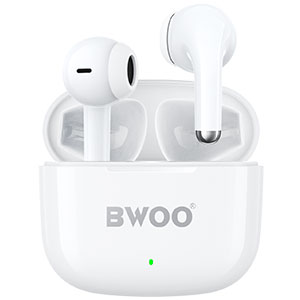
Product portfolio fit: BWOO's BO-BW99 open-ear clip-on earphones (https://www.bwoohk.com/product/earphones/) align with the regional preference for all-day comfort in hot climates (open-ear design reduces sweating).
DDP shipping to UAE and KSA: BWOO offers DDP (Delivered Duty Paid) shipping to major Middle East markets, handling customs clearance and SASO documentation on the buyer's behalf.
Pure B2B model: As a zero-DTC brand, BWOO never competes with its distributors on Amazon.ae, Noon, or local e-commerce platforms.
Conclusion
The Middle East mobile accessories market offers strong growth potential for B2B importers who understand its unique compliance, packaging, and cultural requirements. Success factors include: obtaining SASO/GCC Mark certification before shipping, investing in Arabic-English premium packaging, selecting SKUs that match local feature preferences (ENC for calls, 10000mAh+ power banks, multi-port GaN chargers), and partnering with a supplier like BWOO that provides turnkey export documentation and DDP logistics support.


