

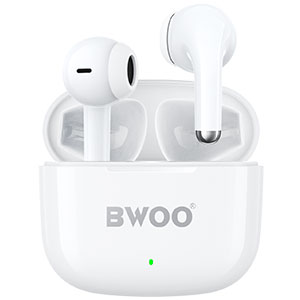


The arrival of wireless headphones has completely changed the way we enjoy music, watch movies and listen to podcasts-especially while travelling. If you are boarding a plane, you might wonder: Can I use wireless headphones on a flight? Are there restrictions? Can I connect them to the plane's entertainment system? In this article we'll answer these questions, walk through airline policies, explain how to connect to in-flight entertainment (IFE), discuss what to keep in mind mid-air, highlight the benefits of active noise-cancelling for aircraft travel, and show why BWOO's wireless headphones are an ideal travel companion.
Airline Policies: Representative Carriers & Their Rules
While most airlines permit the use of personal electronic devices and wireless headphones during flights, each carrier may have its own specific rules-especially during take-off and landing, or when connecting to the seatback IFE.
Below are a few representative examples:
United Airlines (USA) - According to sources, short-range BT devices (such as wireless headphones) have been allowed on flights for some time in the U.S., under guidance from the Federal Aviation Administration (FAA).
American Airlines (USA) - According to one overview, they allow BT headphones during all phases of flight (once the device is in airplane mode) though use with in-flight entertainment may depend on aircraft IFE capability.
Emirates - On modern aircraft, Emirates reportedly allows BT headphones (depending on aircraft model) though older planes may still require wired connection.
China Southern Airlines (China) - While I could not locate a specific publicly-posted policy document for China Southern, general regulatory context in China (via the Civil Aviation Administration of China) has relaxed rules on portable electronic devices as long as they are in airplane mode.
General rule across many carriers:
Wireless headphones are acceptable once cruising altitude is reached, but many airlines require devices to be turned off or stowed during taxiing, take-off and landing.
Key take-aways:
Yes, wireless headphones are allowed onboard in most cases.
But you must set your device to airplane mode (disabling cellular transmissions) and follow crew instructions.
Compatibility with the in-flight entertainment system may vary-some aircraft still require wired jacks, or need an adapter for BT.
2. How to Connect to the Plane's In-Flight Entertainment (IFE)
Even when your wireless headphones are allowed, connecting them to the seat-back screen or IFE system may require a few steps:
Many aircraft still operate older IFE systems that provide 3.5 mm headphone jacks rather than built-in BT transmitter functionality.
If your wireless headphones do not include a cable (or if the seat jack is 2-pin style), bring a BT transmitter/adapter that plugs into the headphone jack and pairs with your headphones. This converts the seat-back output to a BT signal.
Procedure in the aircraft:
Before boarding, charge your wireless headphones and any adapter.
After take-off and when the seatbelt sign is off, switch your device to airplane mode, then re-enable BT. (Sometimes you must wait for the crew's “OK to use electronic devices” announcement.)
If using your own device (tablet/phone) rather than the IFE screen, pair them in advance to avoid fiddling mid-flight.
If you're using the seat-back screen & jack, plug the transmitter, put it in pairing mode, then pair your headphones.
Bring a wired cable backup: in case BT pairing fails or the IFE system won't support BT, you can fall back to a standard wired connection.
Practical Reminders for Using Wireless Headphones in Flight
Here are some smart tips to get the most out of wireless headphones during travel:
1. Pre-load content
Do not rely on the aircraft's WiFi or streaming. Download your movies, music, podcasts ahead of time-because not all flights offer reliable or free WiFi.
2. Charge properly
Fully charge your wireless headphones (and adapter if needed) before boarding. Some in-seat power may exist, but it's safest to start with full battery.
3. Enable BT after airplane mode
Once your device is in airplane mode, you can usually re-enable BT safely (once allowed by the crew).
4. Be ready for switching/pairing
If you bring multiple devices (e.g., tablet + phone) or share your headphones, know how to disconnect and switch BT quickly.
5. Remove headphones for safety announcements
Even if you're immersed in your content, you must be able to hear cabin crew instructions and safety briefings (especially during take-off and landing). Some airlines explicitly ask to remove headphones.
The Importance of Active Noise-Cancelling (ANC) on a Plane
The cabin environment of an aircraft is noisy-engines, airflow, chatter. Using wireless headphones with active noise-cancelling (ANC) can significantly improve your comfort:
How ANC works
The headphones sense ambient noise using microphones, generate an “anti-noise” signal and reduce the perceived noise. This allows you to listen at a lower volume and enjoy clearer audio.
Benefits during flight
Reduced engine and cabin noise means you can listen at a lower volume-this helps protect your hearing and reduce ear fatigue.
Better rest/sleep
With ANC blocking a large portion of background noise, you're more likely to get restful sleep on long-haul flights.
Enhanced clarity
When watching movies or listening to podcasts in a noisy cabin, ANC helps you focus on content rather than drowning out the roar.
Thus, for travel-ready wireless headphones, ANC is a key feature to look for.
Why BWOO's Wireless Headphones Are an Ideal Travel Companion
At BWOO, we've designed our wireless headphone range with travel in mind. Here's why they make an excellent choice for your next flight:
1. Advanced ANC technology
BWOO models incorporate high-performance active noise-cancelling circuits, reducing ambient cabin noise so you listen comfortably at lower volumes.
2. Ultra-long battery life
With long flight times in mind, BWOO headphones offer extended playback hours-so you're not left with dead battery mid-air.
3. Lightweight and portable design
Travel demands compact and carry-on-friendly gear. BWOO headphones fold or pack easily, and include a protective travel case for safe stowage.
4. Stylish, practical and affordable
We believe great travel audio shouldn't break the bank. BWOO brings premium features (ANC, BT, comfort) at a competitive price.
In short: pack your BWOO headphones, plug into your device or adapter, and you're ready to go.
High-End Tips for Using Wireless Headphones on an Aircraft
For travellers who like to go the extra mile, here are a few premium tips:
Carry a pair of ear-plugs as backup
In case your headphones run out of battery or compatibility fails, ear-plugs (especially foam types) help block cabin noise.
Download a noise ambient app
(e.g., Noisli) or white-noise tracks to assist sleep or focus.
Bring a protective hard-case for your headphones
In your carry-on bag, stow them in a protective case to avoid damage from other items.
Keep a small BT transmitter/adapter in your travel kit
This gives you flexibility when the IFE system does not support BT directly.
Mark your headset cable/back-up cable clearly
Many travellers bring wired cables but forget which is which. Labeling or using a bright sticker makes retrieval easier.
Before disembarkation, power off or disable your wireless headphones so they don't drain battery while in baggage or overhead compartment.
Conclusion
So, can you use wireless headphones on a plane? The short answer: yes - provided you comply with airline policies (put your device in airplane mode, respect crew instructions) and prepare for the specifics of connectivity on board.
When prepping for your flight, don't forget to pack your BWOO headphones, charge them, bring any needed adapter or backup cable, and get ready for a comfortable, immersive listening (or movie-watching) experience in the sky. Enjoy your journey - and here's to many stress-free hours onboard!
Related readings:
How do Wireless Earphones Work?


