




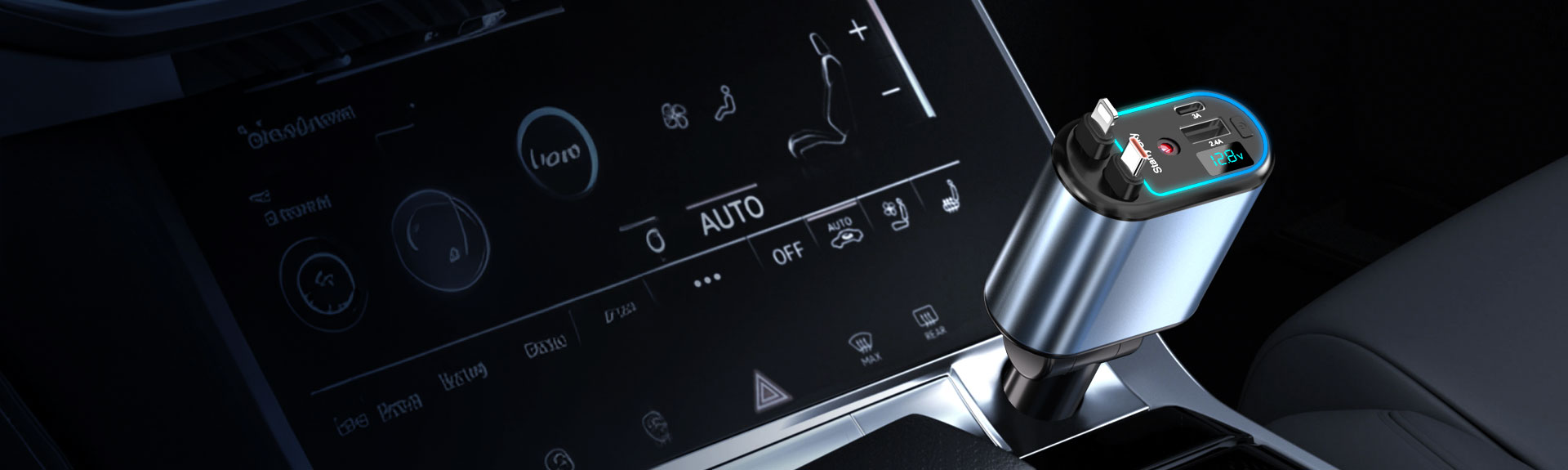


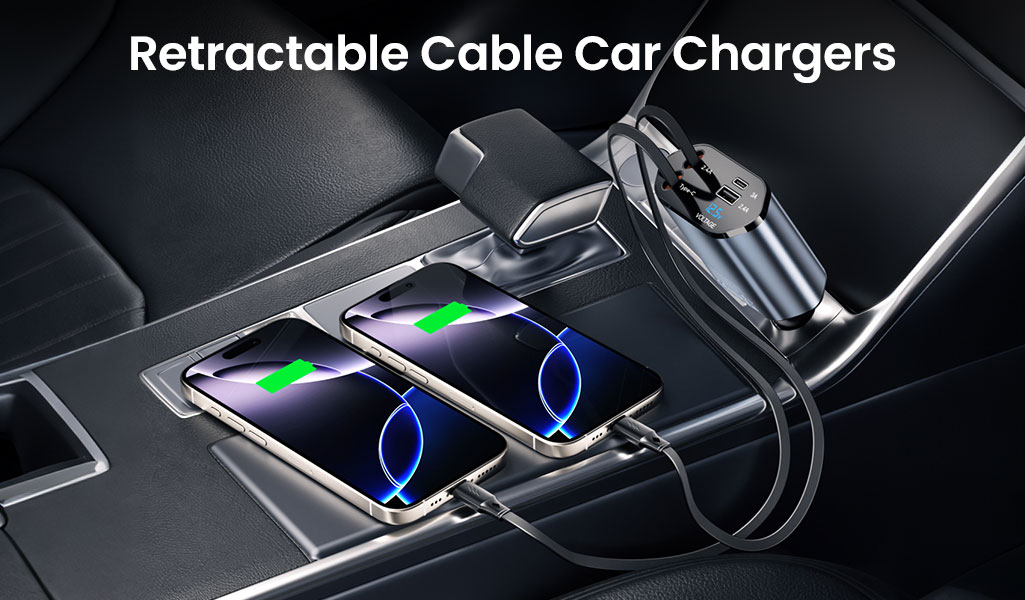
Retractable cable car chargers combine power delivery with cable storage. For users, the appeal is easy access to a charging lead without carrying a separate cable; for buyers, the moving cable mechanism introduces extra points to inspect. A charger may look compact and convenient on a product page, but bulk-order confidence depends on how the cable extends, retracts and behaves after repeated everyday use.
The most useful pre-order assessment combines two types of checks: electrical performance and mechanical behavior. Buyers should examine the product in a real vehicle socket, verify the output configuration under actual loads, and agree on the test conditions that will be used to judge sample acceptance.
1. Check Fit and Adjustment in a Real Vehicle
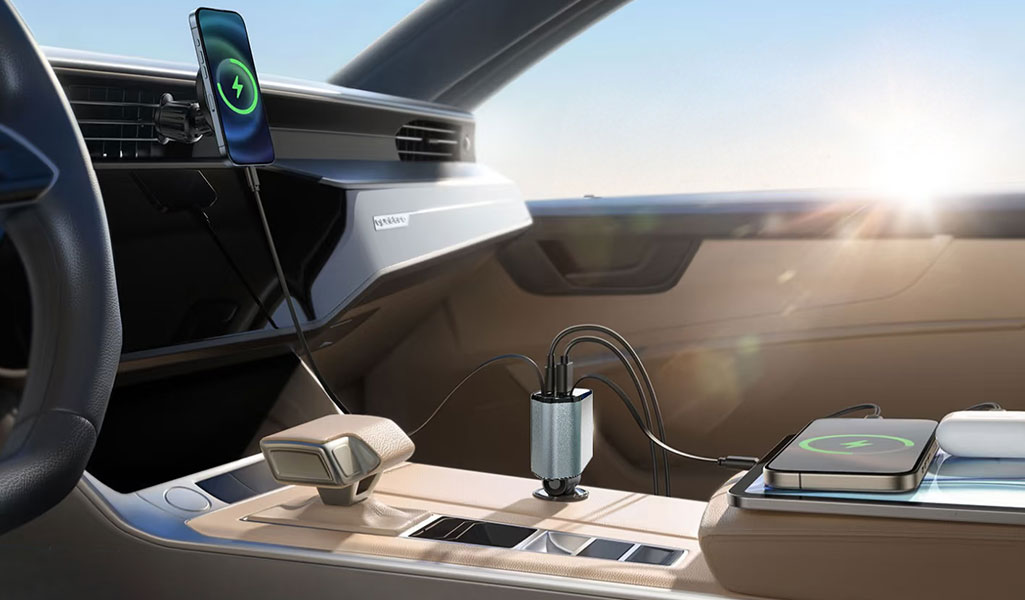
Start with the intended vehicle socket and the space around it. The plug should seat securely, and the charger body should not interfere with nearby controls, storage lids or the driver's access to the console. If the head is adjustable, verify the full range of motion and confirm that the product remains stable in the positions customers are likely to use.
The BWOO BO-CC108 and BO-CC109 pages list DC 12–24V input and a 180-degree adjustable charging head. Those are useful starting specifications, but buyers should test the fit on representative socket layouts and vehicle interiors relevant to the target market.
2. Test the Retractable Mechanism—not Just the First Pull
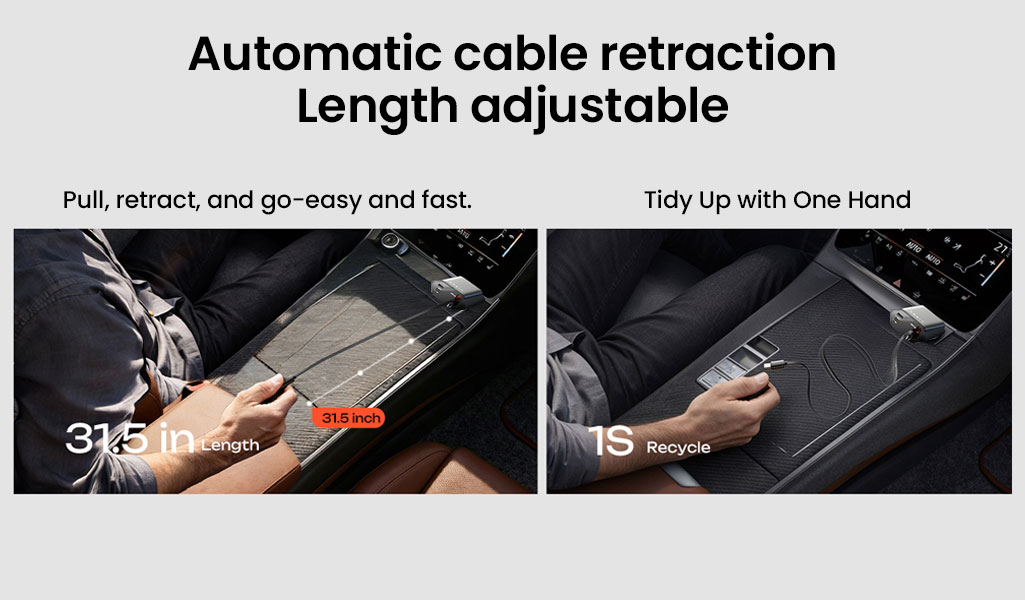
A new sample may extend and retract smoothly once, while performance can change with repeated operation, cable angle or dust and handling. Establish a repeatable test method before approving the product. Record how far the cable extends, whether it retracts consistently, whether the cable twists or catches, and whether the connector or housing shows signs of strain.
Pull the cable out and allow it to retract at different practical lengths; confirm that it locks or returns as designed.
Repeat the operation at realistic pull angles without jerking the cable. Watch for snagging, uneven retraction, excessive looseness or unusual noise.
Check the cable jacket near the exit point and inspect the connector strain relief after repeated extension and retraction.
Confirm that the cable does not retract so abruptly that it risks striking a phone or hand, and that the user can manage it safely.
Do not invent a universal life-cycle number. Ask the supplier whether a mechanical endurance test exists, how many cycles it covers, what angle and pull force are used, and what counts as a failure. If your channel requires a minimum cycle count, agree it before purchase and retain the test record with the approved sample.
3. Validate Power Output by Port and by Scenario
“120W” on a product headline should not be interpreted as 120W available from every port or cable. Check the total-output definition and the port-by-port table. Then test the combinations that the retailer plans to advertise: one device on the USB-C built-in cable, two devices on the built-in cables, and the required combination of built-in cables plus external ports. Record the charger, cable, device or electronic load used in each test.
The current BWOO pages for BO-CC108 and BO-CC109 list a 120W maximum product rating, with a Type-C built-in cable output up to 100W; the pages separately list the iPhone/Lightning cable, USB-A port and USB-C port outputs. Because maximums across outputs cannot be assumed to occur simultaneously, request the complete power-allocation table before publishing combination claims.
Test scenario | What to record | Why it matters |
Single Type-C built-in cable | Negotiated voltage/current, power, device and charger conditions. | Confirms the main high-output path under a defined setup. |
Two built-in cables at once | Output on each cable, total load and whether either device reconnects or slows unexpectedly. | Checks the actual multi-device behavior rather than reading each maximum separately. |
Built-in cables plus external ports | Port-by-port output and the total load supported in the intended combination. | Validates the use case implied by “4 in 1” or “charge multiple devices”. |
Sustained load | Duration, ambient conditions, housing temperature and any throttling or interruption observed. | Helps compare results under a repeatable condition; thresholds should be agreed with the supplier. |
Vehicle fit and movement | Socket fit, head position, visible cable path and whether operation interferes with driving controls. | Covers the in-car environment, not just a desk test. |
4. Check Heat, Materials and Everyday Handling
Car chargers operate in vehicles, where ambient temperature and sunlight can vary widely. Test sustained operation under the conditions specified for the product and market; record temperature using an agreed method instead of judging safety by touch alone. Ask which protection functions are included and request the relevant evidence for the exact model. Do not assume that one certificate or a similar-looking model proves every requirement.
Inspect the housing, cable exit, connector finish and adjustable joint. Look for uneven seams, loose parts, sharp edges, inconsistent fit or obvious damage after handling. The product pages list PC, PVC and aluminum alloy for these models, but material names alone do not establish durability; physical samples and test results remain important.
Two BWOO Models to Evaluate
Model | Published product positioning | Key points to confirm |
BO-CC108 | 120W 4-in-1 car charger with two retractable cables and an adjustable head. | 12–24V input; output allocation; cable retraction behavior; fit in target vehicles; model-specific compliance documentation. |
BO-CC109 | 120W 4-in-1 starry-light car charger with two retractable cables, an adjustable head and a voltage display. | Confirm all BO-CC108 checks plus the starry-light function, visibility, display behavior and whether the added light affects intended vehicle use. |
Review the current pages for BO-CC108, BO-CC109 and the wider BWOO Car Charger collection. Use the page specifications as the starting point for sample testing, not as a substitute for a completed acceptance record.
5. Make the Sample Part of the Purchase Agreement
Before mass production or shipment, document the approved product version, connector type, cable length, color, package contents, logo placement and tested output combinations. If a mechanical endurance test or temperature limit is important, write down the method, acceptance criteria and evidence to be provided. Keep a reference sample and ensure that any changes to components or specifications are approved before production.
A buyer preparing a private-label project can use the OEM/ODM quotation checklist and the existing OEM/ODM Complete Guide to align branding, quantities, sample approval and documentation. For a broader car accessory range, the related guide to car charger and phone-mount combinations and the article on 120W multi-port car chargers address adjacent buyer needs.
Conclusion
Retractable cable car chargers should be evaluated as both an electrical product and a moving mechanical assembly. Check vehicle fit, repeated extension and retraction, cable condition, power allocation under simultaneous use, heat behavior and exact model documentation. The strongest purchase decision is based on repeatable tests and agreed acceptance criteria—not the headline wattage or the convenience of a first-use demonstration.
To compare the BWOO models or discuss bulk requirements, review the product pages and contact BWOO to request the latest specification sheet, sample options and model-specific test evidence.
FAQ
Does a 120W car charger supply 120W to every output?
No. The product headline generally describes a maximum rating; each port and built-in cable has its own output limits, and simultaneous use may change the available power. Ask for the complete allocation table.
How many extension cycles should a buyer require?
There is no universal number that should be assumed for every design. Ask for the supplier’s test method and report, then agree on a suitable target and failure criteria for the intended use.
Should a retractable cable be tested while charging?
Yes, where the test setup allows it safely. Check both the mechanical behavior and power delivery, including cable position, connector stability and any interruption when other devices are connected.
Why test the charger in a real vehicle?
Socket depth, space, angle, vibration and access to controls vary. A bench test cannot show whether the product fits well or whether the cable path could interfere with the driver.
What documents should be requested before a bulk order?
Request model-specific specifications, relevant certification or test documents for the intended market, the port-power table, any mechanical endurance report, and the sample acceptance criteria agreed for the order.


