






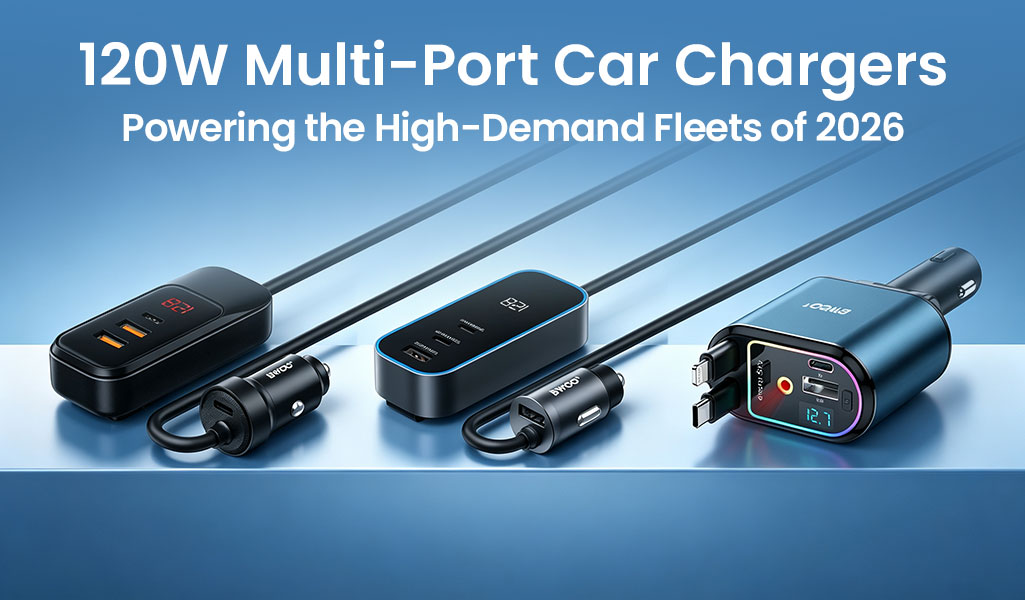
Modern vehicles are no longer just for driving; they are mobile offices, entertainment centers, and charging stations on wheels. Ride-hailing drivers, delivery fleets, and long-distance commuters depend on their phones and laptops staying powered through the day. That is why 120W multi-port car chargers have become one of the fastest-moving accessories in the automotive channel. This article explains the demand, the technology, and what B2B buyers must look for when sourcing high-power car chargers in 2026.
Why High-Wattage Car Chargers Are in Demand
Fleet and Ride-Hailing Use Cases
Professional drivers run navigation, dispatch apps, and payment terminals simultaneously, often for ten or more hours a day. A standard 20W or 30W car charger cannot keep multiple devices alive under continuous use. High-wattage multi-port chargers solve this by delivering enough power to charge a phone rapidly while also supporting tablets, dash cams, and other peripherals. For fleet operators and ride-hailing companies, reliable in-vehicle charging is a business necessity, not a convenience.
Multiple Devices, One Port
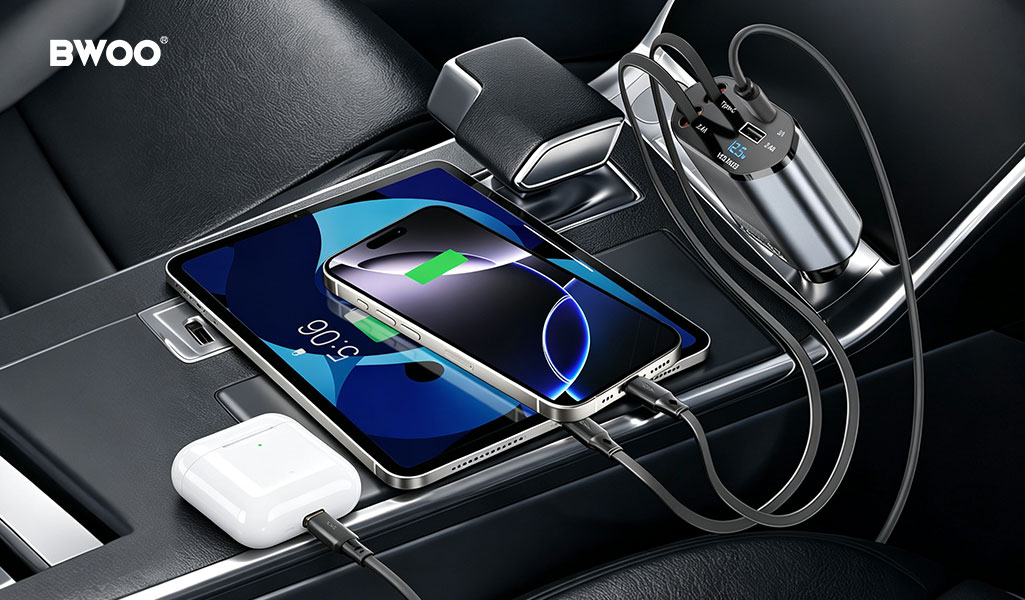
Most cars offer one or two 12V sockets, but modern drivers carry several devices. A multi-port charger consolidates charging into a single outlet, reducing cable clutter and keeping the cabin organized. The ability to charge a laptop, a phone, and earbuds from one compact unit is exactly the value proposition that retail customers understand and are willing to pay a premium for.
Understanding 120W Multi-Port Car Chargers
USB-C PD 100W for Laptops
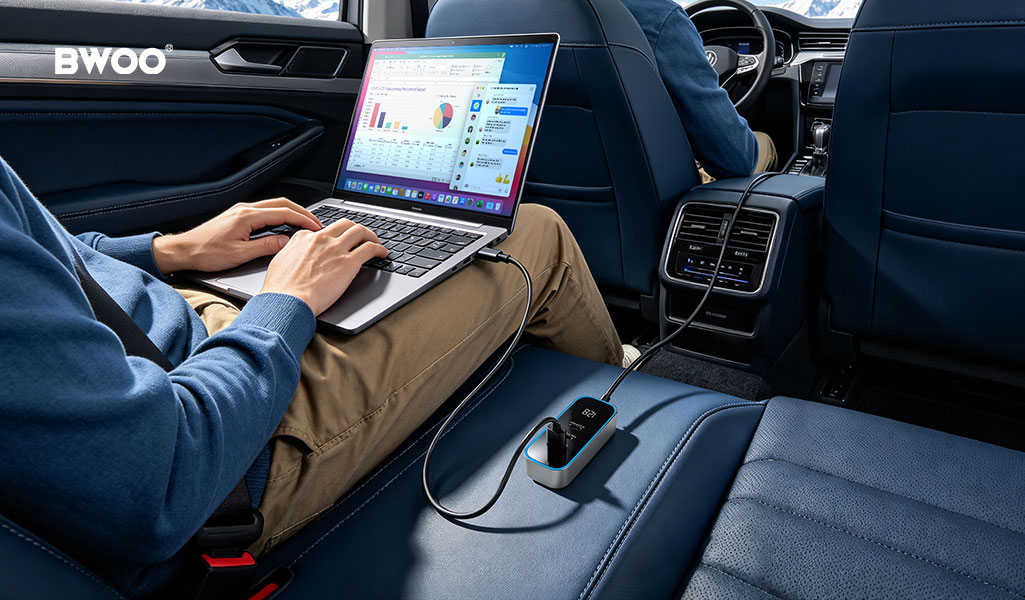
The defining feature of a 120W car charger is a USB-C Power Delivery port capable of up to 100W. This is enough to fast-charge most modern laptops, making the charger useful for remote workers and professionals who need to top up their computers between meetings. A single USB-C PD port at 100W is the anchor of the product, with the remaining wattage distributed across the other ports.
Additional Ports for Phones and Tablets
Beyond the 100W USB-C port, a well-designed 120W charger adds additional USB-C and USB-A ports. This lets users charge a phone, a tablet, and earbuds simultaneously without dropping below fast-charging speeds. The intelligent power management distributes current across ports, prioritizing high-demand devices and protecting lower-wattage ones.
120W vs. 65W vs. 30W Car Charger Comparison
Specification | 120W Multi-Port | 65W Dual Port | 30W Single Port |
Max USB-C Output | 100W (PD) | 60W (PD) | 30W |
Total Output | 120W | 65W | 30W |
Laptop Charging | Yes | Yes (most) | No |
Simultaneous Devices | 3+ | 2 | 1 |
Best For | Fleets, professionals | Commuters | Casual users |
Price Position | Premium | Mid | Entry |
Key Specifications B2B Buyers Should Demand
Safety Features and Protection
High-power charging generates heat, so safety design matters. Look for overload protection, overheat protection, short-circuit protection, and over-current protection built into the circuit. Reliable suppliers test these protections rigorously, and compliance with CE, FCC, and RoHS standards should be documented. For lithium-based and high-wattage products, confirm the relevant certifications for your target markets.
Compatibility with Charging Standards
The charger should support the fast-charging protocols your customers actually use, primarily USB Power Delivery and Qualcomm Quick Charge. Confirm that the USB-C PD port negotiates correctly with major laptop and phone brands, and that additional ports support common protocols. A charger that fails to trigger fast charging on popular devices will generate returns, regardless of its headline wattage. (内部链接: 博客文章: USB-C vs USB-A, Which Is Better|https://bwoohk.com/blog/usb-c-vs-usb-a.html)
Durability and Build Quality
Car chargers live in a harsh environment: heat, vibration, and frequent plugging and unplugging. Insist on metal or reinforced housings, high-quality connectors, and strain-relieved designs. A durable charger reduces warranty claims and strengthens the reputation of both the wholesaler and the retail brand.
Sourcing Multi-Port Car Chargers: What to Ask Your Supplier
Before committing to a supplier, ask five questions. First, what is the real continuous output of the USB-C PD port under load? Second, which fast-charging protocols are supported and verified? Third, what safety certifications and test reports are available? Fourth, what is the MOQ and lead time for custom branding and packaging? Fifth, can you provide samples for independent testing? A transparent supplier with verifiable answers is worth more than the lowest price.
FAQ
Can a 120W car charger charge a laptop?
Yes. A 120W multi-port car charger with a USB-C PD port rated up to 100W can fast-charge most modern laptops, making it ideal for remote workers and professionals on the move.
How many devices can a 120W car charger power at once?
A well-designed 120W charger typically powers three or more devices simultaneously, distributing power intelligently across its USB-C and USB-A ports while maintaining fast charging speeds.
Is it safe to use a high-wattage car charger every day?
Yes, provided the charger includes proper protection circuits and comes from a compliant supplier. Look for overload, overheat, short-circuit, and over-current protection, plus relevant safety certifications.
What is the difference between PD and QC fast charging?
USB Power Delivery (PD) is the standard protocol for USB-C devices, including most laptops and newer phones, while Qualcomm Quick Charge (QC) is common on Android devices. A multi-protocol charger supports both for maximum compatibility.
Power Up Your Automotive Accessory Line
The 120W multi-port car charger is a proven high-ticket item for fleets, professionals, and power users. With the right specifications, safety certifications, and customization options, it can anchor a profitable automotive accessory line for 2026. Explore BWOO's multi-port car charger collection and contact our team for samples, MOQs, and OEM support.
[Send Inquiry] Looking to add high-wattage car chargers to your lineup? Contact the BWOO team for product specs, samples, and wholesale pricing.


