

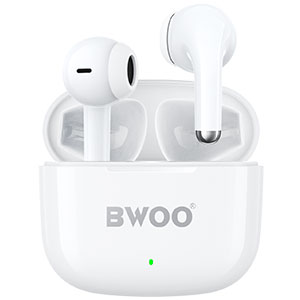


Something unexpected is happening in the wireless earphone market. For years, the industry assumed that the ultimate goal was an earphone that blocks out the world — first with passive isolation, then with active noise cancellation. But in 2026, the fastest-growing category is the exact opposite: open-ear clip-on earphones that let you hear your music and your surroundings at the same time.
The Numbers: How Fast Is Open-Ear Growing?
According to Counterpoint Research, open-ear wireless earphone shipments grew 47% year-on-year in 2025, reaching 86 million units globally. This growth rate is more than 3x the growth rate of the overall TWS market. By 2027, open-ear is projected to represent over 25% of all wireless earphone shipments, up from just 8% in 2023.
The demographic driving this growth is notable: while in-ear TWS originally found its audience among young, tech-forward consumers, open-ear adoption is broad-based — fitness enthusiasts, office workers, parents who need to stay aware of their children, and older consumers who find in-ear tips uncomfortable. This broader demographic has attracted major brands: Bose, Sony, and Shokz (formerly AfterShokz) have all launched or announced open-ear products in 2025-2026.
Open-Ear Clip-On vs. In-Ear vs. Bone Conduction: Full Comparison
Feature | Open-Ear Clip-On | In-Ear TWS | Bone Conduction |
Comfort (6+ hours) | Excellent — no ear canal contact, 4-6g per side | Moderate — silicone tip fatigue after 2-3 hours | Good — rests on temple, no canal contact |
Sound Quality | Good — spatial audio, limited bass | Excellent — sealed chamber, full frequency range | Moderate — weak bass, mid-focused |
Ambient Awareness | Full — ears completely open | Limited — requires transparency mode (ANC on) | Full — ears completely open |
Battery Life | 6-8 hours (per charge) | 4-7 hours (ANC on), 6-9 hours (ANC off) | 6-10 hours |
Water Resistance | IPX4-IPX5 (typical) | IPX4-IPX7 (varies) | IPX5-IPX7 (typical) |
Call Quality (ENC) | Very Good — directional mics | Good (varies by model) | Moderate — less mic placement flexibility |
Best Use Case | Office, walking, gym, parenting | Commute, flights, focused work | Swimming, cycling, outdoor sports |
2026 Price Range (Retail) | USD 25-80 | USD 15-200 | USD 50-180 |
Why Consumers Are Choosing Open-Ear in 2026
All-Day Wearability: The number one reason consumers cite for switching from in-ear to open-ear is comfort. In-ear earphones rely on silicone tips that expand inside the ear canal to create a seal. For a 30-minute commute, this is fine. For an 8-hour work day, it becomes genuinely uncomfortable. Open-ear clip-ons rest gently on the outer ear without entering the canal at all. BWOO's BO-BW99 weighs just 4.8g per side — light enough to forget you are wearing them.
Safety and Situational Awareness: For anyone who exercises outdoors, walks in traffic, or works in an environment where hearing ambient sound is important, open-ear is the safer choice. In-ear ANC in transparency mode attempts to recreate this effect electronically, but even the best transparency modes sound slightly artificial and introduce a 5-15ms latency that can be disorienting in fast-moving traffic situations.
No Occlusion Effect: In-ear earphones create an 'occlusion effect' — the amplification of body-generated sounds (footsteps, breathing, chewing) that are trapped inside the sealed ear canal. For runners and gym users, this constant thudding with each step is one of the most underreported annoyances of in-ear designs. Open-ear eliminates it entirely.
Hygiene in Hot Climates: In tropical and desert climates — Southeast Asia, the Middle East, Australia, the southern United States — in-ear earphones accumulate sweat, earwax, and bacteria inside the ear canal, often causing ear infections with prolonged use. Open-ear designs avoid ear canal contact entirely, making them inherently more hygienic for hot-weather users.
The Ideal Use Cases for Open-Ear
Office and Remote Work
Open-ear earphones let you listen to music, take calls, and hear a colleague tap on your shoulder — all without removing or pausing anything. For remote workers in shared spaces, this awareness is essential. The BO-BW99's ENC (Environmental Noise Cancellation) ensures your call quality is clear even in a moderately noisy office environment.
Fitness and Outdoor Exercise
Runners, cyclists, and gym users are the original adopters of open-ear technology. Hearing approaching vehicles, fellow runners, or gym equipment alerts is a genuine safety consideration. Open-ear clip-ons provide this awareness without the head-vibration fatigue associated with bone conduction alternatives.
Parenting and Caregiving
Parents of young children who want to listen to podcasts or take calls while remaining attentive to their child's sounds have found open-ear to be the ideal compromise between staying connected and staying available.
Introducing BWOO BO-BW99: The Open-Ear Clip-On Built for All-Day Use
BWOO's BO-BW99 embodies the open-ear value proposition with wireless 6.0 for stable, low-latency connection, ENC for clear calls, IPX5 water resistance for sweat and rain, and a featherweight 4.8g-per-side design. The clip-on mechanism uses a memory-alloy earhook that conforms to individual ear shapes without pinching. Battery life is 6.5 hours per charge, with an additional 25 hours in the pocket-sized charging case.
For B2B buyers: the BO-BW99 is one of the fastest-growing SKUs in BWOO's earphone portfolio, reflecting the broader market shift toward open-ear. As a pure B2B brand, BWOO offers this product exclusively to distributors and retailers — no direct-to-consumer competition.
The Verdict: Which One Should You Stock?
For B2B distributors and retailers, the smartest 2026 strategy is a portfolio approach that covers both in-ear ANC and open-ear clip-on models. Consumers are not switching en masse away from in-ear — they are adding open-ear as a second pair for specific use cases. The distributor who stocks both categories, and educates retail staff on their complementary use cases, maximizes basket size and customer satisfaction. BWOO's BO-BW61 (ANC in-ear, replaceable battery) paired with the BO-BW99 (open-ear clip-on) covers both ends of the 2026 earphone demand curve from a single supplier.
Open-Ear and the Fitness Boom: Why Gyms Are Going Open
Walk into any major gym chain in 2026 — Equinox, Barry's, PureGym — and you will notice a shift in what people are wearing in their ears. Three years ago, it was AirPods Pro (ANC in-ear). Today, approximately 30-35% of gym-goers wear some form of open-ear audio, whether Shokz bone conduction or clip-on designs.
The reasons are practical:
In-ear earphones get dislodged during high-intensity movements like burpees, box jumps, and deadlifts — clip-ons stay put because they hook onto the ear;
Open-ear awareness lets you hear if someone is trying to get your attention or if equipment is malfunctioning;
Sweat management is simpler — no silicone tips to clean or replace.
BWOO's BO-BW99 with IPX5 rating is built for this exact use case: sweat-proof, secure clip-on fit, and enough battery to cover even the longest gym session plus the commute home.
The Technology Behind Clip-On Earphones: How Sound Reaches Your Ear
Open-ear clip-on earphones use a fundamentally different acoustic principle than in-ear monitors. Instead of creating a sealed chamber in your ear canal, open-ear designs use precisely angled micro-speakers that direct sound toward the ear canal opening without blocking it. The driver sits just outside the ear, angled to project sound waves that travel a short distance through open air into the canal. Modern clip-on designs like BWOO's BO-BW99 incorporate spatial audio tuning that compensates for the lack of acoustic seal by boosting mid-range frequencies and using DSP (Digital Signal Processing) to minimize the perceived bass loss that open-air designs traditionally suffer. The result is sound quality that is closer to a desktop speaker experience than to in-ear monitors — wider soundstage, more natural instrument separation, but with less isolation and less earth-shaking sub-bass than a sealed IEM. For genres like classical, acoustic, podcasts, and audiobooks, many listeners actually prefer the open-air sound signature.


