





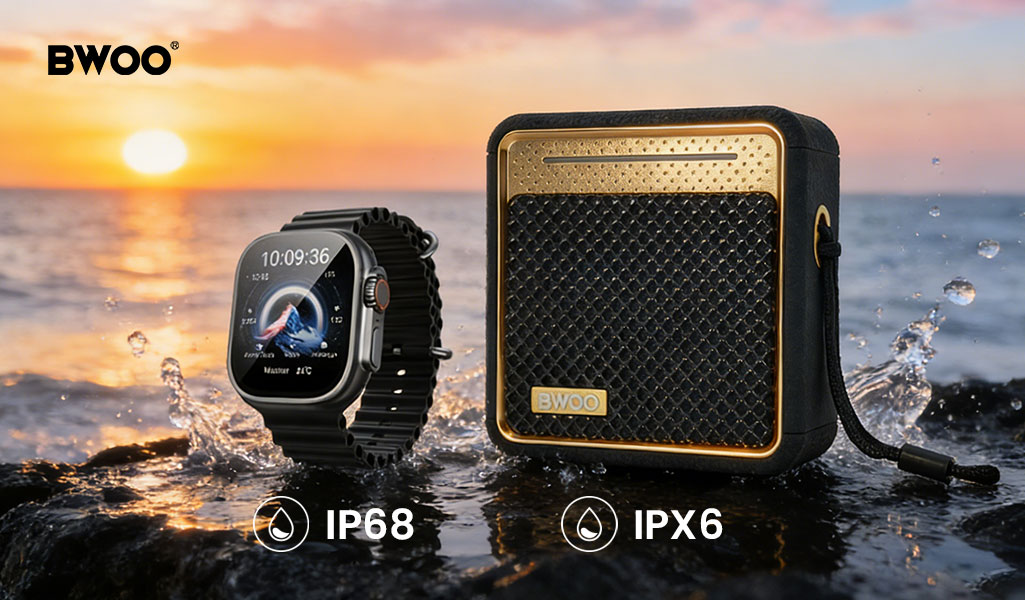
Traditionally, water and electronics simply did not mix. A splash of water, sweat, or rain was often enough to permanently damage a device.
As sealing technology and product standards improved, electronic devices began to tolerate moisture in controlled ways. Today, we see smartwatches worn during workouts, portable speakers used outdoors, and even phones designed to survive accidental water exposure.
These capabilities are defined by a standardized system known as the IP code. This article explains what IP ratings are, what common levels such as IPX4 to IPX7 and IP67 actually mean, and which types of products typically use them.
What are IP codes?
IP stands for Ingress Protection, a classification system defined by the International Electrotechnical Commission (IEC).
An IP rating describes how well a device is protected against:
Solid objects, such as dust or sand
Liquids, mainly water
A full IP rating consists of two digits:
The first digit refers to solid particle protection (0–6)
The second digit refers to liquid protection (0–9)
When a device is marked as IPX4, the “X” indicates that solid particle protection was not tested, while water resistance was.
Understanding Common IP Water Resistance Levels
IPX4 — Protection Against Splashes
IPX4 devices are protected against water splashes from any direction.
Typical scenarios:
Sweat during exercise
Light rain
Daily moisture exposure
This level is commonly found in entry-level smartwatches, fitness trackers, and other wearables designed for everyday use.
IPX5 — Protection Against Low-Pressure Water Jets
IPX5 devices can withstand water projected from a nozzle at low pressure.
Typical scenarios:
Outdoor use in moderate rain
Occasional rinsing with running water
This level appears in some sports-oriented smartwatches and outdoor electronic accessories, but it is less common in compact devices.
IPX6 — Protection Against Strong Water Jets
IPX6 offers resistance against powerful water jets from all directions.
Typical scenarios:
Heavy rain
Water splashes during camping or outdoor activities
Due to structural requirements, IPX6 is most commonly seen in portable BT speakers and outdoor audio equipment, rather than small wearables.
IPX7 — Temporary Water Immersion
IPX7 allows a device to survive immersion in water up to 1 meter for 30 minutes under laboratory conditions.
Typical scenarios:
Accidental drops into water
Short-term exposure to wet environments
This level is often used for smartwatches, portable speakers, and rugged consumer electronics, but it does not indicate suitability for swimming or diving.
IP67 — Dustproof and Water Immersion Protection
IP67 combines:
Complete dust protection (6)
Water immersion protection up to 1 meter (7)
This rating is commonly used in:
Outdoor smartwatches
Rugged portable speakers
Industrial or outdoor consumer electronics
IP67 is chosen when devices must operate reliably in dusty, sandy, or wet environments.
Where Are IP Ratings Commonly Used?
IP codes are most frequently found in the following product categories:
Smartphones and rugged phones
Outdoor and industrial electronics
Home appliances exposed to moisture
The specific IP level depends on product size, enclosure design, and intended usage environment.
Important Limitations to Understand
IP ratings are based on controlled laboratory tests, not unlimited real-world conditions.
They do not cover steam or water vapor
They do not account for corrosive liquids such as seawater or chlorinated pool water
They do not include dynamic water pressure, such as diving or high-speed water impact
Understanding these limits is essential to avoid misuse and premature device failure.
Conclusion
IP codes provide a standardized way to describe how electronic devices handle dust and water exposure.
By understanding what levels like IPX4, IPX6, IPX7, and IP67 actually represent—and where they are commonly applied—users can make more informed choices and match products to their real usage scenarios rather than relying on assumptions.


