




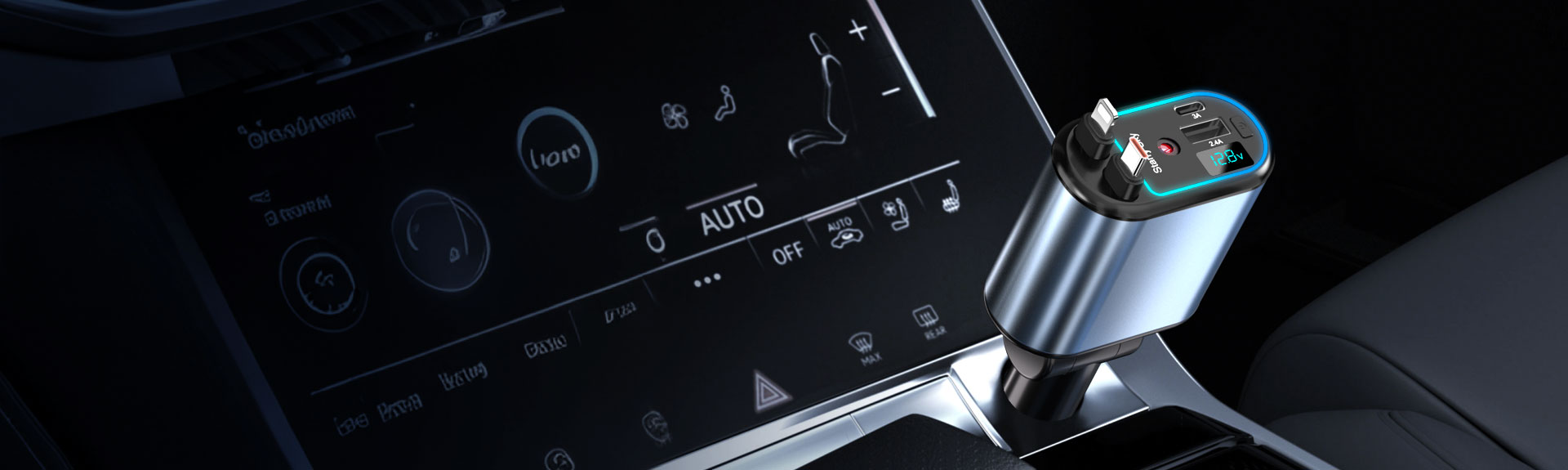


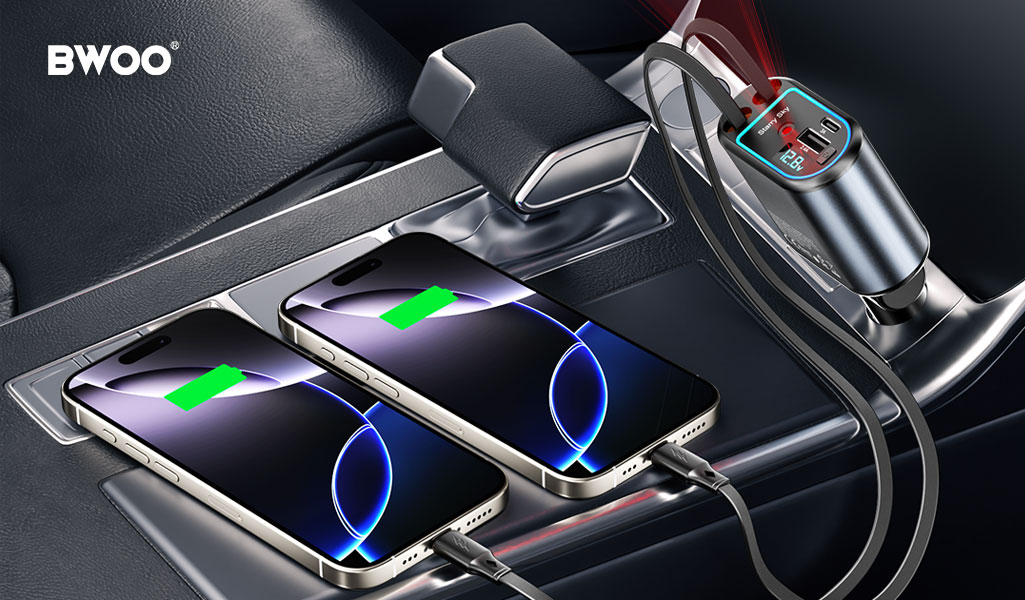
You park the car, turn off the engine, and just before walking away, you notice the indicator light on your car charger is still on.
"Will it drain my car battery overnight?"
"Could my car fail to start tomorrow morning?"
Some drivers unplug their car charger every single time. Others never do—and claim nothing bad has ever happened. So who's right?
Based on modern vehicle electrical systems in 2026, BWOO explains when unplugging is necessary—and when it's completely unnecessary.
The Only Thing That Matters: Is Your Cigarette Lighter Always-On or Switched?
This single factor determines everything.
Type A: Power Cuts Off When the Engine Stops (Most Modern Cars)
How to tell:
When you turn off the engine or press the stop button, the charger's indicator light turns off.
Conclusion:
There is no need to unplug the car charger. The circuit is physically disconnected, meaning zero current draw.
Type B: Always-On Power After Engine Shutdown (Some Older European or American Models)
How to tell:
After shutting off the engine, dash cams keep recording or the charger light stays on.
Potential risk:
With no device connected, power consumption is extremely low
With high-power devices connected, long-term parking could cause battery drain
Debunking 3 Common Myths About Leaving Car Chargers Plugged In
Myth 1: "Standby Power Will Drain My Car Battery"
The data:
A BWOO car charger with an LED indicator typically draws less than 10–20mA in standby.
The math:
For a standard 60Ah car battery, this level of draw is negligible unless the vehicle is left unused for several weeks.
Conclusion:
Daily parking or even a few days of inactivity poses no real risk.
Myth 2: "Engine Start Voltage Spikes Will Damage My Phone"
Reality:
Modern vehicles temporarily cut auxiliary power during engine startup.
Even if voltage fluctuation occurs, BWOO car chargers use built-in voltage regulation chips that filter unstable input and protect connected devices.
Myth 3: "Car Chargers Are a Fire Hazard"
The truth:
Fire risks are associated with low-quality chargers lacking proper heat and safety design.
Car chargers that meet CE and RoHS standards are designed with thermal protection and flame-resistant materials to handle long-term power connection safely.
Why BWOO Car Chargers Are Safe to Leave Plugged In
This is where engineering makes the difference.
Ultra-Low Standby Power Design
BWOO uses high-efficiency, low-power ICs that keep standby current at about half the industry average.
Smart IC Multi-Layer Protection
Every BWOO car charger includes:
Over-current protection
Short-circuit protection
Over-temperature protection
Even in always-on vehicles, power is managed safely and intelligently.
Flame-Retardant Housing
Made from high-grade PC or aluminum alloy materials, BWOO car chargers are built to withstand extreme summer cabin temperatures without deformation or ignition risk.
Three Practical Tips for Peace of Mind
1. Check once, remember forever:
After turning off the engine, glance at the charger light—you'll instantly know your vehicle type.
2. Long-term parking? Unplug everything:
If the car will sit unused for over a week, removing external accessories is a smart precaution.
3. Choose trusted brands:
Cheap chargers may fail to fully shut down internal circuits, increasing long-term risk.
Conclusion
For the vast majority of modern vehicles in 2026, leaving your car charger plugged in after turning off the engine is completely safe.
Battery anxiety usually isn't caused by electricity—it's caused by uncertainty. With proper knowledge and a well-designed charger, there's nothing to worry about.


