



A great pair of headphones is defined by more than just comfort and design-sound quality is the most critical factor. However, evaluating sound quality can be subjective, as everyone's listening preferences and hearing sensitivities differ. To make informed choices based on reliable audio characteristics, understanding how to test and analyze headphone sound quality is essential.
This guide walks you through practical, accurate, and widely accepted testing methods to assess the performance of any headphones.
Frequency Response
Frequency response describes how well headphones reproduce sound across low, mid, and high frequencies. It is the foundation of overall audio quality.
How to Test
Play frequency sweep tracks (20Hz-20kHz).
Use reference tracks that you are familiar with, particularly vocals and acoustic instruments.
Use audio testing software or apps (e.g., REW, AudioCheck).
How to Analyze
Balanced response:
No frequency band should overpower others.
Bass:
Should sound full but not muddy.
Mids:
Vocals and instruments should stay natural and forward.
Highs:
Should be crisp without harshness or sibilance.
Identify peaks or dips that indicate coloration or imbalance.
Soundstage and Imaging
Soundstage refers to the perceived spatial width of audio, while imaging is the accuracy of placing audio elements within that space.
How to Test
Listen to binaural recordings or live concert tracks.
Use positional audio test files (left/right, center, distance cues).
Choose orchestral music or acoustic live recordings.
How to Analyze
Soundstage width:
Wide soundstage feels open and immersive.
Depth accuracy:
Ability to distinguish near vs. far sounds.
Imaging:
You should clearly locate instruments or vocals in the stereo field.
Bass Quality
Bass performance affects musical genres such as EDM, hip-hop, and cinematic tracks.
How to Test
Play bass sweep and sub-bass rumble tracks.
Listen to songs with punchy kick drums or deep drops.
Use low-frequency distortion test files.
How to Analyze
Sub-bass extension:
Should reach low frequencies without distortion.
Mid-bass punch:
Should be tight, not boomy.
Control:
Bass should not bleed into mids or overpower vocals.
Treble Clarity
Treble defines detail, brightness, and overall clarity.
How to Test
Play high-frequency chirp or sparkle tracks.
Listen to music with strings, cymbals, or high-hat patterns.
How to Analyze
Clarity:
Details should sound clean and crisp.
No harshness:
Sharp treble can cause fatigue.
Airiness:
Good headphones present subtle ambient details without noise.
Harmonic Distortion
Total harmonic distortion (THD) impacts the purity and accuracy of sound reproduction.
How to Test
Use THD test tones available on audio testing websites.
Play music with complex layers, like electronic tracks or rock.
How to Analyze
Low THD:
Clean sound without buzzing or crackling.
High volume stability:
Sound should remain accurate even when increasing volume.
Driver performance:
Distortion indicates the driver is struggling with certain frequencies.
Noise Isolation and ANC Performance
Noise isolation and active noise cancellation (ANC) significantly affect listening quality in noisy environments.
How to Test
Test in real environments (bus, office, café noise).
Play simulated noise tracks (airplane cabin, crowd noise).
Toggle ANC on/off to observe differences.
How to Analyze
Passive isolation:
Good seal reduces external noise even without ANC.
ANC effectiveness:
Low-frequency noise should be significantly reduced.
Sound quality with ANC on:
High-quality headphones maintain stable audio without hiss or pressure.
Long-Term Comfort Evaluation
Comfort affects listening experience during long sessions.
How to Test
Wear the headphones for at least 1-2 hours continuously.
Check headband pressure, ear cushions, and overall fit.
Move your head naturally to see if they stay secure.
How to Analyze
Pressure balance:
Should not cause soreness or fatigue.
Breathable materials:
Reduce heat buildup.
Stability:
Should stay in place without being too tight.
Conclusion
Testing headphone sound quality requires a combination of objective evaluation and personal listening preferences. By analyzing frequency response, soundstage, bass performance, treble clarity, distortion, ANC effectiveness, and long-term comfort, you can gain a complete picture of a headphone's sonic performance.
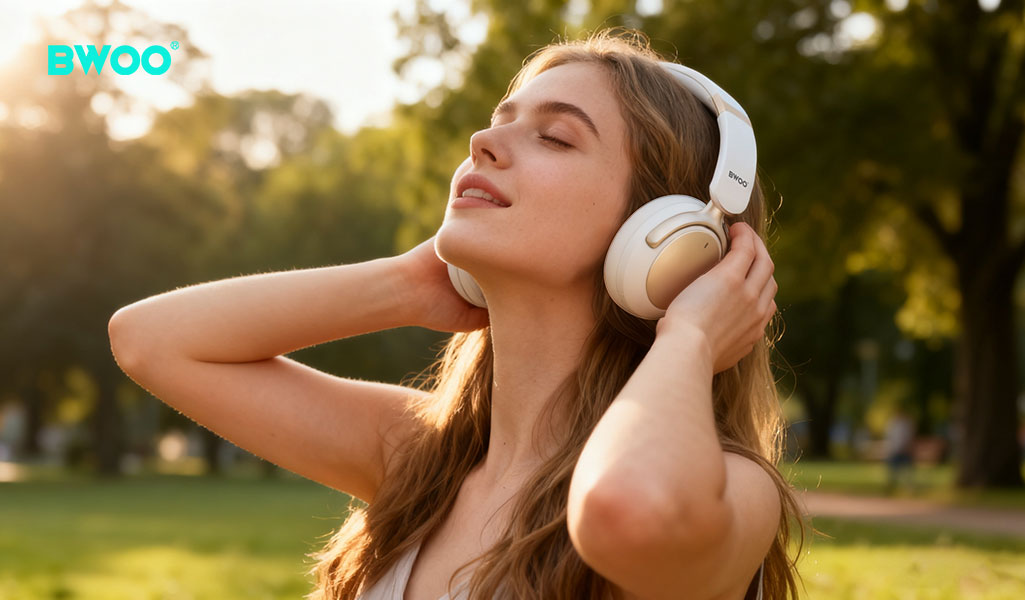
For users seeking a balanced and high-fidelity experience, BWOO BO-BW589 is an excellent option. It features Active Noise Cancellation and a 40mm composite driver, delivering well-balanced Hi-Fi sound across all frequencies-ideal for both casual listeners and audio enthusiasts.


