

Headphones

How to Choose Wireless Earbuds: A Complete Buyer's Guide

2026-07-11 18:04

how to choose wireless earbuds.jpg


Shopping for wireless earbuds in 2026 can feel like navigating a maze. Walk into any electronics store or scroll through an online marketplace, and you will face hundreds of options ranging from 15no - namebudsto300 flagship models. The spec sheets are filled with jargon: ANC, ENC, IPX ratings, codec names, driver sizes, and battery figures that do not always add up. How do you cut through the noise and pick the right pair?

This guide breaks down every dimension that matters when choosing wireless earbuds, explains how to read between the lines of spec sheets, and maps different models to real-world use cases. By the end, you will have a clear framework for making a confident purchase, whether your budget is 30 or 150.


The Seven Dimensions of Wireless Earbud Selection

1. Sound Quality: Drivers, Codecs, and Tuning

Sound quality is the foundation of any earbud experience, yet it is also the hardest dimension to judge from a spec sheet. Two technical factors influence what you hear:

Driver Size and Type: Most wireless earbuds use dynamic drivers ranging from 6mm to 13mm. Larger drivers generally move more air and produce fuller bass, but driver quality matters more than raw size. A well-tuned 10mm driver can outperform a poorly engineered 13mm one. Some premium models use hybrid setups combining dynamic drivers for bass with balanced armature drivers for treble detail, though this adds cost and complexity.

Audio Codecs: The codec determines how audio data is compressed and transmitted wirelessly from your phone to the earbuds. SBC is the baseline codec found on all wireless earbuds, offering acceptable but not great sound. AAC delivers better quality on iPhones. Qualcomm's aptX and aptX HD provide higher bitrates on compatible Android devices. LDAC, developed by Sony, supports near-lossless transmission at up to 990 kbps. If you stream from services like Tidal or Apple Music Lossless, look for earbuds that support at least AAC or aptX. Hi-Res Audio certification is another useful signal, indicating the earbuds can reproduce frequencies beyond the standard 20Hz-20kHz range.

Practical tip: Codec support matters only if both your earbuds and your phone support it. Check your phone's specifications before paying a premium for LDAC or aptX HD.

2. Noise Cancellation: ANC, Passive, or None?

Noise cancellation has become the most marketed feature in wireless earbuds, but not all cancellation is created equal. Understanding the three tiers is essential:

  • Passive Noise Isolation: Every earbud that seals your ear canal provides some level of passive isolation. In-ear designs with silicone or foam tips physically block external sound. Well-fitted tips can attenuate 15-25dB of ambient noise without any electronics. For many users in moderately quiet environments, good passive isolation is sufficient.

  • Active Noise Cancellation (ANC): ANC uses microphones on the outside of each earbud to capture ambient noise, then generates an inverted sound wave to cancel it out before it reaches your eardrum. Modern ANC systems can reduce steady low-frequency noise such as engine hum, air conditioning drone, and train rumble by 25-42dB. The critical number to watch is the noise reduction depth in decibels (dB). Earbuds claiming "ANC" without specifying depth often deliver only 15-20dB of reduction, barely better than passive isolation. Premium implementations achieve -35dB to -42dB, eliminating roughly 95% of ambient noise.

  • Hybrid ANC adds internal microphones inside the ear canal for a second round of correction, improving cancellation of mid-frequency sounds like voices and keyboard clicks. Adaptive ANC goes further by automatically adjusting the cancellation intensity based on your environment, preserving battery when the room is already quiet.

Transparency Mode is the inverse of ANC. Instead of blocking sound, it pipes external audio through the microphones so you can hear announcements, traffic, or conversations without removing the earbuds. This is a must-have for office workers and urban commuters.

3. Battery Life: Single Charge and Total with Case

Battery life numbers on product pages can be misleading. Here is how to read them correctly:

  • Single-Charge Playtime: This is how long the earbuds last on one full charge. Most models range from 4 to 8 hours. ANC consumes additional power, so manufacturers often list two figures (e.g., "7 hours without ANC, 5 hours with ANC"). Always check the ANC-on figure if you plan to use noise cancellation regularly.

  • Total Battery with Charging Case: The case holds additional charges, extending total use to anywhere from 20 to 40+ hours. A specification like "5+25 hours" means 5 hours from the earbuds plus 25 hours stored in the case, totaling 30 hours before you need a wall outlet.

  • The mAh Trap: Do not compare battery capacity in milliampere-hours (mAh) across different earbuds. A 40mAh earbud battery on one model may last 4 hours, while a 45mAh battery on another lasts 6 hours, because power consumption varies significantly based on driver efficiency, ANC processing, and wireless chip optimization. Focus on actual usage hours from reviews and manufacturer specifications, not raw mAh numbers.

  • Charging Speed: Quick-charge features that deliver 1-2 hours of use from a 10-minute charge are increasingly common and worth prioritizing for heavy users. Also check whether the case supports wireless charging if you own a wireless charging pad.

4. Fit Style: In-Ear, Half-In-Ear, or Open-Ear?

The physical design determines comfort, noise isolation, and stability:

  • In-Ear (Canal-Type): The earbud tip inserts into the ear canal, creating a seal. This provides the best passive noise isolation, stronger bass response, and a secure fit for exercise. The downside is that some users find the plugged-ear sensation uncomfortable during extended wear. Multiple ear tip sizes (S/M/L) are essential for a proper seal.

  • Half-In-Ear (Semi-Open): The earbud rests in the concha without penetrating the ear canal, similar to classic Apple EarPods. Half-in-ear designs are more comfortable for all-day wear and allow some ambient awareness, but they sacrifice noise isolation and bass impact. They are ideal for office environments where you need to hear colleagues.

  • Open-Ear (Clip-On or Bone Conduction): These designs sit outside the ear canal entirely, using either air conduction from small speakers near the ear or bone conduction through the temple. They maximize situational awareness and are the safest choice for outdoor running and cycling, but sound quality and bass are notably weaker than in-ear designs.

5. Water Resistance: IPX Ratings Decoded

The IPX rating tells you how well earbuds handle moisture and sweat:

Rating

Protection Level

Best For

IPX4

Splash-resistant (sweat, light rain)

Casual use, light exercise

IPX5

Water jet resistant (heavy sweat, rain)

Running, gym workouts

IPX6

Powerful water jet resistant

Intense outdoor training

IPX7

Immersion up to 1m for 30 min

Swimming (rare in wireless earbuds)


Note that the charging case is rarely rated for water resistance, even when the earbuds are. Always dry earbuds before placing them back in the case.

6. Connection Stability: Wireless Version and Chipset

Connection quality determines whether your earbuds drop audio during a commute or maintain a rock-solid link across rooms. Two factors dominate:

  • Wireless Version: BT 5.3 and BT 5.4 are the current standards, offering improved stability, lower latency, and better energy efficiency compared to BT 5.0 or 5.1. The newer versions also support LE Audio and the LC3 codec, which will become more relevant as phones adopt these standards. BT 6.0, now appearing on some 2026 models, introduces further range and bandwidth improvements.

  • Chipset Quality: Beyond the version number, the wireless chipset manufacturer matters. Qualcomm, Realtek, BES, and Airoha produce the chips inside most wireless earbuds. Premium chipsets from Qualcomm (QCC series) tend to offer more reliable multi-point connections and lower gaming latency.

  • Multi-Point Connection: This feature allows earbuds to simultaneously connect to two devices, such as a laptop and a phone, and switch between them seamlessly. It is invaluable for office workers who take calls on their computer while listening to music from their phone.

7. Call Quality: ENC and Microphone Count

Call quality is often an afterthought in earbud reviews but a daily frustration for users whose conversation partners complain about background noise.

ENC (Environmental Noise Cancellation) is distinct from ANC. While ANC is for your ears, ENC is for the person on the other end of your call. ENC uses microphones to identify and filter out background noise from your voice signal. Earbuds with dual-mic or quad-mic ENC arrays perform dramatically better in noisy environments like cafes, open-plan offices, and streets.

When evaluating call quality, look for earbuds that explicitly mention ENC or "AI noise reduction for calls." The number of microphones is a useful proxy: 4-mic systems generally outperform 2-mic setups.


Scenario-Based Buying Guide

Different use cases demand different feature priorities. The table below maps four common scenarios to the specifications that matter most:

Scenario

Top Priority

Secondary Priority

Nice to Have

Fit Recommendation

Commuting & Travel

ANC depth (≥-35dB)

Battery life (≥30h total)

Transparency mode, quick charge

In-ear for isolation

Sports & Fitness

IPX5+ water resistance

Secure fit (ear hooks/fins)

Ambient awareness

In-ear with hooks or open-ear

Office & Meetings

ENC call quality (≥2 mics)

Multi-point connection

Transparency mode, comfort

Half-in-ear or comfortable in-ear

Casual Daily Use

Comfort & price

Decent battery (≥20h total)

Good passive isolation

Half-in-ear or in-ear


Commuting and Travel: If you spend hours on trains, buses, or planes, ANC is non-negotiable. Look for earbuds with at least -35dB of noise reduction depth and a total battery life exceeding 30 hours so you can go days without recharging. Transparency mode is essential for hearing train announcements or flight gate changes without removing the earbuds. The in-ear form factor maximizes passive isolation, which works synergistically with ANC.

Sports and Fitness: Sweat and movement are the enemies of earbuds. Prioritize IPX5 or higher water resistance and a physical securing mechanism such as ear hooks, ear wings, or fins. Open-ear designs are safer for outdoor running because they preserve situational awareness, though they compromise on bass. If you prefer in-ear buds for the gym, look for models with multiple tip sizes and wing tips for a locked-in fit.

Office and Meetings: Call clarity defines the office earbud experience. ENC with at least two microphones per earbud is the minimum bar; four-mic arrays are better. Multi-point connection lets you take a Teams call on your laptop and immediately switch to music on your phone without re-pairing. Comfort for all-day wear is critical, making half-in-ear or lightweight in-ear designs the best choices.

Casual Daily Use: If you mostly listen to podcasts and take occasional calls in quiet environments, you can save money by skipping ANC and focusing on comfort, battery life, and build quality. A well-tuned pair of half-in-ear earbuds with 20+ hours of total battery and reliable wireless connectivity can serve 90% of daily needs at a fraction of the cost.


Key Parameters: How to Read Spec Sheets Like a Pro

Do not compare mAh. Compare real-world hours. As explained in the battery section, two earbuds with identical mAh ratings can deliver wildly different playback times because power consumption varies by design. Always look for manufacturer-stated playtime under realistic conditions (ANC on, moderate volume), and cross-reference with independent reviews.

Do not trust the "Noise Cancellation" label. Check the dB depth. Many budget earbuds advertise "ANC" or "noise reduction" but only achieve -15dB to -20dB, which is barely distinguishable from passive isolation with well-fitted tips. Quality ANC implementations specify their noise reduction depth, with -35dB being solid, -40dB being excellent, and -42dB or better representing top-tier performance that eliminates approximately 95% of ambient noise.

Driver size is not everything. A 10mm driver from a quality manufacturer with good tuning can sound far better than a generic 13mm driver. Look for Hi-Res Audio certification or specific codec support (AAC, aptX, LDAC) as more reliable quality indicators.

Check what the case actually does. Some charging cases only hold one extra charge, while others hold five or more. Some support wireless charging; others do not. The case also determines the total footprint in your pocket or bag, which matters for everyday carry.


Product Recommendations

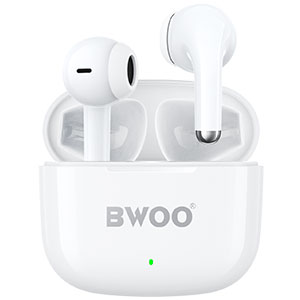
Understanding the theory is one thing. Finding earbuds that deliver on these dimensions without breaking the bank is another. Here are two BWOO models that exemplify what to look for in different usage scenarios:

Best for Commuting and Travel: BWOO ANC In-Ear Wireless Earbuds with Digital Display

For anyone who commutes daily or travels frequently, the BWOO ANC In-Ear Wireless Earbuds with Digital Display checks every box on the commuter's priority list. It delivers self-adaptive ANC with a noise reduction depth of -42dB, eliminating 95% of ambient noise from engines, traffic, and crowd chatter. The BT 6.0 connection ensures stable audio in high-interference environments like subway cars and airports.

Battery performance is a standout: 5 hours of playback on a single charge with ANC active, plus an additional 25 hours stored in the charging case, for a total of 30 hours. The LED digital display on the case shows remaining battery at a glance, so you never leave home with a dead case. Hi-Res Audio certification and 3D stereo sound ensure your music sounds as good as the silence surrounding it. Touch controls and IPX5 water resistance round out a package purpose-built for life on the move.

Best for Office and Daily Use: BWOO BO-BW61

For office professionals and everyday users who prioritize call clarity and long-term reliability, the BWOO BO-BW61 offers a compelling proposition. Its quad-mic ENC system ensures your voice comes through clearly on calls, even in open-plan offices and busy cafes. The ANC functionality cuts through ambient hum for focused work sessions.

What sets the BO-BW61 apart is its replaceable battery design. Unlike conventional wireless earbuds where the internal battery degrades over two to three years, eventually rendering the entire product unusable, the BO-BW61 allows you to swap in a fresh battery when the original one shows signs of wear. This means your earbuds maintain their original battery life for years, not months. The BT 6.0 chipset provides rock-solid connectivity with low latency, and the 32-ohm dynamic driver with bass boost tuning delivers engaging audio for music and podcasts alike. With up to 35 hours of total playtime, the BO-BW61 is built for all-day reliability.


Conclusion

Choosing wireless earbuds does not need to be overwhelming once you know which dimensions matter for your lifestyle. A commuter should prioritize ANC depth and battery life. An athlete needs water resistance and a secure fit. An office worker lives and dies by call quality and multi-point connection. A casual user can focus on comfort and value.

The most common mistakes buyers make are fixating on mAh ratings instead of real-world hours, trusting "noise cancellation" labels without checking dB depth, and assuming larger drivers automatically mean better sound. Avoid these traps, map your priorities to the scenarios above, and you will find earbuds that genuinely serve your needs rather than collecting features you will never use.

Quick Navigation
65W Chargers: Pras and Cons
Advantages of 65W Chargers;
Disadvantages of 65W Chargers;
65W Chargers: Pras and Cons
Advantages of 65W Chargers;
Disadvantages of 65W Chargers;
Advantages of 65W Chargers;
Disadvantages of 65W Chargers;
65W Chargers: Pras and Cons
Advantages of 65W Chargers;
Disadvantages of 65W Chargers;
Inquiry
You can use the form below to get in touch with Portworld.
Name*
Email*
Phone*
Company Name
Description*