




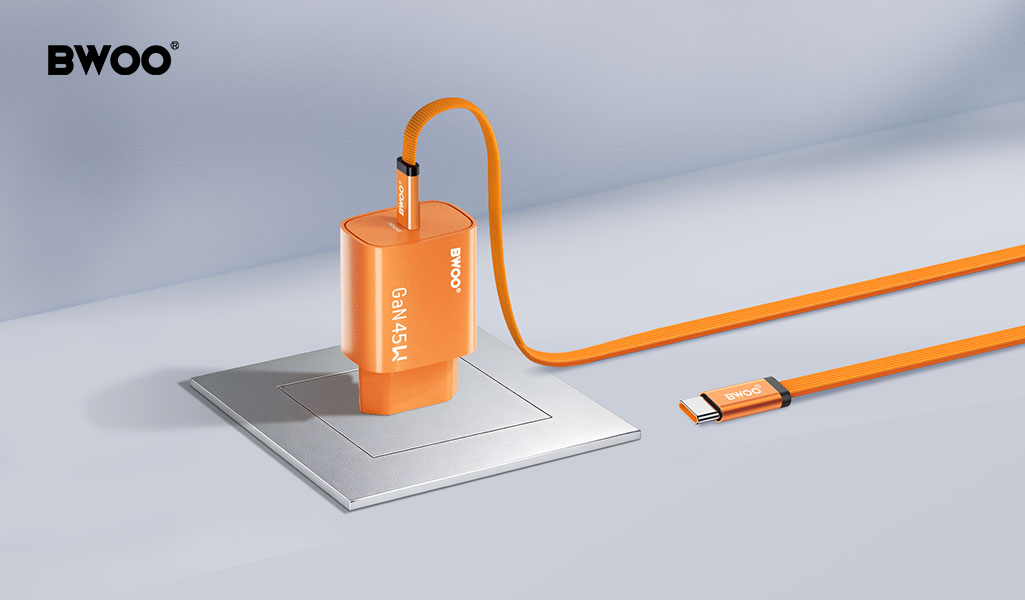
Many people leave their phone chargers plugged into the wall even when they are not actively charging a device. This raises a frequent question online: Does a charger consume electricity when it's plugged in but not charging?
The short answer is: yes, it does—but the amount is extremely small.
From the perspective of BWOO, a professional charger manufacturer, this phenomenon is known as no-load power consumption. In this article, we'll explain what it means, why it happens, how it reflects charger quality (especially for B2B buyers), and whether it really affects your electricity bill.
What Is No-Load Power Consumption?
No-load power consumption refers to the small amount of electricity a charger draws from the grid when it is plugged in but not connected to any device (or when the connected device is already fully charged).
Even though no phone is charging, the charger is not completely “off.” Certain internal circuits remain active to ensure the charger can respond instantly when a device is connected.
Why Does a Charger Consume Power Even When Not Charging?
1. How Switching Power Supplies Work
Modern phone chargers are switch-mode power supplies (SMPS). Once connected to AC power, several internal components must remain energized to maintain system stability, including:
Input rectification circuits
Control IC standby circuits
EMI filtering components
These parts operate at very low power but cannot be fully shut down without disconnecting the charger from the socket.
2. Sources of Energy Loss
Even under no-load conditions, small energy losses still exist, mainly from:
Startup resistor losses: Used to supply initial power to the control IC
Magnetic core losses: Minor losses in transformers or inductors
Capacitor leakage current: Tiny current flowing through electrolytic or ceramic capacitors
In well-designed chargers, these losses are carefully controlled and minimized.
Advanced Insight: What No-Load Power Tells You About Charger Quality (B2B Perspective)
For professional buyers and distributors, no-load power consumption is a key indicator of charger quality.
Energy Efficiency Level VI
High-quality chargers comply with DOE Level VI energy efficiency standards, which strictly limit no-load power consumption. This is now a baseline requirement in many global markets.
GaN Technology and Power Loss Reduction
Chargers using GaN (Gallium Nitride) components typically achieve:
Lower switching losses
Higher efficiency at both high load and standby
Reduced heat generation during idle operation
Safety, Heat, and Aging
Lower standby power means:
Less internal heat buildup
Slower component aging
Reduced risk of long-term reliability issues
For B2B buyers, this directly translates into lower RMA rates and better brand reputation.
The Math: How Much Does It Cost If You Leave a Charger Plugged In for a Year?
Let's assume a charger has a no-load power consumption of 0.1W.
Annual energy usage:
0.1W × 24 hours × 365 days = 0.876 kWh per year
That's less than 1 kWh per year, which is typically negligible on an electricity bill in most countries.
From a pure cost perspective, the impact is almost zero.
BWOO's Energy Efficiency Philosophy: Green, Efficient, and Long-Lasting
BWOO R&D Standards
At BWOO, every PD fast charger is designed with intelligent standby sleep technology. When no load is detected—or when a device reaches full charge—the control chip automatically switches to ultra-low power mode.
Advice for Buyers and Distributors
By choosing BWOO chargers certified to Level VI energy efficiency, buyers are not only helping end users save energy, but also:
Reducing heat-related failures
Extending product lifespan
Lowering after-sales service and RMA costs
This is especially important for large-scale distribution and long-term brand operations.
Conclusion
From a cost-saving perspective, leaving a charger plugged in when not charging is generally not a problem.
However, from an environmental standpoint and a product longevity perspective, unplugging chargers when they are not in long-term use is still a good habit.
If you're interested in learning whether keeping a charger plugged in long-term poses any safety risks, you can read another article on BWOO blog.
Related readings:
Best Charger Manufacturer in China


