



Studying in public spaces - coffee shops, libraries, or shared dorm rooms - can be a challenge. Unexpected notifications, conversations, and foot traffic regularly break concentration. For many students, a good pair of headphones is more than a music device: it’s a tool to shape an audio environment that helps focus and retention. Research suggests that the right auditory conditions (including quiet via noise-cancelling, low-volume instrumental music, or controlled white noise) can improve aspects of attention and memory for certain tasks and people. This article will combine research data to list the most important headphone functions for studying, provide practical listening tips, and recommend two BWOO headphones that meet the needs of studying.
Why a proper headphone matters for studying
Noise reduction improves task performance in noisy environments. Multiple controlled studies show active noise cancellation (ANC) reduces distracting background speech/noise and can improve working memory and serial-recall performance in open-plan settings. In real-world-like tests participants performed better and reported improved subjective wellbeing when ANC was active.
Controlled noise (white noise) helps some learners. Experiments find low-level white noise can improve certain memory and learning tasks (for example, new-word learning and some aspects of sustained attention), particularly for people with lower baseline attention. Effects vary by individual and task.
Music effects are task- and person-dependent. Reviews and health-communication articles conclude calm, low-volume, instrumental music may help sustained attention for some students but lyrical or high-arousal music can impair reading comprehension or tasks requiring language processing. Overall the evidence is mixed, so practical testing per student is recommended.
Key headphone features for studying
Active Noise Cancellation (ANC)
Reduces low-frequency ambient noise (traffic, café hum). If you study in cafes, libraries with background chatter, or open-plan dorms, ANC is high priority.
Comfort & Fit
Long study sessions (1-4+ hours) require over-ear or well-padded on-ear designs with adjustable headbands and breathable padding. Discomfort undoes any audio benefit.
Battery life
Long battery life (10+ hours) keeps ANC and playback running through long study blocks.
Sound signature: neutral / balanced
Avoid overly bass-heavy consumer “boom” profiles for tasks that require clarity (reading, note-taking). For studying, a clear midrange and controlled bass are preferable.
Transparency / pass-through modes
Useful for brief interactions (e.g., hearing announcements) without removing the headphones.
Low distortion at moderate volumes
Listening at safe volumes for long durations helps hearing health and sustained focus.
Wired option or low-latency mode
Useful if you sometimes use the headphones for online lectures or language labs where latency matters.
Which headphones to consider - BWOO recommendations
BWOO BO-BW589 - Why it fits studying
Active Noise Cancellation (ANC) for blocking ambient café/library noise (helps concentration in noisy settings).
Long battery life suitable for extended study blocks.
Balanced sound profile tuned to clarity (helps with speech, lectures, and low-volume study playlists).
Fit comfortably and can be worn for extended periods without causing any discomfort.
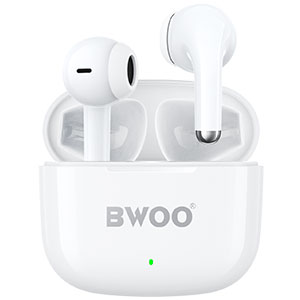
BWOO BO-BW40 - Why it fits studying
Tight in-ear design, and with active noise cancellation(ANC) technology, can effectively isolate external noise.
Extremely long playback time and reliable Bluetooth connection for long lectures or study marathons.
Compact design, making them easy to carry and suitable for various occasions.
Practical study tips using headphones
Match the audio to the task
For heavy reading or language-heavy tasks, choose silence or low-volume instrumental (no lyrics). For repetitive or rote tasks, upbeat but non-lyrical background audio can help maintain motivation.
Try white noise for attention variability
If you or your students find silence too under-stimulating, test low-level white noise during vocabulary learning or repetitive drills; some studies show measurable gains for certain learners. Keep volume moderate.
Use Pomodoro + curated playlists
Short focused blocks (25–50 minutes) with consistent playlists can train mental associations between that audio and focused work (context-dependent memory). Many students create “study-only” playlists (instrumental lo-fi, ambient, or classical). Forum reports (student communities) often recommend such consistent playlists.
Control volume & take breaks
Long sessions at high volume risk hearing health and cognitive fatigue. Follow safe-listening guidelines and take periodic breaks.
Personal A/B testing
Individual differences are large. Try A/B comparison across sessions (silence vs. music vs. ANC vs. white noise) to discover what yields best retention for you.
Related readings:
Can You Use Wireless Headphones on a plane?


