



A common question many users ask is:
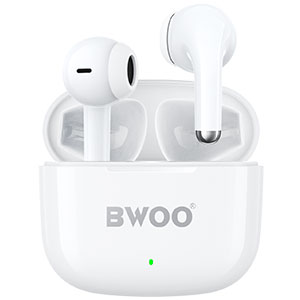
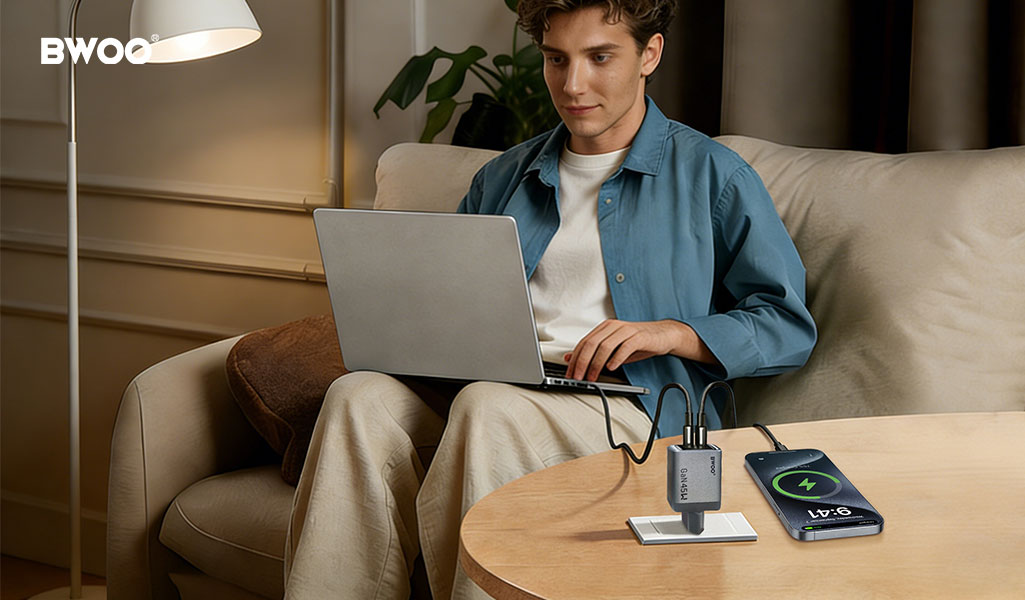
"I just bought a 65W GaN charger for my laptop—can I safely use it to charge my older phone or wireless earbuds?"
This concern is completely understandable. Many people worry that a high-power charger might overload or damage smaller devices.
The answer lies in a key concept: backward compatibility.
Backward compatibility means that a high-performance charger can automatically adapt to the power requirements of older or lower-power devices. Instead of forcing maximum output, modern chargers intelligently adjust based on what the connected device actually needs.
In this article, we'll explain how fast charging protocols like PD, QC, and PPS make this possible—and why it ensures both safety and universal usability.
1. How Do Fast Charging Protocols Ensure Compatibility?
The Digital Handshake
Fast charging is not just about sending power—it's about communication.
When you connect a device, the charger and device perform a digital handshake through internal communication channels.
The process works like this:
Charger: "What voltage and current can you handle?"
Device: "I can accept up to 5V/1A" (or higher if supported)
The charger then adjusts its output accordingly.
This means the device controls the power intake—not the charger.
The 5V Safety Baseline
All USB charging standards—from early versions to modern protocols—include a default 5V output mode.
If no fast charging agreement is reached:
The charger automatically falls back to safe 5V charging
This prevents any risk of overloading older devices
This built-in safety layer ensures universal compatibility across generations.
Step-Down Voltage Adjustment
Modern chargers support multiple voltage levels, such as:
20V (for laptops)
12V / 9V (for smartphones)
5V (for basic devices like earbuds)
The charger dynamically steps down voltage based on device requirements, ensuring safe and efficient power delivery at all times.
2. Fast Charging Protocol Compatibility (2026 Overview)
USB Power Delivery (PD) — The Universal Standard
USB-PD has become the most widely adopted fast charging protocol.
Key advantage:
Full backward compatibility across versions
A PD 3.1 charger (up to 240W) can still safely charge older PD 2.0 devices
This makes PD the foundation of universal charging ecosystems.
Quick Charge (QC) — Cross-Generation Support
Qualcomm's Quick Charge technology has evolved through multiple versions:
QC 2.0 → QC 3.0 → QC 4.0 → QC 5.0
Modern QC chargers are designed to support earlier versions, ensuring compatibility with older smartphones.
There is also increasing integration between QC and PD protocols, improving cross-device support.
PPS (Programmable Power Supply) — Precision Charging
PPS is an advanced feature within the PD 3.0 standard.
It allows:
Fine voltage adjustments in very small steps
Real-time optimization based on device temperature and battery status
This makes PPS especially useful for devices that require stable and controlled charging, reducing heat and improving battery longevity.
Importantly, PPS remains fully compatible with standard PD devices.
3. Why Backward Compatibility Matters for B2B Buyers
Backward compatibility is not just a technical feature—it has real business value for distributors and wholesalers.
Simplified Inventory Management
Instead of stocking multiple chargers for different devices, distributors can offer:
One high-power, fully compatible charger
This reduces the number of SKUs and simplifies inventory planning.
Lower After-Sales Risk
Compatibility issues are a common cause of customer complaints.
With backward-compatible chargers:
The risk of device damage is extremely low
Customers can safely use one charger across multiple devices
This leads to fewer returns and lower support costs.
Stronger Product Positioning
Chargers that support multiple protocols—including legacy ones—demonstrate:
Advanced chip integration
Broader device compatibility
Higher engineering standards
For B2B buyers, this translates into better market acceptance and brand trust.
4. 2026 Buying Guide: How to Check Compatibility
Choose the Right PD Version
Look for chargers that support:
PD 3.1 (latest standard)
Backward compatibility with earlier PD versions
PPS support for optimized charging
Understand Multi-Port Power Allocation
For multi-port chargers, power is shared dynamically.
When multiple devices are connected:
The charger redistributes power automatically
Each port adjusts output based on device demand
Understanding this helps avoid confusion about charging speed.
BWOO's Smart Compatibility Solution
BWOO chargers are designed with Smart IC technology, enabling:
Automatic recognition of thousands of device models
Dynamic power adjustment for optimal performance
Support for multiple charging protocols across generations
This ensures a safe, efficient, and universal charging experience.
Conclusion: Compatibility Makes Power Truly Universal
As charging technology evolves, compatibility remains essential.
Backward compatibility ensures that new chargers work seamlessly with both old and new devices, eliminating the need for multiple adapters.
It is this balance between innovation and safety that defines modern charging solutions.
BWOO is a professional consumer electronics manufacturer and B2B supplier, specializing in charging solutions including GaN chargers, power banks, and cables. With strong R&D capabilities and global supply experience, BWOO provides OEM/ODM services, wholesale solutions, and fully compatible charging products for distributors worldwide.
If you are looking for reliable, future-proof charging solutions, welcome to contact BWOO for product catalogs, pricing, and cooperation opportunities.


