





How to Evaluate a Power Bank Supplier? 6 Key Factors for Smart Importers

2026-03-31 17:02
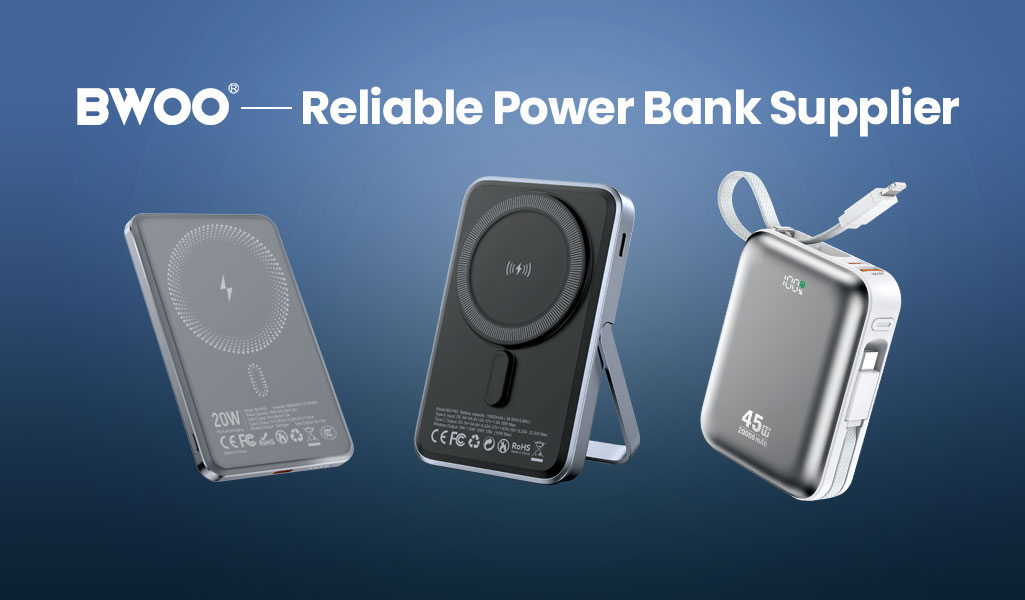
In 2026, a power bank is no longer just a "backup battery.” It is a compact, high-tech device integrating Qi2 wireless charging, PD 3.1 fast charging, and digital displays.
At the same time, stricter aviation regulations and rising safety standards have made supplier selection more critical than ever. Some low-cost manufacturers cut corners by overstating capacity or using recycled battery cells—creating serious compliance risks, product failures, and costly returns for importers.
This guide provides a practical, audit-ready checklist to help you identify reliable power bank suppliers and build a secure, future-proof supply chain.
1. Cell Quality & Supply Chain Transparency
Battery cells account for over 60% of a power bank's cost and determine both performance and safety.
What to Check
Grade A Cells: Ensure the supplier uses brand-new lithium polymer cells
Real Capacity: Verify true 20000mAh output under standardized testing
Self-Discharge Rate: High-quality cells retain charge longer
Risk Alert
Avoid suppliers using:
Recycled or dismantled cells
Industrial surplus batteries
Insight: Poor cell quality leads to swelling, overheating, and short product lifespan.
2. BMS Protection & Thermal Management
A power bank is only as safe as its Battery Management System (BMS).
Essential Protections
Overcharge protection
Over-discharge protection
Overcurrent protection
Short circuit protection
Overvoltage protection
2026 Standard
At least 2 NTC temperature sensors for real-time heat monitoring
Advanced thermal materials such as graphene sheets or thermal gel
Why It Matters
For high-power models (65W–140W+), poor heat control can lead to:
Performance throttling
Safety hazards
3. Global Compliance & Aviation Regulations
Without proper certifications, your shipment may be blocked or destroyed at customs.
Mandatory Certifications
Transport: UN38.3, MSDS
Europe: CE (EMC/LVD), RoHS, REACH
USA: FCC, UL 2054
India: BIS
2026 Aviation Requirement
Clear and permanent Wh (watt-hour) labeling on the product
Compliance with updated airline carry-on rules
Tip: A standard 20000mAh power bank (~74Wh) is airline-safe—but only if properly labeled.
4. Protocol Compatibility & Future-Proof Technology
Technology evolves quickly. Your supplier must keep pace.
Key Features to Evaluate
Fast Charging Protocols: PD 3.1, PPS, QC 5.0
Wireless Charging: Qi2 magnetic alignment (15W standard)
Bi-directional Charging: Fast input and output
Performance Benchmark
A modern 20000mAh power bank should:
Fully recharge within 2–4 hours
Deliver stable high-wattage output
Insight: Poor protocol compatibility leads to slow charging and customer complaints.
5. Manufacturing Capability & R&D Strength
A reliable supplier must deliver both scale and innovation.
Factory Capabilities
Automated spot welding machines
Battery grading and capacity testing systems
High/low temperature testing chambers
Innovation Indicators
Regular release of private mold (custom-designed) products
In-house R&D team (hardware + industrial design)
Quality Benchmark
RMA (defect rate) should be below 0.5%
Why It Matters: Strong R&D ensures your products stay competitive for years.
6. Service Flexibility & Digital Support
Efficient communication and service reduce long-term friction.
What to Look For
Flexible MOQ: Support for both small trial orders and bulk production
RTS + OEM Capability: Ready stock plus customization options
After-Sales Policy: Clear replacement or refund process
Digital Support
High-quality product images and videos
Localized marketing materials for global platforms
Real-time inventory and order tracking
Insight: A digitally supplier helps accelerate your go-to-market speed.
Conclusion
Power bank sourcing in 2026 is no longer about finding the lowest price—it's about ensuring safety, compliance, and long-term reliability.
By evaluating suppliers across these six key dimensions, importers can avoid costly mistakes and build a resilient supply chain. A trusted supplier is not just a vendor, but your brand's safety shield and growth partner.


