



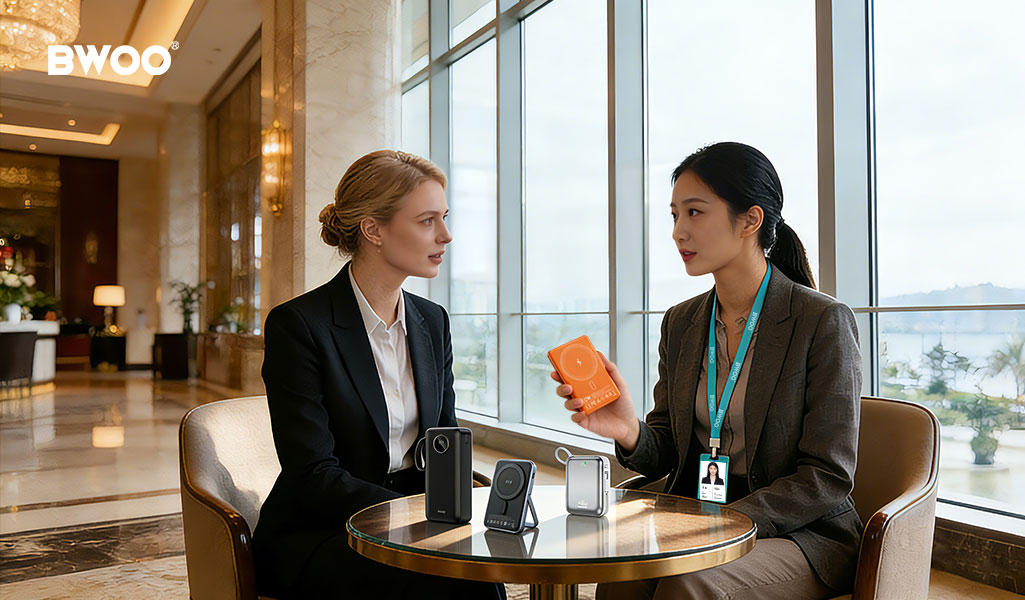
With the growing demand for smartphones, tablets, laptops, and other portable devices, power banks have become an essential accessory worldwide. For brands, wholesalers, and distributors, choosing the right power bank supplier is a critical decision that directly affects product quality, brand reputation, and long-term business growth.
However, the power bank market is highly competitive, and suppliers vary greatly in terms of manufacturing capability, quality control, certifications, and after-sales support. This guide provides a practical and objective framework to help you evaluate and choose a reliable power bank supplier based on real-world industry standards.
Evaluate Manufacturing Capabilities and Experience
A trustworthy power bank supplier should have proven manufacturing capabilities rather than relying solely on trading or outsourcing.
Key factors to assess include:
In-house factory or long-term partner factories
Years of experience in power bank manufacturing
Production capacity and scalability to support bulk or long-term orders
R&D capabilities, such as PCB design, battery management systems (BMS), and product engineering
Suppliers with strong manufacturing foundations are more likely to deliver consistent quality, stable lead times, and customized solutions.
Verify Product Quality and Safety Standards
Power banks involve lithium batteries, making safety and quality non-negotiable. A reliable supplier should follow strict quality control procedures throughout the production process.
Look for:
Battery cell sourcing transparency (Grade A cells, reputable brands)
Multiple-stage quality inspections, including incoming materials, in-line checks, and final testing
Safety features, such as overcharge, over-discharge, overcurrent, short-circuit, and temperature protection
Consistent quality control is a strong indicator of a supplier's professionalism and long-term reliability.
Check Certifications and Compliance
Certifications are not just paperwork—they ensure your products can legally and safely enter target markets.
Common certifications to request include:
CE / RoHS / FCC for general global markets
UL for North America
UN38.3 / MSDS for battery transportation
IEC 62133 for battery safety
A qualified power bank supplier should understand compliance requirements for different regions and provide valid, verifiable documentation.
Assess Customization and OEM/ODM Capabilities
If you are building your own brand, customization is essential. Not all suppliers offer true OEM or ODM services.
Evaluate whether the supplier can support:
Logo printing and packaging customization
Custom capacities, ports, and fast-charging protocols (PD, QC, PPS)
Industrial design and mold development
Firmware or feature customization for specific markets
Suppliers with flexible OEM/ODM capabilities can help your brand stand out in a crowded market.
Review Pricing Structure and Long-Term Value
Price matters, but choosing the cheapest supplier often leads to hidden risks such as unstable quality, delayed shipments, or lack of support.
Instead of focusing only on unit price, consider:
Price consistency over time
Cost-performance ratio
Minimum order quantity (MOQ) flexibility
Transparency in quotations (materials, customization, packaging)
A reliable supplier prioritizes long-term partnerships over one-time transactions.
Understand Lead Time and Supply Chain Stability
Power bank demand can fluctuate due to seasons, promotions, or market trends. A dependable supplier should have a stable supply chain.
Ask about:
Standard production lead times
Raw material inventory management
Peak-season production planning
Export and logistics experience
Stable delivery timelines help you avoid stock shortages and maintain customer satisfaction.
Evaluate Communication and After-Sales Support
Effective communication is often overlooked but is critical for smooth cooperation.
A professional power bank supplier should offer:
Clear and timely communication
Technical support before and after sales
Warranty policies and defect handling procedures
Dedicated account or sales support
Strong after-sales service reflects a supplier's confidence in their products and commitment to long-term cooperation.
Industry Perspective: What Reliable Suppliers Do Differently
From an industry perspective, established manufacturers such as BWOO reflect many of the best practices outlined above. As a company focused on the research, development, and manufacturing of mobile accessories—including power banks—BWOO emphasizes standardized production processes, strict quality control, and global compliance from the early stages of product development. By aligning manufacturing, certification, and after-sales support under one system, suppliers with this approach are better positioned to deliver consistent quality and support long-term partnerships rather than short-term transactions. This type of operational model is often what differentiates dependable power bank suppliers from purely price-driven vendors.
Conclusion
Choosing the right power bank supplier is not just about finding a manufacturer—it's about building a reliable partnership. By carefully evaluating manufacturing capabilities, quality control, certifications, customization options, pricing strategy, supply chain stability, and after-sales support, you can significantly reduce risks and improve your brand's competitiveness.
A well-chosen supplier helps ensure product safety, consistent quality, and sustainable growth in an increasingly demanding global market.
Related readings:
Can A Power Bank Charger A Laptop?
Can You Use Power Banks on Planes?


