




How to Connect Wireless Headphones to Smart TV?

2026-02-04 11:13
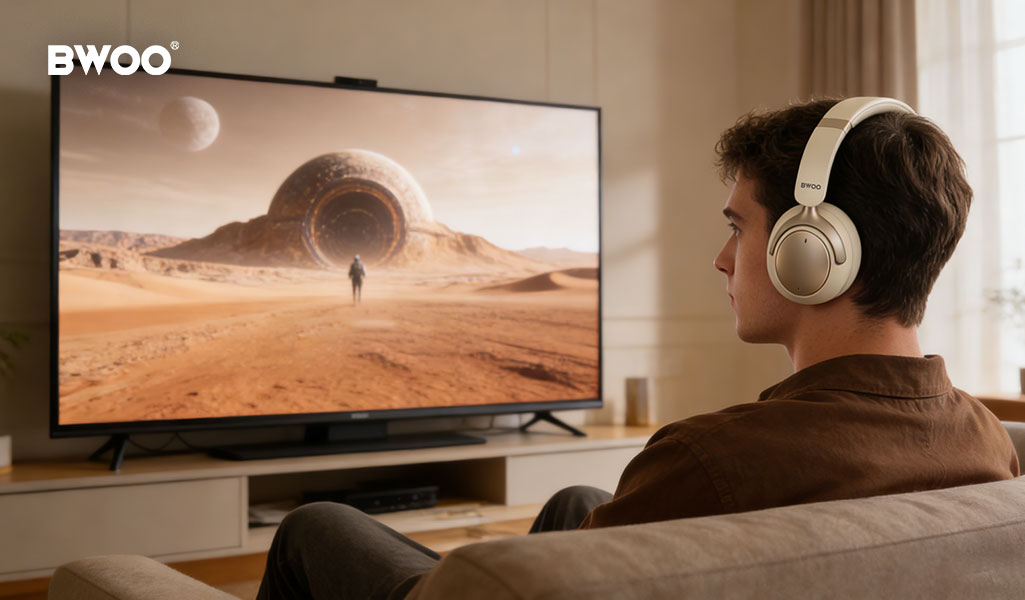
Watching a late-night football match or an action movie can be immersive—but turning up the TV volume isn't always an option when others are asleep. Wireless headphones offer a simple and effective solution. Whether you're using a modern smart TV or an older television model, this article explains how to connect wireless headphones easily and enjoy a private, cinema-like viewing experience.
Scenario 1: Connecting to a Smart TV with Built-in Wireless Audio (Fastest Method)
Supported systems: Samsung Tizen, LG webOS, Android TV (Sony, TCL, Xiaomi), and similar platforms.
Step 1: Activate Pairing Mode on Your Headphones
Place your wireless headphones (such as BWOO BW-589 ANC Over-Ear Wireless Headphone) into pairing mode. To re-pair, disconnect the earphones from the original device (turn off Bluetooth or move them out of the pairing range). The indicator light will flash, signaling the start of pairing with a new device.
Step 2: Open the TV Audio Settings
Using the TV remote, navigate to:
Settings → Sound → Sound Output
Step 3: Search for Nearby Devices
Select Wireless Device List, BT Audio List, or Add New Device, depending on your TV system.
Step 4: Complete the Connection
Tap your headphone name from the list and confirm. Once connected, the TV audio will automatically route to your headphones.
Scenario 2: Connecting Wireless Headphones to Older or Non-Smart TVs
If your TV does not support built-in wireless audio, there are still reliable solutions.
Option 1: Use a Wireless Audio Transmitter
Connect a wireless audio transmitter to your TV's 3.5 mm headphone jack or RCA (red/white) audio output.
Power on the transmitter
Put both the transmitter and your BWOO headphones into pairing mode
Wait until the connection is established
This method works with most legacy TVs.
Option 2: Connect via a Streaming Media Device
Streaming devices such as Apple TV, Fire TV Stick, or Chromecast often include built-in wireless audio support.
Simply pair your headphones directly within the streaming device's audio settings instead of the TV itself.
Core Insight: Why Wireless Headphones Sometimes Feel Out of Sync
As a manufacturer, it's important to explain why audio delay can occur.
What Causes Audio Delay?
The primary factor is audio encoding and buffering. Wireless audio must be compressed, transmitted, decoded, and buffered before playback—all of which introduce slight delay.
How to Reduce Audio Lag
Ensure both the TV and headphones support newer BT versions (5.3 or later)
Use headphones with a dedicated Low Latency Mode, such as BWOO advanced over-ear models
Check your TV's Audio Delay / Lip Sync settings and adjust manually if available
Why BWOO Headphones Are Better for TV Viewing
BWOO designs wireless headphones specifically with long-form viewing in mind.
Extended Battery Life
BWOO over-ear headphones deliver over 40 hours of continuous playback, ideal for movies and series marathons.
Comfort-Focused Ergonomics
High-elastic protein leather ear cushions reduce pressure and heat buildup during extended use.
Dual-Device Connection Support
Selected BWOO models allow simultaneous connection to two devices—watch TV while staying connected to your phone without missing calls.
Frequently Asked Questions (FAQ)
Q: Why can't my TV find my headphones?
A: Make sure the headphones are disconnected from any previously paired phones or tablets.
Q: There's no sound after connecting—what should I do?
A: Manually set the TV's sound output to Wireless Audio in the settings menu.
Q: The volume sounds too low.
A: Increase volume on both the TV remote and the headphone controls, as they often work independently.
Conclusion
With the right setup, connecting wireless headphones to a TV is simple and reliable. Whether your TV is brand new or several years old, a few steps are all it takes to enjoy immersive sound without disturbing others. BWOO continues to refine wireless audio compatibility to make home viewing as seamless and comfortable as possible.


